
Why Your Teeth Suddenly Hurt After a Vacation
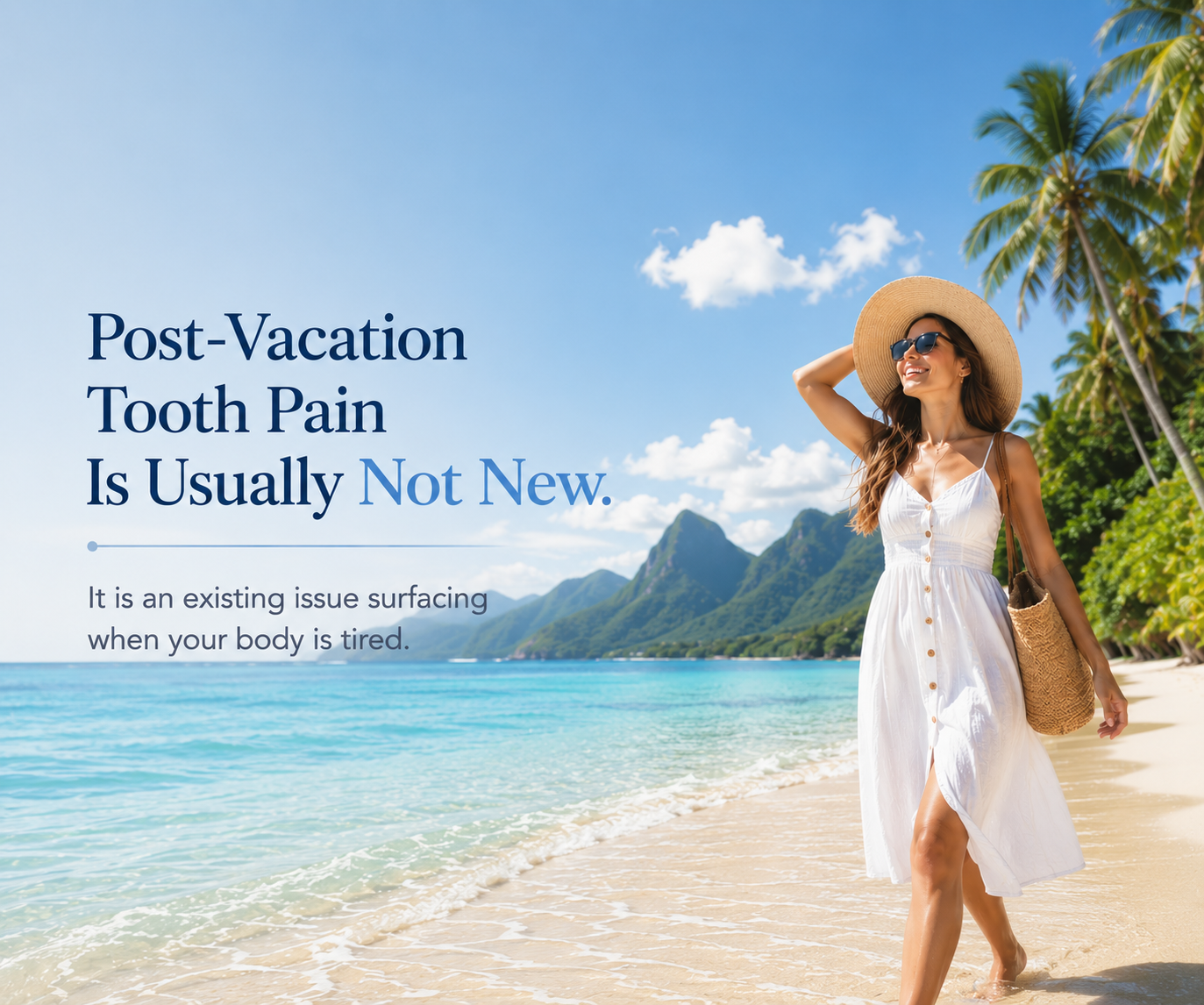
It's a strangely common experience: you come back from a great trip relaxed and recharged — except now a tooth is aching, or something's sensitive to cold, or a gum feels swollen. It seems to have come out of nowhere, and the timing feels almost unfair.
Here's the reassuring part: it almost never actually came out of nowhere. Post-vacation tooth pain is one of the more predictable patterns we see, and understanding why it happens is the first step to preventing it.
Travel Changes the Environment Inside Your Mouth
A vacation disrupts nearly every routine that keeps your mouth stable, and those disruptions stack up quickly.
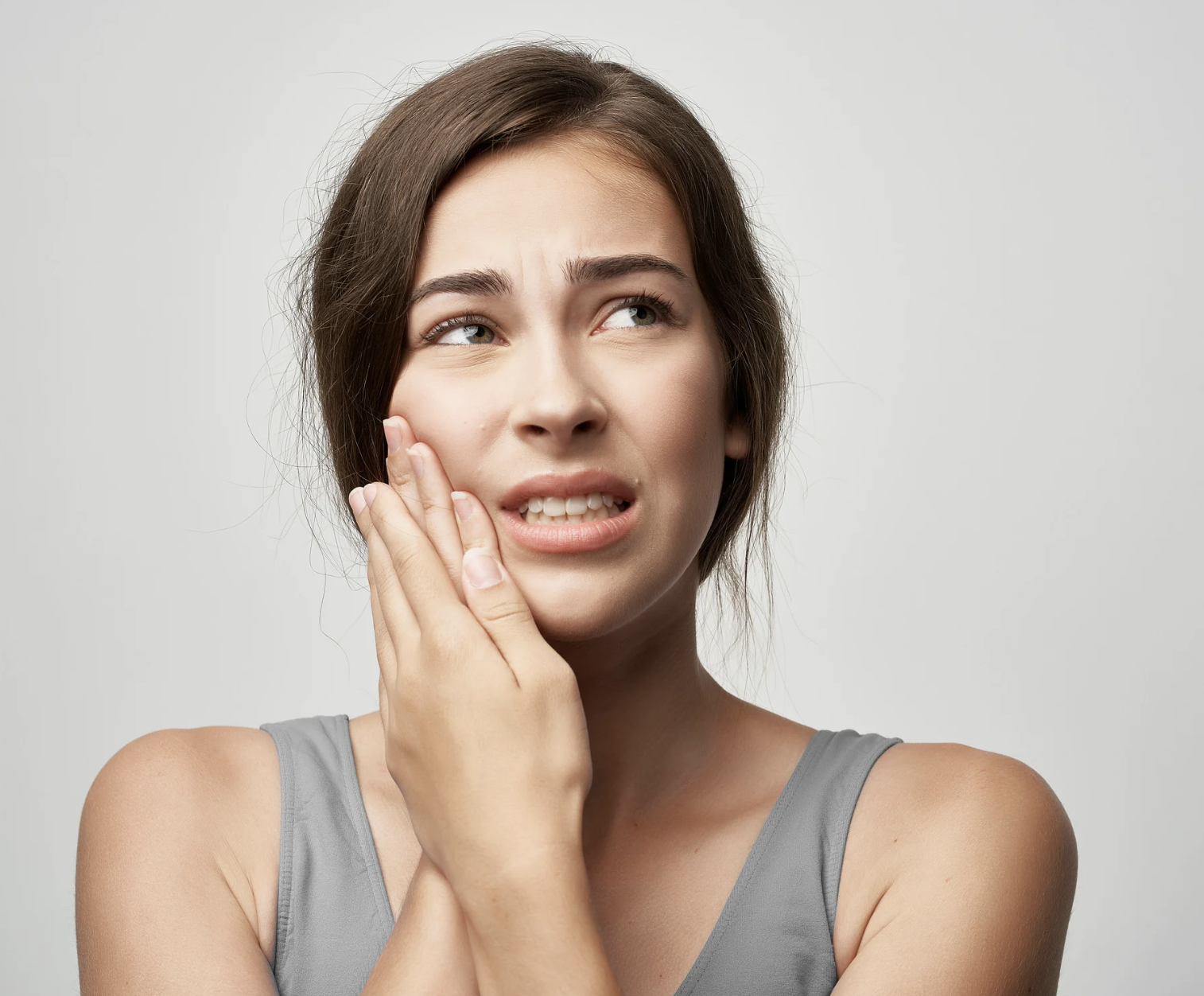
Air travel and long days leave the body tired and the immune system running at reduced capacity — which matters, because your immune system is what quietly holds low-grade oral infections and gum inflammation in check. Sleep becomes irregular. Water intake drops, especially with flying and higher activity, and less hydration means less saliva — the mouth's primary defense against acid and bacteria. Then the diet shifts: more soda, more sweets, more alcohol, more acidic and sugary foods at irregular hours. Each of these alone is manageable. Together, over several days, they tilt the oral environment toward inflammation and away from its normal balance.
The result is a mouth that's temporarily less defended than usual — exactly the conditions in which a small, quiet problem becomes a loud one.
Why Existing Problems Surface Now
This is the key idea: post-vacation tooth pain is rarely a new problem. It's almost always an existing one that was being tolerated silently until travel pushed it over the threshold.
A tooth with a small area of decay that wasn't yet symptomatic. A hairline crack that hadn't caused trouble. A pocket of low-grade gum inflammation the body was managing. Early pulp inflammation that hadn't announced itself. Under normal conditions, these sit quietly below the level of noticeable pain. Under the combined stress of travel — dehydration, dietary change, fatigue, disrupted routine — they cross into symptomatic territory.
That's why the pain feels sudden even though the underlying issue isn't. The problem was already there; travel just removed the conditions that were keeping it quiet. Common ways it shows up include new discomfort when chewing, sharp sensitivity to cold, or swollen, tender gums — either mid-trip or in the days right after.
The Airplane Factor
Flying adds a mechanism the rest of travel doesn't: pressure change.
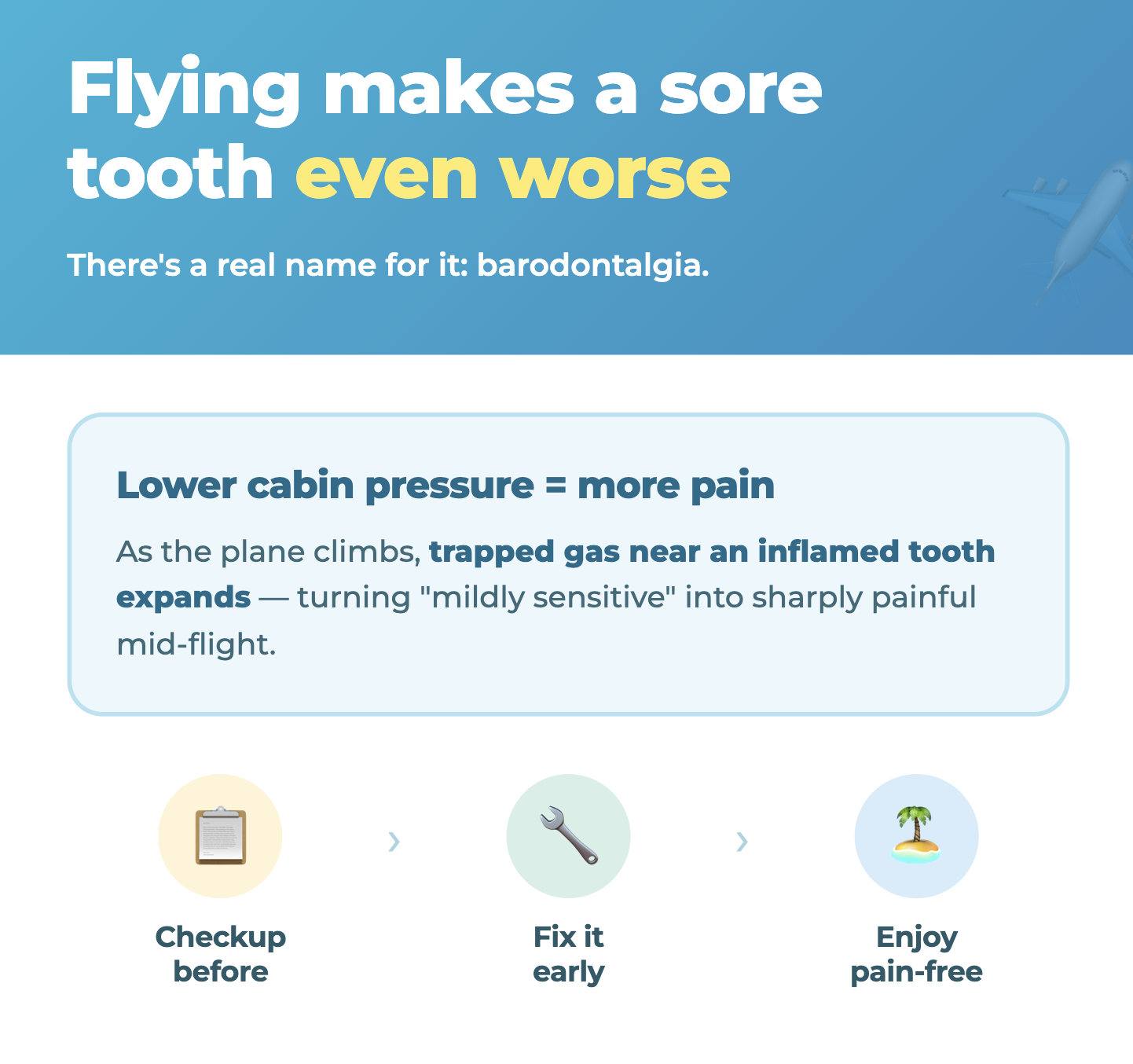
Aircraft cabins are pressurized to roughly 6,000–8,000 feet of equivalent altitude, not sea level. As the plane climbs and cabin pressure drops, any trapped gas in enclosed spaces within or around a tooth — an inflamed pulp chamber, a pocket of decay, an incompletely sealed filling, a small abscess — expands. That expansion creates pressure inside a space that can't accommodate it, and the result is pain. Aviation medicine has a name for this: barodontalgia, tooth pain caused by atmospheric pressure change.
The practical version: a tooth that's been mildly sensitive for weeks, easy to dismiss as "not that bad," can produce sharp or even severe pain during a flight. The teeth most affected are exactly the ones with a pre-existing issue — active or recent inflammation, decay near the pulp, or a compromised restoration. It's one more reason the problem to catch is the one that's still quiet.
What Actually Prevents It
The pattern points to a simple solution: since post-vacation pain is usually an existing problem surfacing, the fix is to find that problem before you travel, while it's still small and manageable.
A focused pre-travel checkup looks specifically for the things likely to flare under travel conditions — active or early decay, a filling or crown with a compromised margin, a tooth with an incomplete crack, or gum inflammation that could escalate. Catching any of these before departure is straightforward. Discovering them mid-trip, when finding a trusted dentist is difficult and emergency care abroad is expensive, is not.
Ideally, this happens two to four weeks before you leave — enough time for any needed treatment to be completed and settled before travel. It's one appointment, and it's the kind of preparation that pays off invisibly: you simply have a trip where your teeth never become the story.
Frequently Asked Questions
Why do my teeth hurt after a vacation?
Travel disrupts the routines that keep your mouth stable — hydration, sleep, diet, and immune function. Existing small problems (early decay, hairline cracks, low-grade gum inflammation) that were being tolerated silently often become symptomatic under that combined stress.
Can flying make tooth pain worse?
Yes. Reduced cabin pressure causes trapped gas near inflamed or decayed teeth to expand, producing pain — a phenomenon called barodontalgia. Teeth with pre-existing inflammation, decay, or compromised restorations are most affected.
Is post-vacation tooth pain a new problem or an old one?
Almost always an existing problem surfacing. The underlying issue — decay, a crack, or inflammation — was usually present but below the threshold of noticeable pain until travel conditions pushed it over.
How can I prevent tooth pain during travel?
A focused dental checkup 2–4 weeks before departure catches the issues most likely to flare — early decay, compromised fillings, cracked teeth, gum inflammation — while they're still simple to address.
Should I see a dentist before a big trip even if nothing hurts?
Yes, if the trip matters. Many travel dental emergencies come from problems that produced no symptoms at ground level. A pre-travel checkup is the most reliable way to avoid one.
The Thing About "Out of Nowhere"

In dentistry, very little actually happens out of nowhere. The tooth that flares up on the third day of a trip was almost always sending faint signals beforehand — a little sensitivity, a bit of discomfort when chewing, something easy to overlook in a busy pre-vacation stretch.
That's not a reason for worry, just a reason for a quick look before you go. The trips where your teeth never cross your mind are usually the ones where someone checked while everything was still quiet.
If you've got travel coming up, give us a call before you leave. It's a short visit, and it's the kind of preparation you never have to think about again.
📍 State Avenue Dental Office — Kansas City, KS (KCK) 🗣 English • Korean • Spanish