
Chipped a Tooth but It Doesn't Hurt? Here's Why That Doesn't Mean It's Fine.
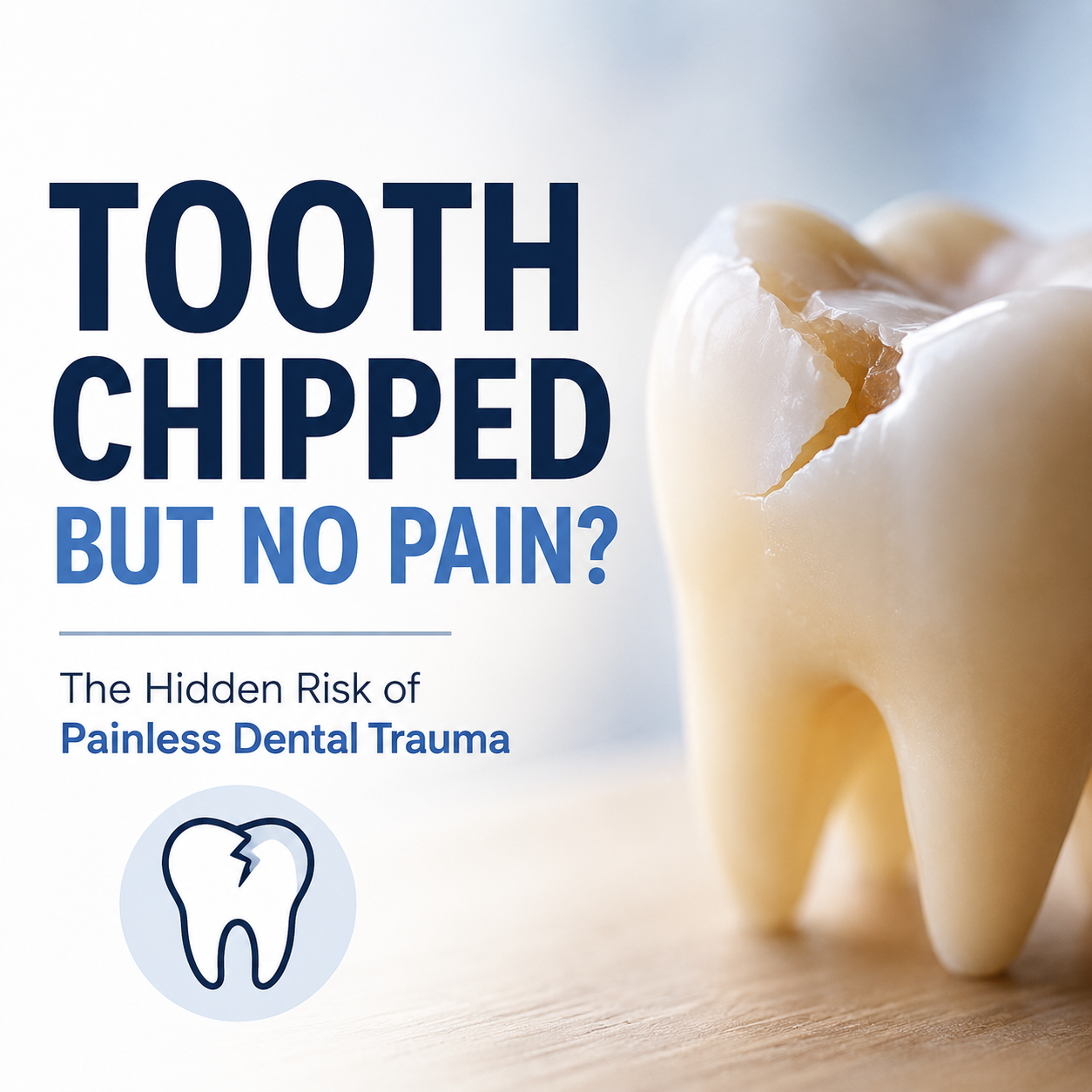
A small chip in a tooth is easy to shrug off. It doesn't hurt, it's not obviously affecting anything, and life is busy. You run your tongue over the rough edge a few times, decide it's minor, and move on.
Often, it really is minor. But "it doesn't hurt" is one of the least reliable ways to judge dental trauma — because with teeth, the most important damage frequently happens where you can't see it and can't feel it, at least not right away.
Here's what's worth understanding before you decide a chip is nothing.
Why "No Pain" Isn't the Same as "No Damage"
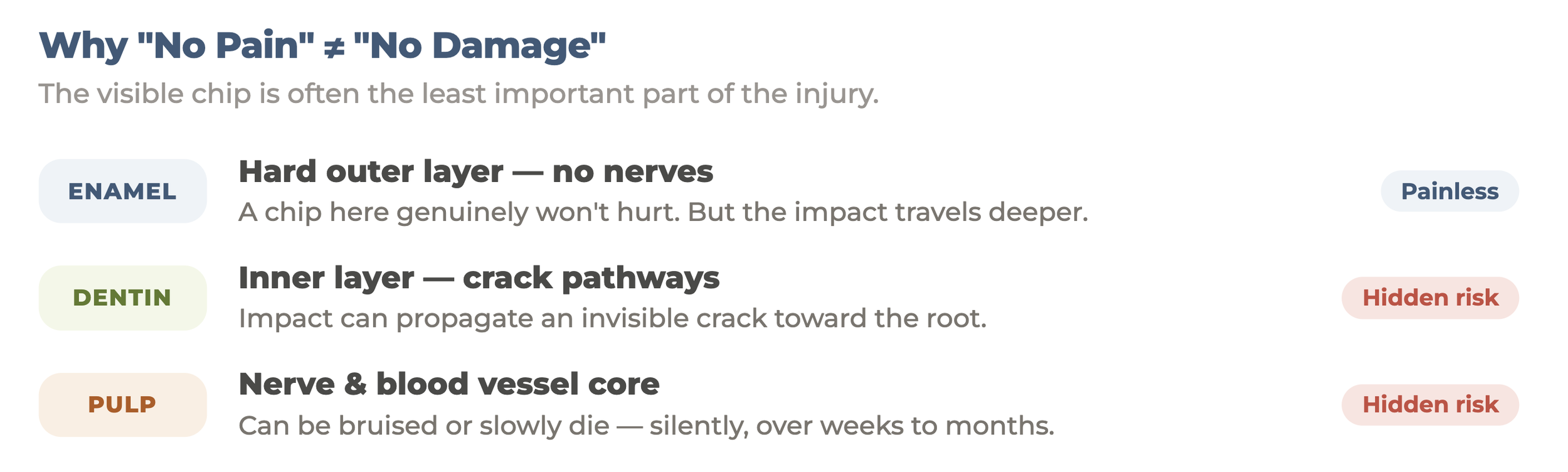
The visible part of a chipped tooth — the missing piece of enamel — is often the least significant part of the injury. What matters more is what happened to the structures underneath and around it during the impact.
Enamel, the hard outer layer, has no nerves. A chip confined entirely to enamel genuinely won't hurt, because there's nothing there to register pain. But the same impact that broke off a piece of enamel also transmitted force deeper into the tooth — to the dentin, to the pulp (the nerve and blood vessel core), and potentially into the root. Those structures can be injured without producing immediate pain, which is exactly why a painless chip can be misleading.
In other words: the absence of pain tells you the enamel damage isn't reaching a nerve at this moment. It tells you nothing about whether the impact caused deeper injury that will announce itself later.
The Hidden Injuries a Chip Can Mask
A crack extending beyond the visible chip.
The force that chips a tooth can also propagate a crack through the tooth structure — often invisible to the naked eye and undetectable on standard X-rays. These cracks can extend into the dentin or toward the root, creating a pathway for bacteria and a source of future pain. A chip that looks trivial can sit at the visible end of a much more significant crack.
Pulp trauma.
The pulp — the living tissue at the center of the tooth — can be bruised or damaged by an impact even when the tooth structure looks largely intact. This is called pulpal trauma, and its consequences often unfold slowly. The pulp may become inflamed, gradually die, or develop a low-grade infection over weeks to months. In the early stages, this happens silently.
Micro-fractures that weaken the tooth.
Even without a single clean crack, an impact can create a network of micro-fractures that compromise the tooth's structural integrity. The tooth holds together initially but becomes vulnerable to further fracture under normal biting forces down the line.
The Warning Signs That Appear Later
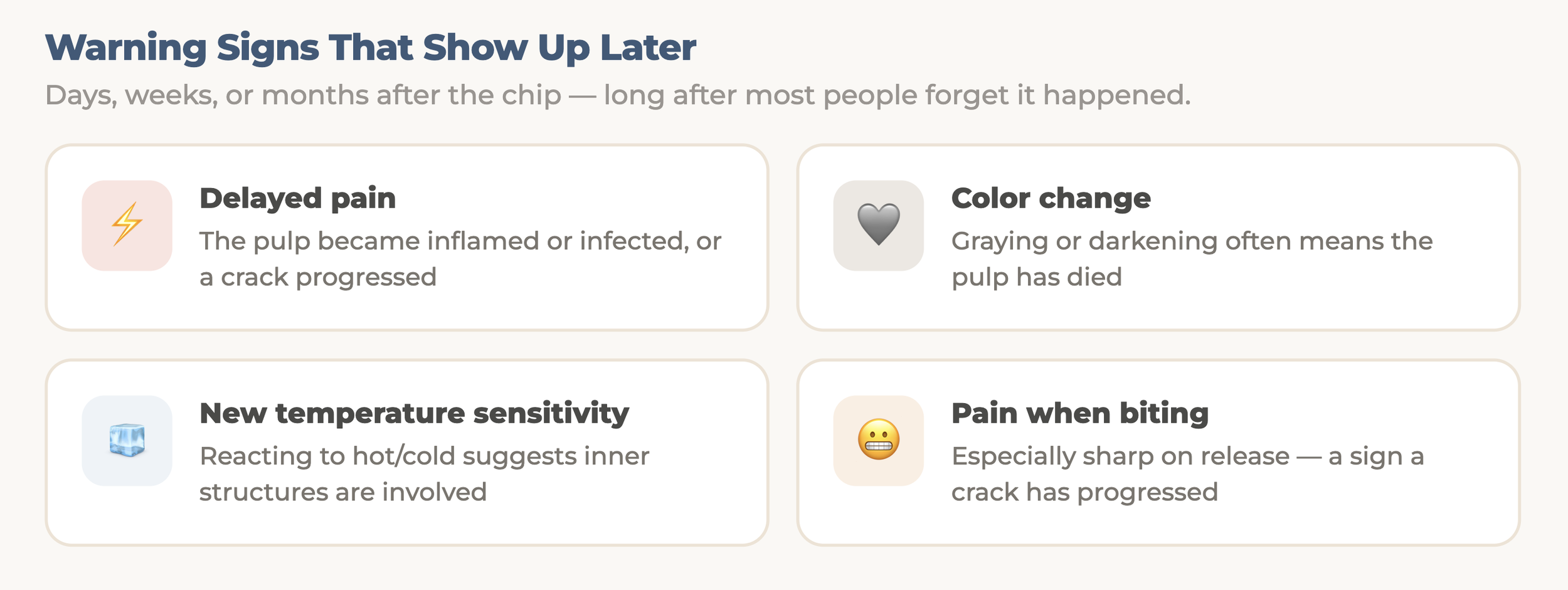
This is the part that catches people off guard. A chip that felt like nothing at the time can produce symptoms days, weeks, or even months afterward — and by then, most people have forgotten the original impact entirely.
Delayed pain.
Pain that emerges well after the injury often signals that the pulp has become inflamed or infected, or that a crack has progressed. This can range from sensitivity to a persistent ache to acute pain, depending on what's happening inside the tooth.
Color change.
This is one of the most telling signs, and one people frequently miss. A traumatized tooth that gradually darkens — turning gray, brown, or yellow relative to its neighbors — is often signaling that the pulp has died. A dying or dead pulp discolors the tooth from the inside. This can happen slowly enough that it's only noticed when comparing photos over time, or when someone else points it out.
New temperature sensitivity.
If a previously unremarkable tooth starts reacting to cold or heat after a chip, it suggests the inner structures are now involved. Sensitivity that lingers after the stimulus is removed is particularly worth attention, as it can indicate pulpal inflammation.
Sensitivity to biting pressure.
Discomfort specifically when biting down — especially a sharp sensation on release — can indicate a crack that's progressed since the original injury.
Why Early Evaluation Actually Matters
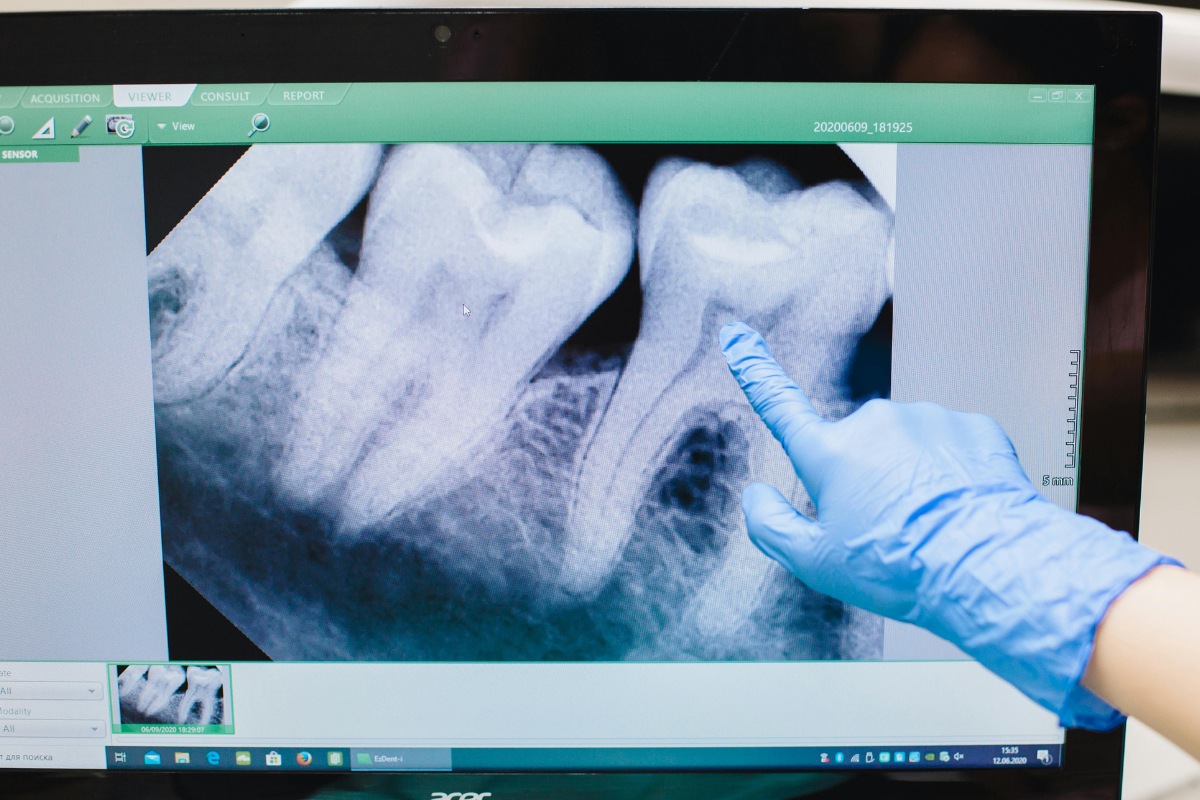
The value of getting a painless chip evaluated isn't about treating the chip itself — it's about catching the hidden injuries while they're still manageable.
When a dentist evaluates a chipped tooth, the assessment goes well beyond the visible damage. We check the pulp's vitality with cold and sometimes electric testing to see how the nerve is responding. We look for cracks using magnification, transillumination (shining light through the tooth), and sometimes dye. We take X-rays to assess the root, the bone, and the proximity of the damage to the pulp. And critically, we establish a baseline — so that if something changes at a future visit, we can catch it against a known starting point.
This matters because the difference in treatment between early and late is significant. A crack caught early can often be protected with a crown before it propagates to the root. A pulp showing early signs of trouble can sometimes be monitored or treated conservatively. But a crack that reaches the root may mean losing the tooth, and a pulp that has fully died and become infected requires root canal treatment or extraction — outcomes that early intervention can sometimes prevent entirely.
Frequently Asked Questions
Is a chipped tooth okay if it doesn't hurt?
Not necessarily. Enamel has no nerves, so a chip can be painless while still involving deeper damage to the dentin, pulp, or root. The absence of pain doesn't rule out a crack or pulp injury that may surface later. A quick evaluation is the reliable way to know.
Why did my chipped tooth start hurting weeks later?
Delayed pain often means the pulp became inflamed or infected after the injury, or a crack progressed over time. Pulp trauma frequently unfolds slowly and silently before producing symptoms, which is why pain can appear well after the original chip.
Why is my chipped tooth turning gray or dark?
A darkening tooth after trauma usually indicates the pulp has died. A dead or dying pulp discolors the tooth from within. This is a clear signal to have it evaluated, as the tooth will typically need treatment to prevent infection.
Should I see a dentist for a small chip that doesn't hurt?
Yes — at least once. The evaluation checks for the hidden injuries a chip can mask (cracks, pulp trauma) and establishes a baseline. Catching a problem early is far simpler than treating it after it's progressed.
How long after chipping a tooth can problems appear?
Anywhere from days to months. Pulp trauma and crack progression often develop gradually, which is why a tooth that seemed fine right after the injury can become symptomatic much later.
The Thing About Injuries You Can't Feel

Pain is a useful signal, but it's a lagging one when it comes to dental trauma. By the time a traumatized tooth hurts, the underlying problem has often had weeks or months to develop. The chips that turn into bigger problems are rarely the ones that hurt right away — they're the ones that felt fine, got ignored, and quietly changed over time.
That's not a reason to worry over every minor chip. It's a reason to get it looked at once, establish that nothing deeper is going on, and have a baseline on record if it ever changes.
If you've chipped a tooth — even a small one, even one that doesn't hurt at all — give us a call. A quick look now is simple, and it's the most reliable way to make sure a minor chip stays minor.
📍 State Avenue Dental Office — Kansas City, KS (KCK) 🗣 English • Korean • Spanish