
Why Are My Teeth Getting Shorter?
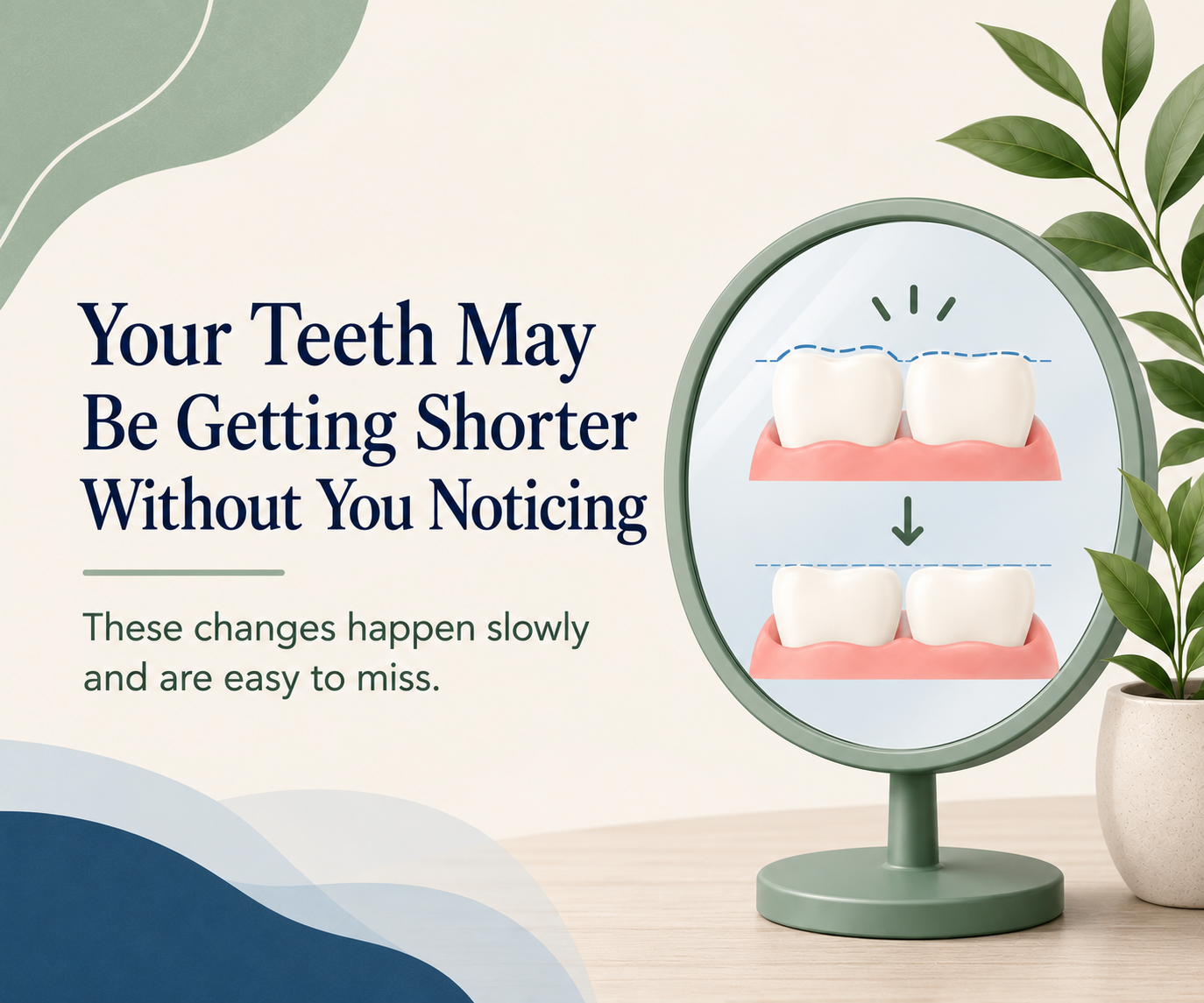
Every so often a patient looks in the mirror and notices something they can't quite place at first: their teeth look a little shorter than they remember. The front teeth don't show the way they used to when smiling. The edges look flatter, more even, less defined. It's a strange thing to notice, and it's easy to write off as imagination or just "getting older."
Usually, it's neither. Teeth really do get shorter over time — and while some of that is age, the bigger driver is almost always something more specific and more addressable. Here's what's actually happening.
Age Is Real, but Habits Matter More
Some tooth wear over a lifetime is normal. Decades of chewing gradually smooth and shorten the biting surfaces, and everyone's teeth show some of this by later adulthood.
But when teeth are wearing noticeably — enough to change how they look or feel — age is rarely the main explanation. In most cases, the pace of wear is being driven by specific, identifiable factors that are doing far more damage than time alone ever would. The good news in that: unlike age, those factors can usually be addressed once they're found.
The Main Causes of Tooth Wear
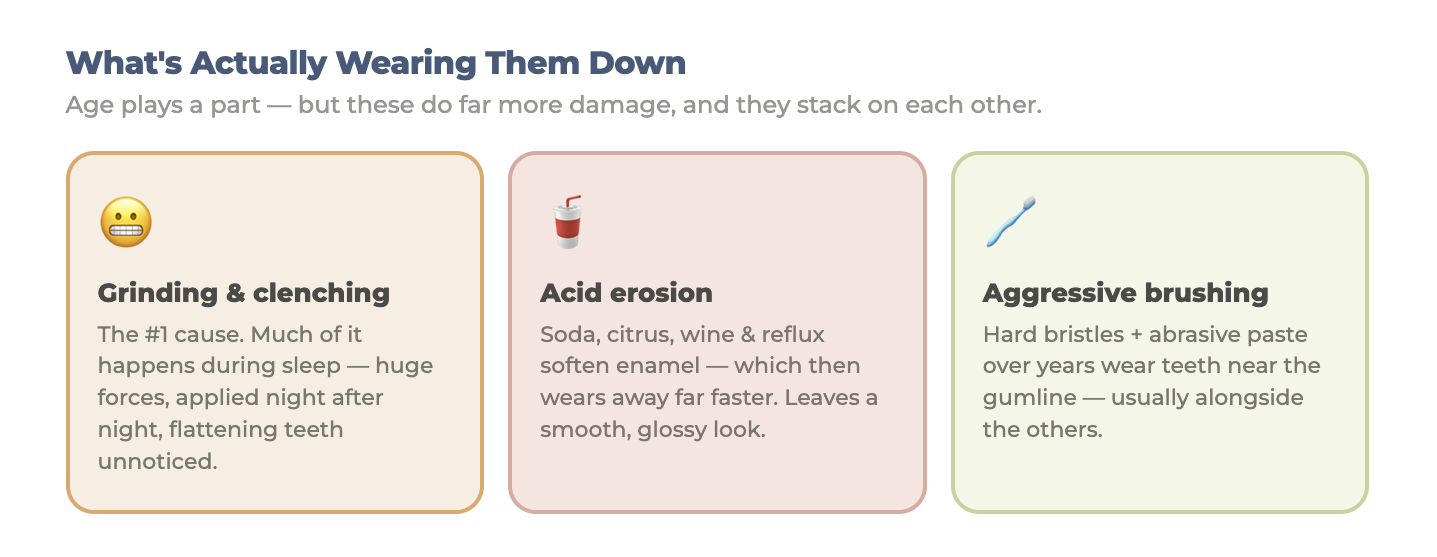
Grinding and clenching (bruxism).
This is the single biggest cause of significant tooth wear, and much of it happens during sleep, when you have no awareness or control over it. The forces involved are substantial — grinding can generate pressures far beyond normal chewing — and applied night after night, they steadily flatten and shorten the teeth. Because it happens unconsciously during sleep, many people who grind have no idea they do until the wear shows up. Clenching, its daytime cousin, adds sustained pressure that compounds the effect.
Acid erosion.
This is a chemical process rather than a mechanical one, and it's frequently underestimated. Frequent soda, sports drinks, citrus, wine, and other acidic foods and drinks soften the enamel surface. Softened enamel then wears away far faster under normal chewing and any grinding. Acid reflux and certain medical conditions can do the same thing from the inside. Erosion often produces a distinctive smooth, glossy, sometimes cupped appearance on the teeth.
Abrasion.
Mechanical wear from outside sources — aggressive brushing with a hard-bristled brush, particularly with abrasive toothpaste, over many years — can wear teeth down too, especially near the gumline. It tends to combine with the other causes rather than acting alone.
Most significant wear isn't from a single cause. It's usually grinding plus acid, or clenching plus aggressive brushing — factors stacking on each other and accelerating the overall pace.
Why It Matters Beyond Appearance
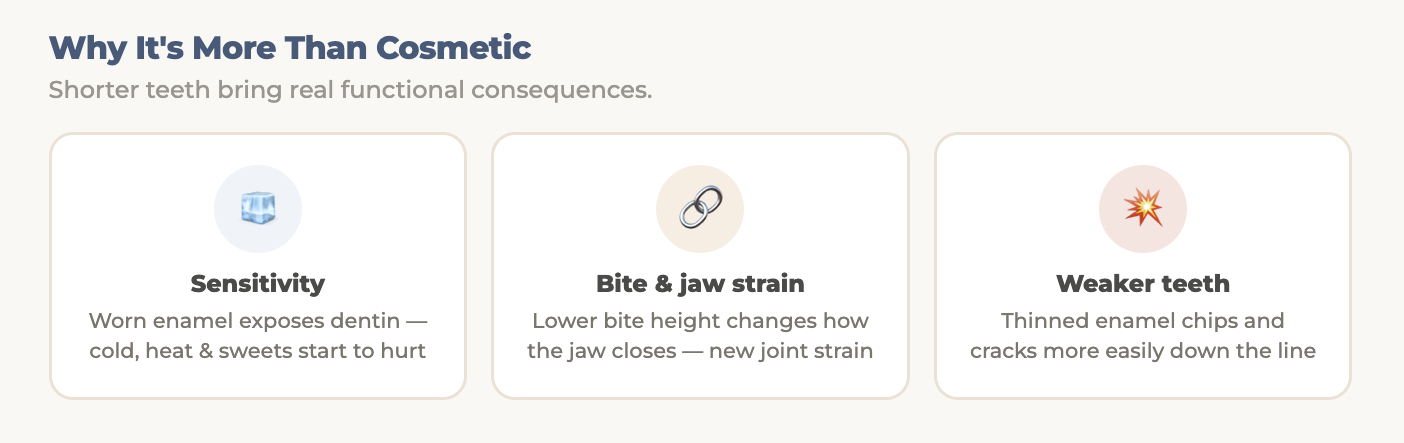
Shorter teeth might sound like a purely cosmetic concern, but progressive wear has real functional consequences.
Sensitivity. Enamel is the protective outer layer, and it's finite. As it wears away, it exposes the dentin underneath, which contains microscopic channels leading to the nerve. This is why worn teeth frequently become sensitive to cold, heat, and sweets — the insulation is thinning.
Bite changes and jaw strain. As teeth wear down, the overall height of the bite decreases. This changes how the upper and lower teeth meet and how the jaw closes, which can place new strain on the jaw joints and chewing muscles. Significant wear can gradually alter the bite relationship in ways that produce jaw discomfort, muscle fatigue, or joint symptoms.
Structural vulnerability. Heavily worn teeth are weaker teeth. Thinned, flattened enamel is more prone to chipping and cracking, and the loss of protective structure makes the teeth more susceptible to further damage down the line.
The Real Problem: It Happens Invisibly
Here's what makes tooth wear genuinely tricky: it happens so gradually that the person it's happening to almost never notices in real time.
A tooth doesn't wear down in a week or a month. It wears over years, a fraction of a millimeter at a time. At any given point, today's teeth look essentially identical to yesterday's — because the change per day is far too small to perceive. The wear only becomes visible in retrospect, when enough has accumulated to change the overall appearance, or when sensitivity or a bite change finally announces it.
This is exactly why the photographic records we take at checkups matter so much for wear specifically. Comparing this year's images to a set from a few years ago turns invisible, gradual change into something clearly measurable. Wear that's imperceptible day to day is obvious across a multi-year record — which is what allows it to be caught while there's still enamel worth protecting.
Why Early Action Is Everything
There's one fact about tooth wear that shapes the entire approach to it: enamel does not grow back. Unlike bone, which remodels, or skin, which regenerates, worn tooth structure is gone permanently. The body has no mechanism to rebuild it.
That reality changes the whole goal. Since we can't restore lost enamel biologically, the entire strategy centers on identifying the cause early and slowing the rate of loss before more structure disappears. Catching grinding early means a night guard can protect the teeth for decades of sleep. Catching acid erosion early means dietary changes and protective measures can preserve what's left. Catching it late means the same protections still help — but they're now protecting far less remaining tooth, and rebuilding significantly worn teeth requires restorative work like bonding, veneers, or crowns.
The difference between early and late intervention isn't about whether something can be done. It's about how much natural tooth structure is still there to save when you start.
Frequently Asked Questions
Why are my teeth getting shorter?
The most common cause is grinding and clenching, often during sleep. Acid erosion from soda, citrus, and other acidic sources accelerates it, as can aggressive brushing over time. Some wear is normal with age, but noticeable shortening usually points to one of these specific, addressable causes.
Can worn-down teeth be fixed?
Enamel doesn't grow back, so lost structure can't be restored biologically. But the wear can be stopped or slowed by addressing the cause, and significantly worn teeth can be rebuilt with restorative options like bonding, veneers, or crowns. Early action preserves more of the natural tooth.
Does grinding really make teeth shorter?
Yes — it's the leading cause of significant tooth wear. Grinding generates forces well beyond normal chewing, and because much of it happens during sleep, it progresses unnoticed until the wear becomes visible. A night guard is the primary protection.
How do I know if my teeth are wearing down?
Signs include teeth that look shorter or flatter, new sensitivity to cold or sweets, a smooth or glossy appearance on the surfaces, and changes in how your bite feels. Because it's gradual, comparison against past dental photos is often what reveals it clearly.
Is tooth wear a cosmetic or a health issue?
Both. Beyond the change in appearance, wear causes sensitivity as enamel thins, can strain the jaw joint as the bite height changes, and leaves teeth more vulnerable to chips and cracks.
The Thing About Things You Can't Undo
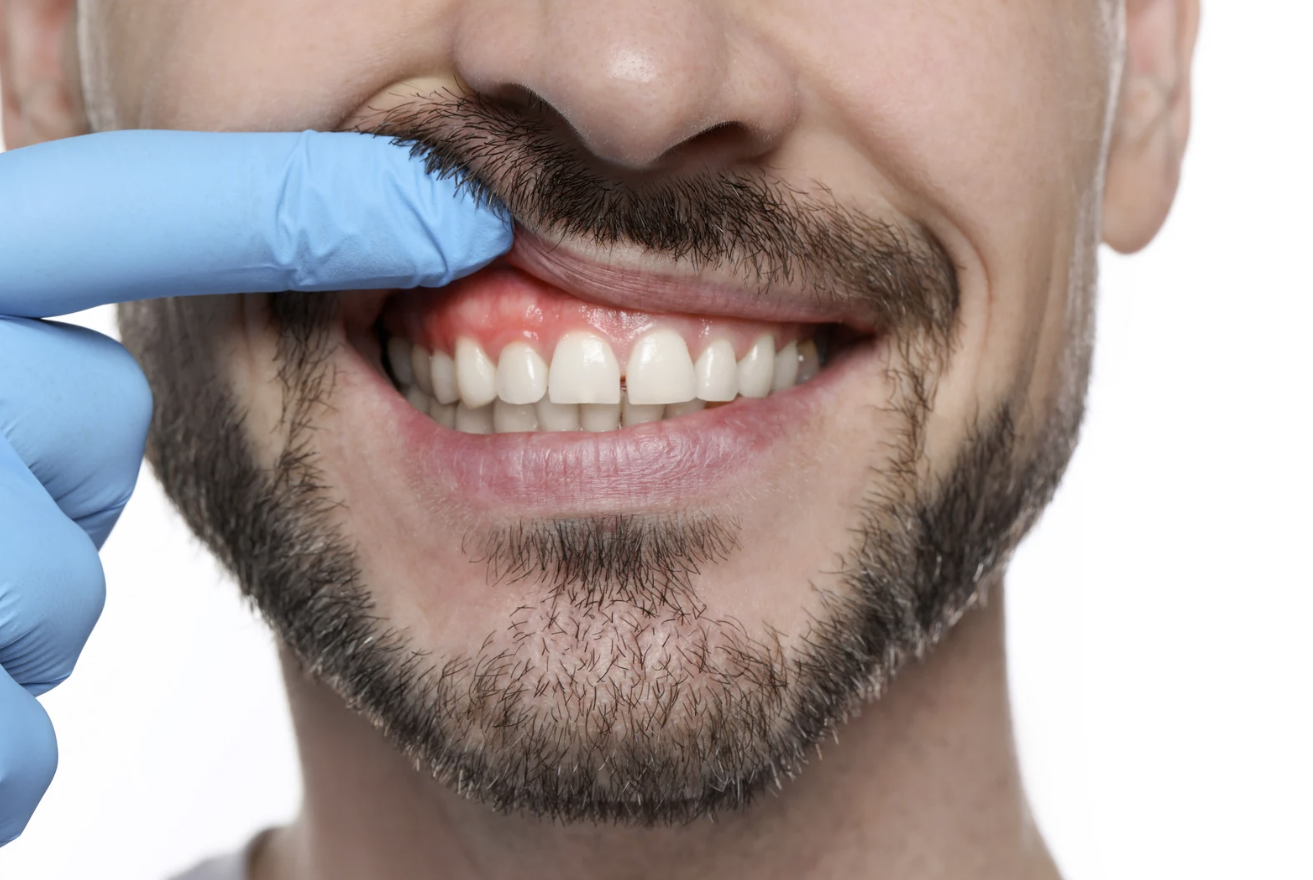
Most dental problems have a fix. Cavities get filled, infections get treated, even a lost tooth can be replaced. Tooth wear is a little different, because the enamel itself is a one-way resource — once it's worn away, it's gone for good.
That's not a reason for alarm, but it is a reason to pay attention. Wear you catch early is wear you can slow down while there's still plenty of tooth to protect. Wear you catch late is still worth addressing — just with less to work with.
If your teeth look shorter than they used to, or you've noticed new sensitivity or flattening, it's worth finding out what's driving it. Give us a call — we'll look at what's happening, figure out the cause, and help you keep the enamel you've still got.
📍 State Avenue Dental Office — Kansas City, KS (KCK) 🗣 English • Korean • Spanish