
Why Gum Treatment Comes First — Before a Dental Implant
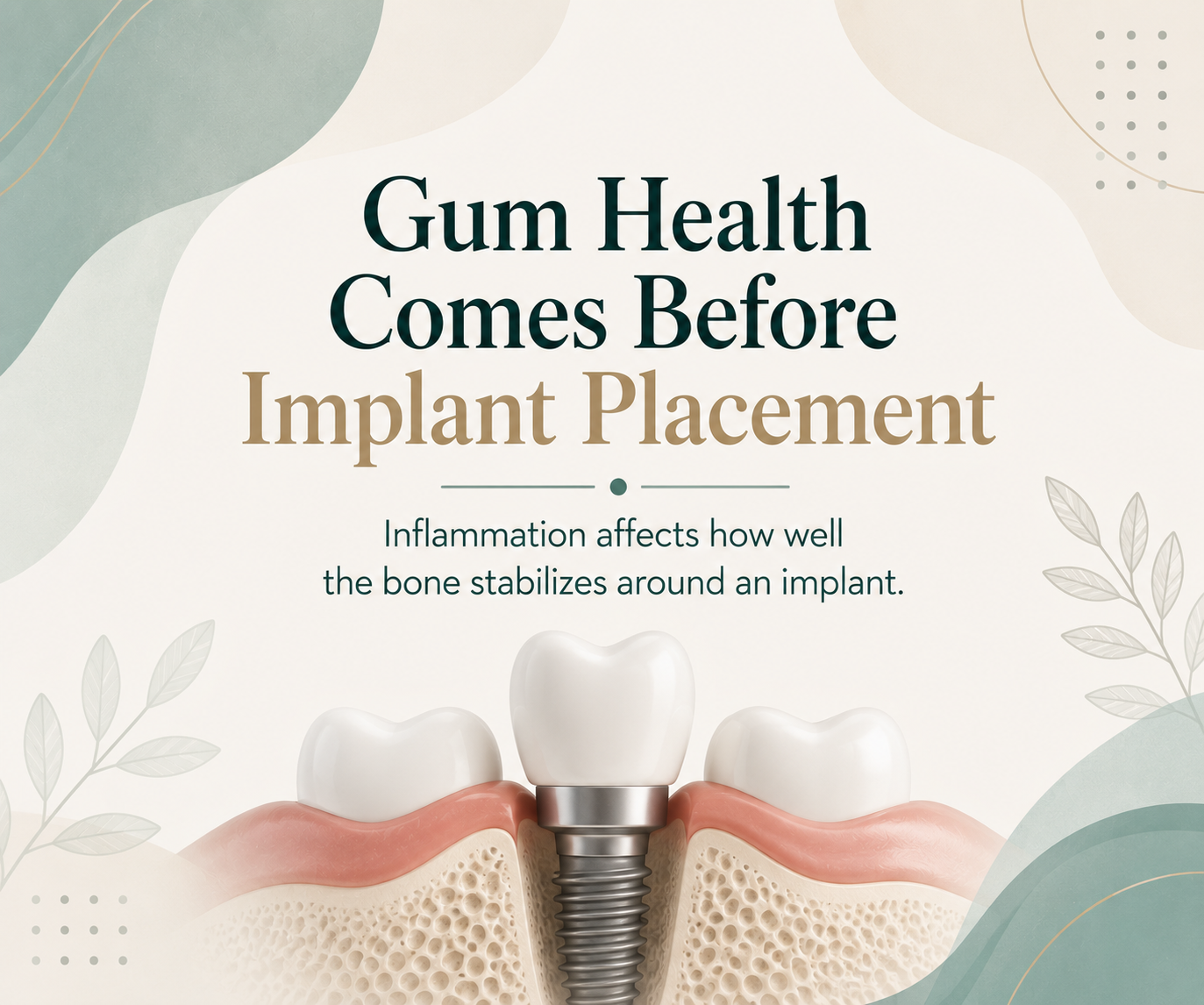
When someone decides to get a dental implant, the understandable instinct is to want it done — to get the tooth in and move on. So it can feel like a detour when the answer is, "First, we need to treat your gums."
But that sequence isn't a delay or an upsell. It's the difference between an implant that lasts for decades and one that runs into trouble. The foundation an implant sits in matters at least as much as the implant itself — and getting that foundation healthy first is one of the most important predictors of long-term success.
Here's why the order matters so much.
An Implant Is Only as Good as What Holds It
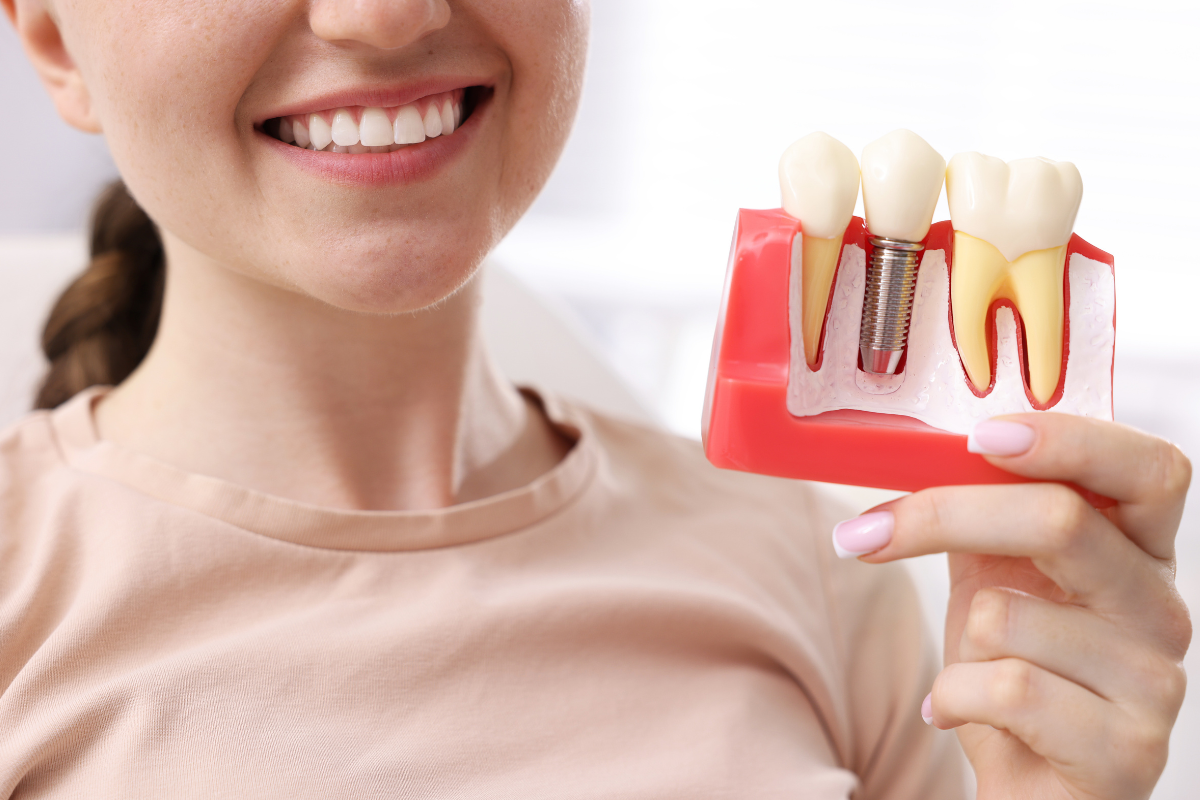
A natural tooth is anchored by the periodontal ligament — a layer of tissue that connects it to the bone. A dental implant has no such thing. It relies entirely on osseointegration: the direct fusion of the implant to the surrounding jawbone. That bond, and the health of the gum and bone around it, is the entire foundation of the implant.
This is why gum and bone health isn't a side consideration for implants — it's the main event. The implant is essentially a fixture set into living tissue, and the quality of that tissue determines whether the fixture stays solid. Placing an excellent implant into a compromised foundation is like setting a strong post into unstable ground. The post isn't the problem; what's holding it is.
What Active Gum Disease Does to an Implant
Gum disease — periodontitis — is a bacterial infection that inflames the gums and progressively destroys the bone that supports teeth. Placing an implant into a mouth where that infection is still active creates several serious problems.
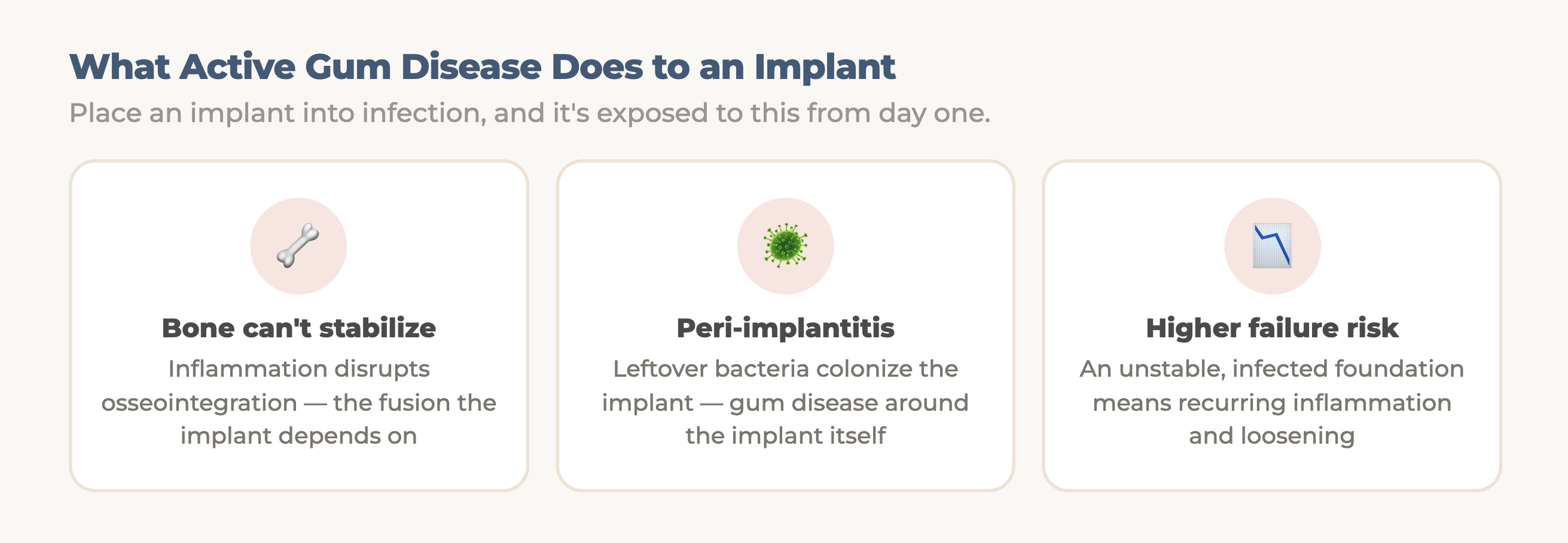
Bone can't stabilize properly.
Successful osseointegration requires healthy, stable bone that can bond with the implant surface. Active inflammation disrupts this process. The bone is under bacterial attack and inflammatory stress at exactly the moment it needs to be quietly fusing to the implant — undermining the integration the implant depends on.
The bacteria are still there.
The same bacteria that caused gum disease around natural teeth don't disappear when an implant is placed. They readily colonize the tissue around the new implant, leading to a condition called peri-implantitis — essentially gum disease around an implant. It inflames the surrounding tissue and destroys the supporting bone, and it's one of the leading causes of implant failure. An implant placed into an actively infected mouth is exposed to this risk from day one.
Recurring inflammation and higher failure risk.
The combined effect is an implant on an unstable, infected foundation — more likely to loosen, to develop chronic inflammation around it, and ultimately to fail. Much of this is preventable by resolving the infection before the implant goes in.
Why "It Looks Fine" Isn't Enough
One of the trickiest things about gum disease is how quietly it progresses. In its earlier and even moderate stages, it's frequently painless. The gums may look reasonably normal, and the person often has no symptoms they'd notice — even while bone loss is occurring beneath the surface.
This is exactly why a careful periodontal evaluation before implant planning is so important. "My gums feel fine" is not reliable evidence that they're healthy enough for an implant. The assessment goes beneath the visible surface: measuring the depth of the pockets around teeth, evaluating bone levels on X-rays, checking for bleeding and inflammation, and identifying active infection that isn't visible or symptomatic. Only that kind of evaluation can confirm the foundation is genuinely ready — or reveal that it needs treatment first.
The Right Sequence, and Why It Works
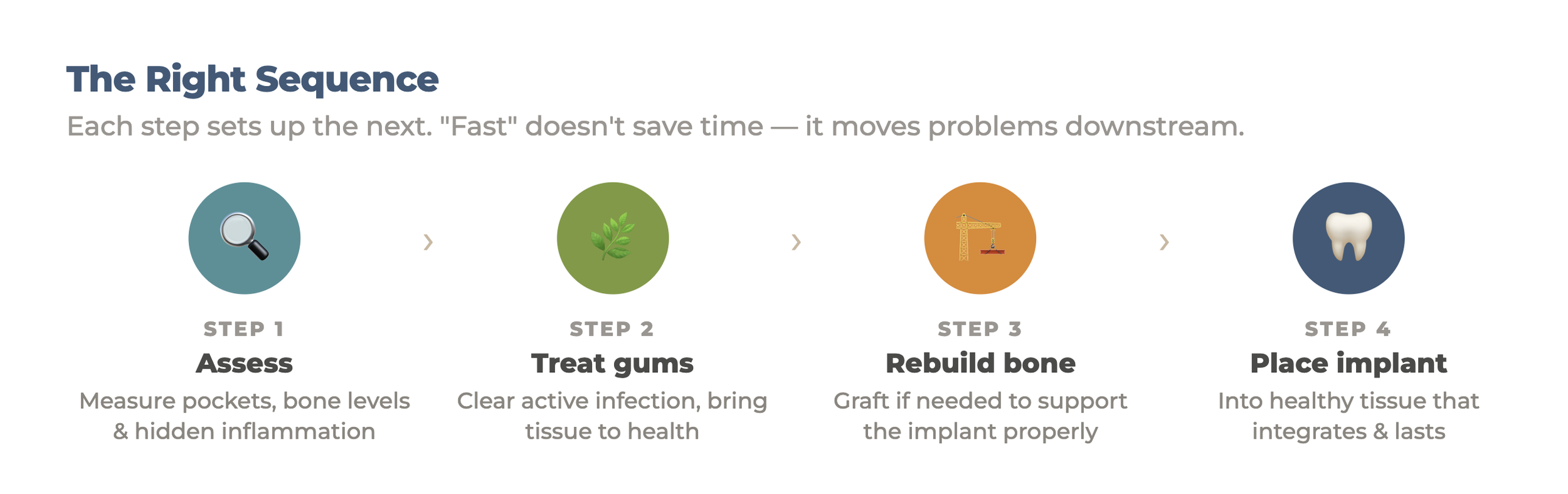
When gum treatment comes first, the whole process is built on a stable base. The typical sequence looks like this:
First, assess. A thorough periodontal evaluation establishes the real condition of the gums and bone — not the surface impression, but the measured reality.
Then, treat the gums. If active disease is found, it's addressed — through deep cleaning (scaling and root planing), improved home care, and in some cases more advanced periodontal treatment. The goal is to eliminate the active infection and bring the tissue to a stable, healthy state.
Then, rebuild the foundation if needed. Where gum disease has already destroyed bone, procedures like bone grafting may be needed to build back enough healthy bone to support the implant properly.
Then, place the implant. With the infection resolved and the foundation stable, the implant is placed into healthy tissue that can osseointegrate as it should — and be maintained for the long term.
Each step sets up the next. Skipping ahead to placement doesn't save time in any meaningful sense; it just moves the problems downstream, where they're harder and more expensive to fix.
Frequently Asked Questions
Do I need gum treatment before a dental implant?
If you have active gum disease, yes. An implant placed into infected, inflamed tissue is far more likely to fail. Treating the gum disease first creates the stable, healthy foundation the implant needs to integrate and last.
Can you get a dental implant if you have gum disease?
Not until the gum disease is treated and stabilized. Placing an implant into active periodontal infection significantly raises the risk of peri-implantitis and implant failure. Once the disease is controlled and the foundation is healthy, implant treatment can proceed.
What is peri-implantitis?
It's essentially gum disease around an implant — a bacterial infection that inflames the tissue and destroys the bone supporting the implant. It's a leading cause of implant failure, and pre-existing untreated gum disease is a major risk factor.
Why treat my gums if they feel fine?
Gum disease is frequently painless in its earlier and moderate stages, progressing invisibly while bone is lost beneath the surface. Feeling fine isn't reliable evidence of health — only a proper periodontal evaluation can confirm the foundation is ready for an implant.
Does treating gums first delay getting my implant?
It adds steps upfront, but it protects the outcome. Rushing to placement in an unhealthy mouth risks failure, which costs far more time and money than doing the sequence correctly the first time.
The Thing About Foundations
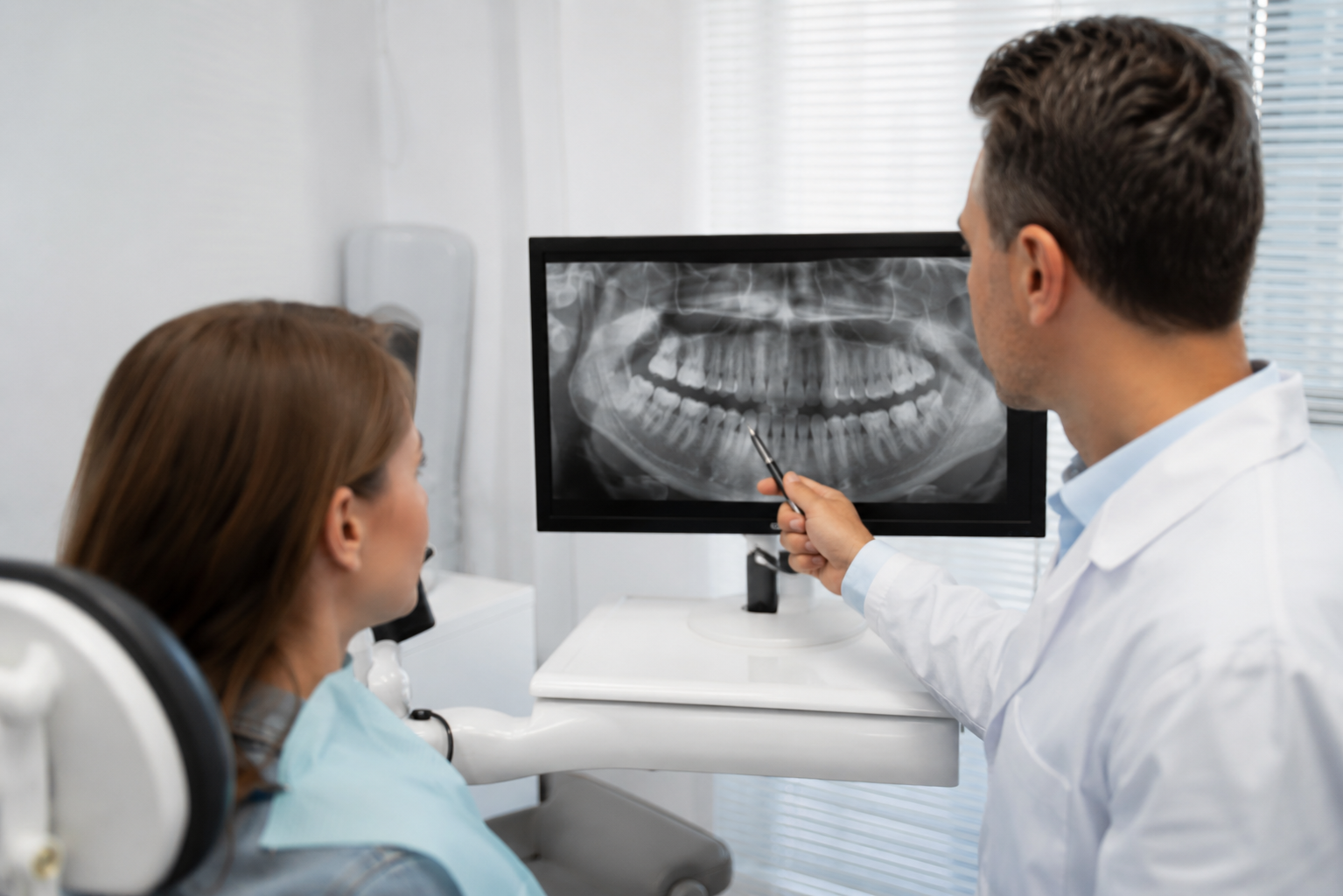
There's a reason you don't build on ground you haven't checked. The structure can be perfect, but if what's underneath it isn't sound, the whole thing is at risk — and the failure, when it comes, always traces back to the foundation, not the building.
Dental implants work the same way. The implant itself is reliable, well-understood technology. What determines its success is overwhelmingly the health of the gum and bone it's placed into. That's why the sequence isn't negotiable for a good long-term result: get the foundation healthy, then build on it.
If you're considering an implant, the best first step isn't the implant — it's an honest look at the gums and bone that will hold it. Give us a call, and we'll start where success actually starts.
📍 State Avenue Dental Office — Kansas City, KS (KCK) 🗣 English • Korean • Spanish