
Why Are My Teeth Suddenly Yellow?
It’s Not Always the Coffee — What’s Really Happening to Your Enamel
Your habits haven’t changed, but your teeth look noticeably more yellow than they used to. The instinct is to reach for a whitening strip. But here’s what most dental websites won’t tell you: not all yellowing is a stain. Some of it is a structural change happening inside your tooth — and whitening won’t fix that. In some cases, it can make things worse.
Two Different Problems That Look the Same
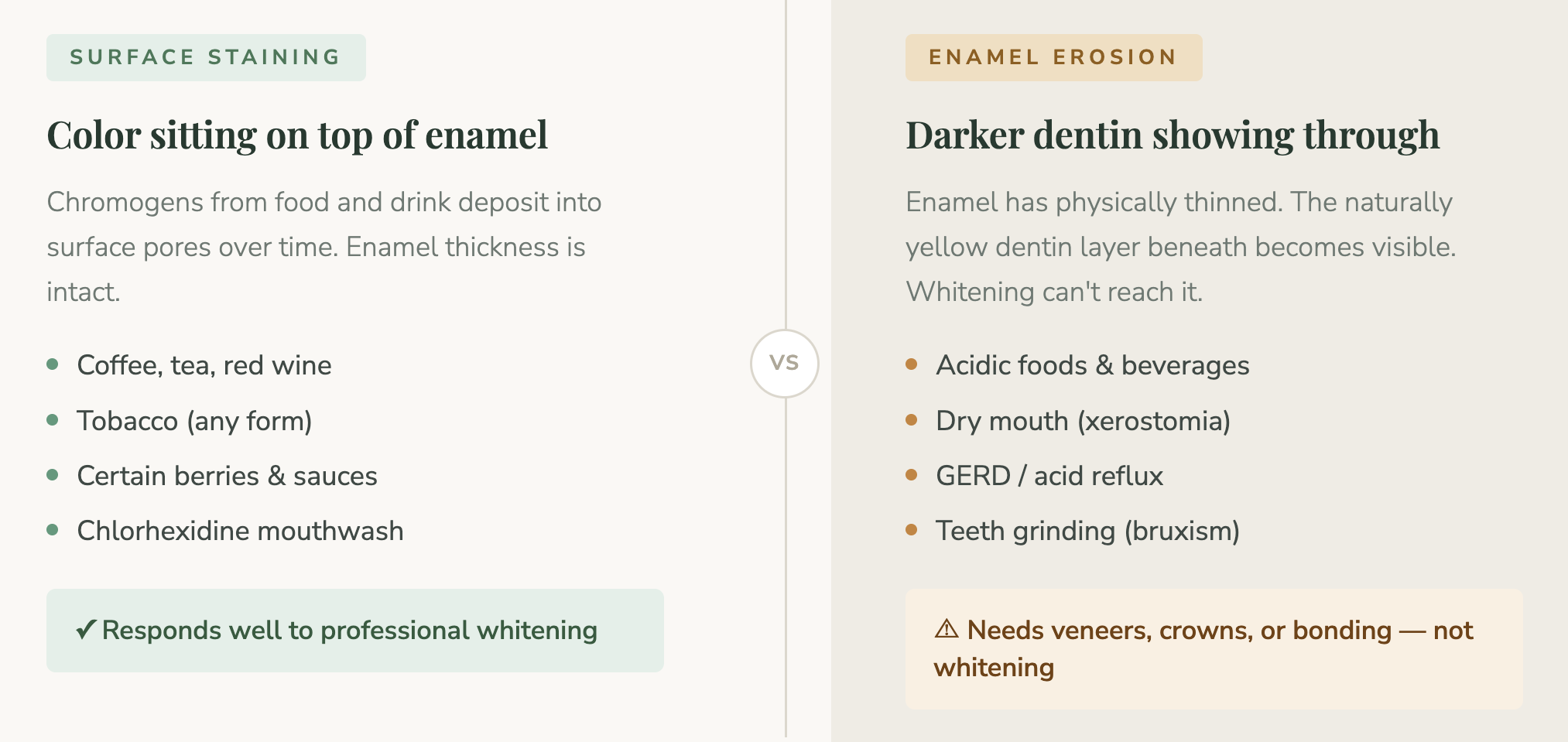
Your tooth has two layers that determine its color: enamel (the hard, semi-translucent outer shell) and dentin (the naturally darker layer underneath). When enamel is thick and healthy, it masks the dentin. When enamel thins — from acid, age, grinding, or dry mouth — the dentin starts to show through. That yellow is coming from inside the tooth, not the surface.
No whitening product can change dentin color. Whitening works on surface enamel only. If enamel is already thin, whitening increases sensitivity without delivering the result you’re expecting.
What Causes Enamel to Thin
Acidic foods and drinks. Sodas, energy drinks, citrus, and even sparkling water have low enough pH to gradually dissolve enamel. Don’t brush immediately after — acid temporarily softens enamel, and brushing accelerates the damage. Rinse with water first and wait 30 minutes.
Dry mouth. Saliva neutralizes acid and helps remineralize enamel. When it’s consistently low — from medications, mouth breathing, or dehydration — teeth erode faster. Antihistamines, antidepressants, and blood pressure medications are common culprits.
Acid reflux (GERD). Stomach acid with a pH of roughly 2 reaches your teeth, often during sleep. A characteristic erosion pattern on the inner surfaces of upper front teeth is something we can identify on exam.
Teeth grinding (bruxism). Mechanical wear flattens edges and shortens teeth. Often combined with acid erosion, which compounds the damage.
Natural aging. Enamel thins gradually over a lifetime of use. This is why teeth naturally look darker with age — it’s not entirely preventable, but it can be slowed.
Surface Staining: When Whitening Does Work
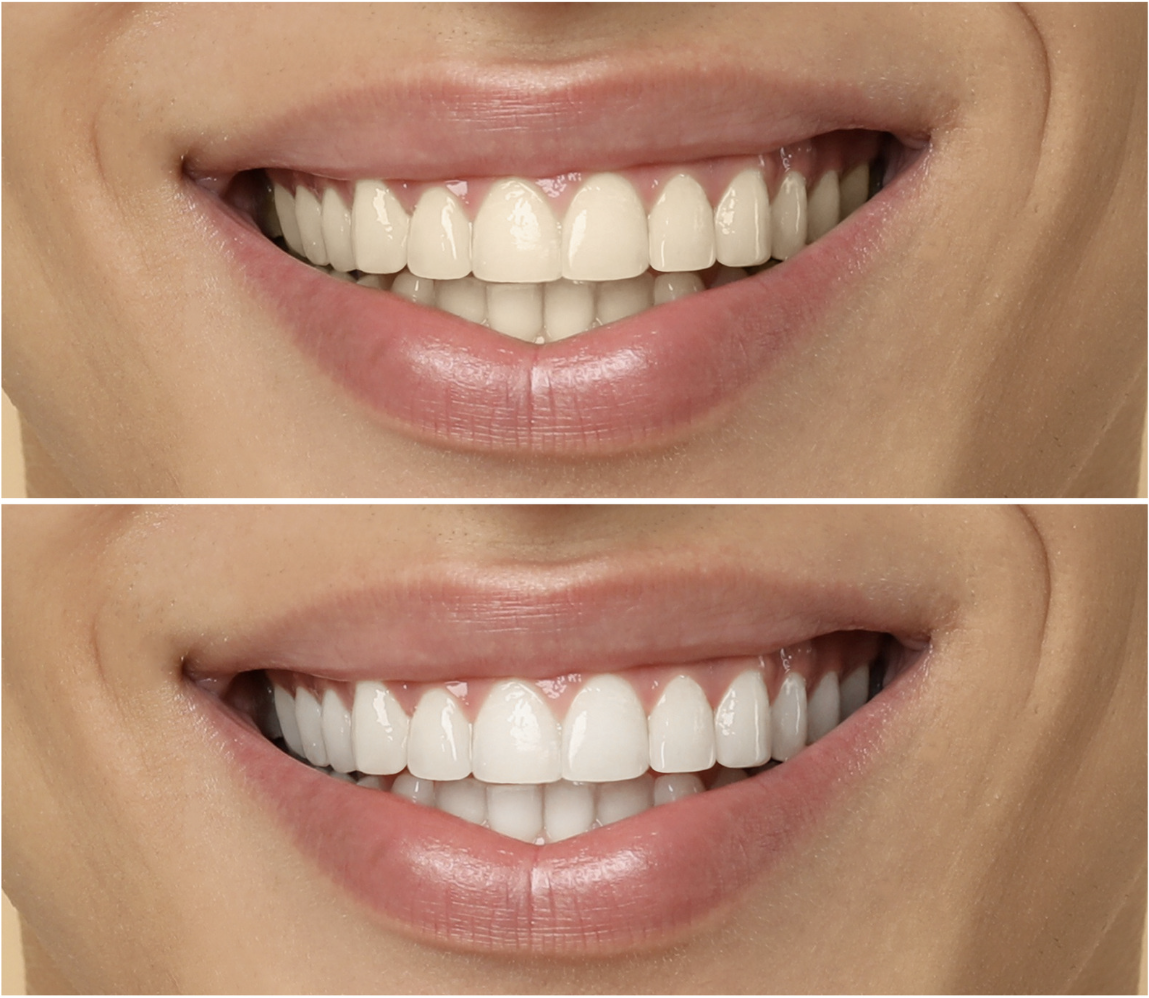
To be clear: surface staining is real, and it is very common. Coffee, tea, red wine, tobacco, certain berries, and even some mouthwashes (those containing chlorhexidine) deposit chromogenic compounds into the microscopic pores and surface irregularities of enamel over time.
Surface staining is the type of yellowing that whitening treatments address effectively. Professional bleaching, whether in-office or with custom take-home trays, can lighten staining by several shades with predictable results.
The key distinction: surface staining sits on or just within the outermost layer of enamel. Dentin show-through happens because the enamel itself is physically thinner. One responds to whitening. The other does not.
When Whitening Isn’t the Right Answer
This is the part we want every patient to understand before spending money on cosmetic treatment.
If your yellowing is primarily due to enamel thinning — not surface staining — whitening will deliver minimal cosmetic improvement at best. At worst, the hydrogen peroxide in whitening agents will penetrate through thin enamel and irritate the exposed dentin, causing significant sensitivity without the result you were hoping for.
In these cases, the more appropriate clinical path involves protecting and restoring the tooth surface first. That typically means:
Porcelain Veneers: Thin shells bonded to the front surface. They cover the existing tooth, provide a uniform new color, and protect remaining enamel from further erosion. Ideal when discoloration is internal, enamel is visibly thinned, or shape and color need correction simultaneously.
Dental Crowns: Full coverage when erosion or damage is more extensive. Matched to a natural shade, restoring both function and appearance.
Composite Bonding: For less extensive changes — minor discoloration, chips, or shape irregularities. Tooth-colored resin applied directly in a single visit. Less expensive than veneers, no lab work required.
How to Tell Which Type You Have
The only reliable way to know is a clinical exam. But these patterns point in the right direction:
Yellowing appeared gradually with no habit change → likely enamel thinning or age-related dentin show-through
Concentrated on specific teeth you know stain → likely surface staining
Sensitivity alongside the color change → strong signal for enamel erosion
Teeth look shorter or edges have worn down → enamel erosion, possibly combined with grinding
Whitening you tried had minimal effect → consistent with dentin show-through, not surface staining
What You Can Do Right Now

Even before you come in for an evaluation, there are practical steps that slow enamel erosion and support long-term tooth health:
Switch to a soft-bristled toothbrush and use gentle pressure. Aggressive brushing removes surface enamel over time. If you’re not sure how hard you’re brushing, an electric toothbrush with a pressure sensor takes the guesswork out.
Use a fluoride toothpaste. Fluoride helps remineralize early enamel softening and provides a degree of acid resistance. For patients with significant erosion risk, prescription-strength fluoride may be appropriate.
Rinse with water after acidic food or drinks. This neutralizes the pH quickly. Wait 30 minutes before brushing.
Stay hydrated. Adequate hydration supports saliva production, which is your mouth’s natural buffer against acid.
Address dry mouth proactively. If a medication is causing dry mouth, ask your physician about alternatives or mitigation strategies. Xylitol gum or lozenges can help stimulate saliva between meals.
Don’t skip your cleaning appointments. Professional cleanings remove surface staining and give us the opportunity to measure enamel levels over time and catch changes early.
Frequently Asked Questions
Why are my teeth yellow even though I brush regularly?
Brushing addresses surface staining but doesn’t prevent enamel thinning. If the yellowing is dentin showing through thinner enamel, brushing frequency won’t reverse it.
Can whitening damage my enamel?
On healthy enamel, whitening is safe. On already-thin enamel, the peroxide can penetrate more deeply and cause significant sensitivity without meaningful results. A clinical assessment before whitening is worth doing.
How do I know if I need veneers or just whitening?
Key factors: Is the yellowing from the surface or from within? Is there enamel thinning or sensitivity? These require a clinical exam. We’re happy to give you a clear answer at a consultation.
Does insurance cover veneers?
Purely cosmetic veneers generally aren’t covered. However, when restorations are clinically indicated — due to erosion or structural compromise — coverage may apply. We’ll check your specific plan.
A Note from Our Practice
We’ve been a dentist in Kansas City, Kansas since 2003. One of the most common things we see: patients who’ve spent money on whitening that didn’t work — not because whitening doesn’t work, but because it wasn’t the right tool for what was actually happening.
Tooth color change is a signal worth paying attention to. Give us a call — we’ll take a real look and tell you exactly what’s going on.
📍 State Avenue Dental Office — Kansas City, KS (KCK) 🗣 English • Korean • Spanish