
Do I Need to Go to the Dentist If Nothing Hurts?
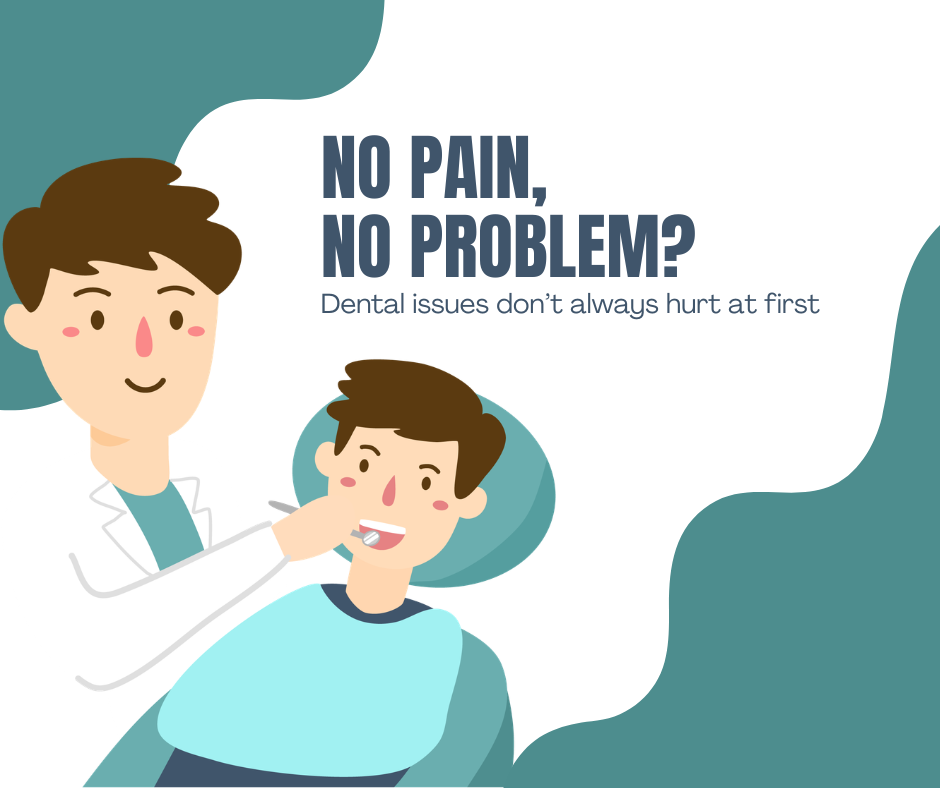
It's one of the most reasonable questions we hear — and honestly, one of the most important ones to get right: "Everything feels fine. Do I really need to come in?"
The short answer is yes. The longer answer is worth understanding, because it changes the way most people think about dental care entirely.
The Quiet Problem With "No Pain"
Here's something that surprises a lot of patients when we explain it: the most common dental conditions — gum disease, early cavities, hairline cracks in enamel — produce little to no pain in their early stages. Not a little discomfort. Genuinely nothing.
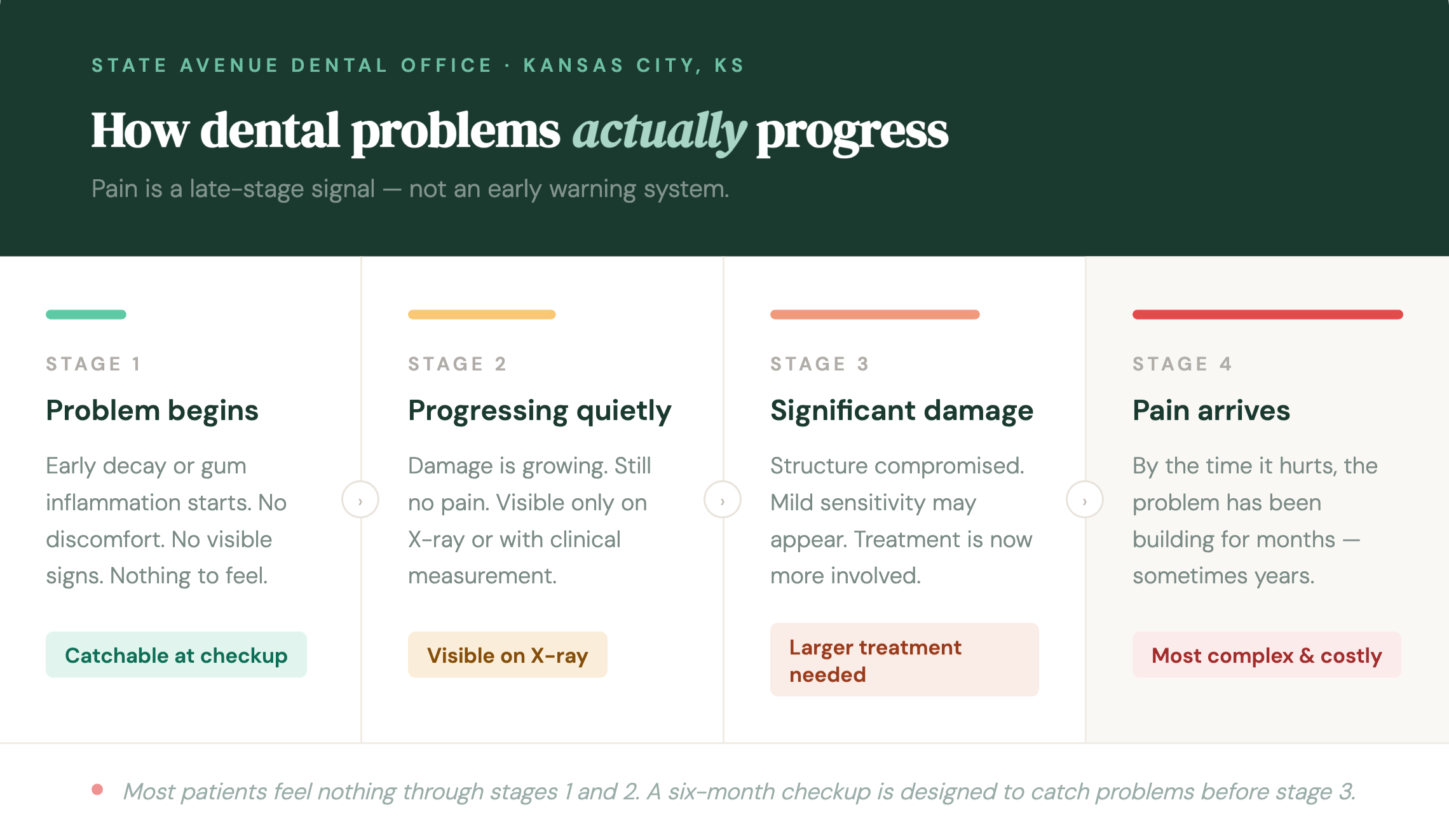
Pain, when it finally arrives, is not the beginning of a problem. It's usually a signal that something has been building for a while and has now crossed a threshold your nervous system can't ignore.
By that point, a cavity that could have been caught and filled with a simple restoration may now require a crown. Gum disease that could have been managed with a cleaning and some habit adjustments may now require more intensive treatment. A crack that could have been monitored or protected with a crown may now have propagated to the point of fracture.
In dentistry, time is not neutral. Untreated problems don't stay the same size — they grow.
What's Actually Happening Between Your Visits
Your mouth is a dynamic environment. Bacteria, dietary acids, bite forces, and the slow wear of daily use are all acting on your teeth and gums continuously — whether you feel it or not.
Gum disease (periodontal disease) is one of the most instructive examples. In its early stage — gingivitis — the gums may bleed slightly when you brush, but cause no pain whatsoever. Most people either don't notice or dismiss it. Left unaddressed, gingivitis progresses to periodontitis, which involves active bone loss around the roots of the teeth. Bone loss is irreversible. And it happens silently, over months and years, until the structural support for your teeth is meaningfully compromised.
Early cavities work similarly. Enamel doesn't have nerve endings, so the initial demineralization process produces no sensation. The cavity has to reach the dentin — the inner layer of the tooth — before sensitivity begins. By then, it's already a moderately sized restoration. And if it reaches the pulp (the nerve), you're looking at a root canal.
Craze lines and hairline cracks are another common silent issue. Teeth develop micro-fractures from grinding, chewing hard foods, or thermal expansion over time. These cracks are often invisible to the naked eye and painless until they either worsen or create pathways for bacteria to enter the tooth. An exam with proper lighting and magnification can catch them before they become something bigger.
The point isn't to alarm you. It's to give you an accurate picture of why the absence of pain doesn't mean the absence of a problem.
What a Dental Exam Actually Does
A comprehensive dental checkup isn't just a tooth cleaning with a quick look-around at the end. It's a structured clinical assessment designed to catch things you can't see or feel.
At State Avenue Dental Office, a routine exam includes:
Periodontal charting — We measure the depth of the space between your gums and teeth at multiple points around every tooth. Healthy pockets are 1–3mm. Deeper pockets indicate gum disease activity. These measurements give us a baseline to track over time — changes between visits are often more informative than any single snapshot.
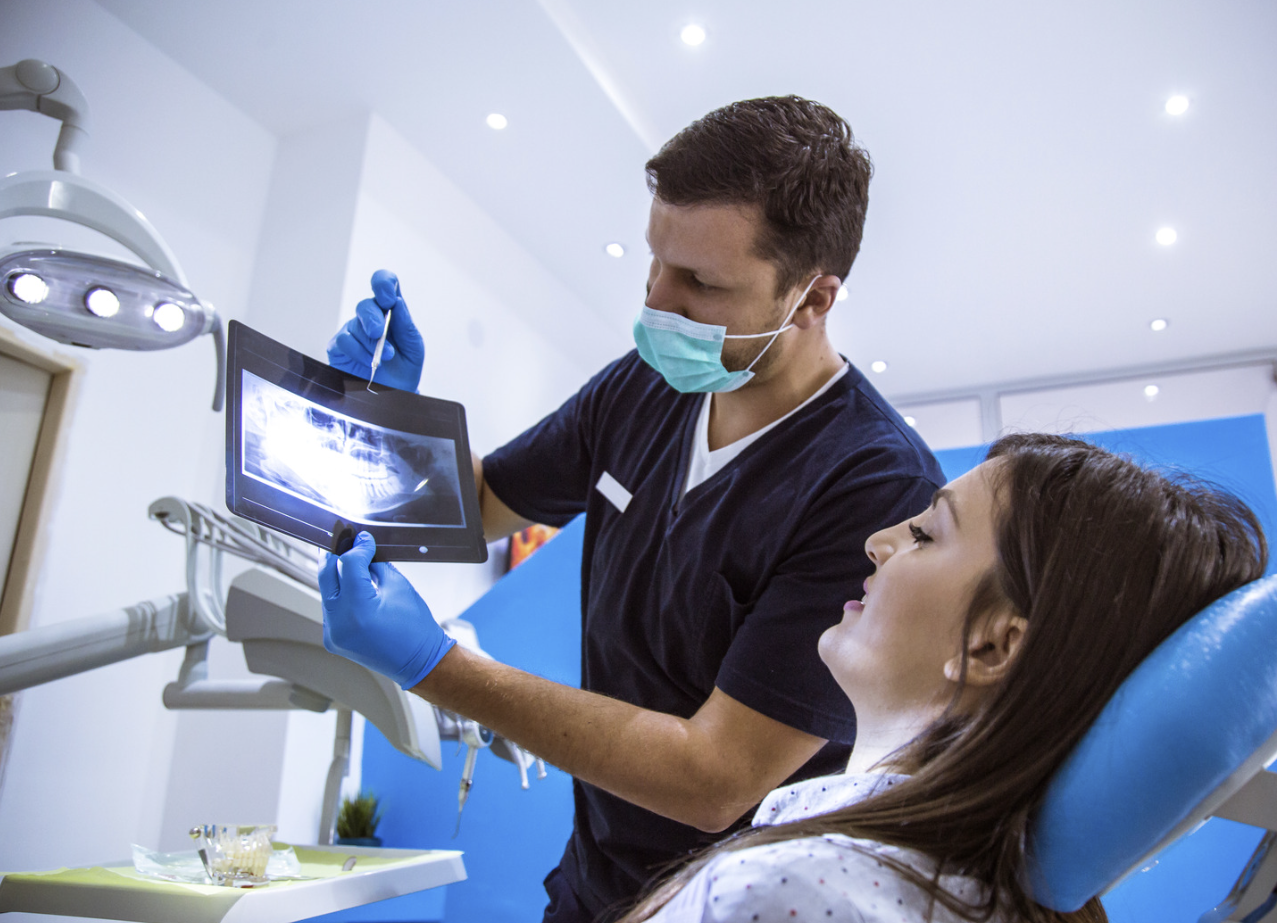
Digital X-rays — Radiographs reveal decay between teeth (where neither you nor we can see directly), bone levels, root conditions, and changes in tooth structure that aren't visible on the surface. We use low-dose digital X-rays that expose patients to a fraction of the radiation of traditional film.
Oral cancer screening — We examine the soft tissues of the mouth, throat, and neck at every comprehensive exam. Oral cancer has a high survival rate when caught early and a significantly worse prognosis when caught late. This takes about two minutes and costs nothing extra.
Bite and occlusion assessment — How your teeth come together affects wear patterns, jaw health, and the longevity of any dental work you have. Uneven bite forces often fly under the radar until they've caused noticeable damage.
Monitoring existing restorations — Fillings, crowns, and other restorations have a lifespan. A restoration that's beginning to fail can be identified and addressed before it creates a bigger problem — like decay underneath a failing crown.
The Real Cost of Waiting

We understand that dental visits take time, cost money, and aren't most people's idea of a good afternoon. But the math tends to work in favor of coming in regularly.
A preventive cleaning and exam, caught early, is typically covered significantly by dental insurance and costs a fraction of what restorative treatment costs. A filling costs considerably less than a crown. A crown costs considerably less than an implant. And gum disease managed in its early stages costs considerably less — in time, money, and discomfort — than advanced periodontal treatment.
Preventive dentistry isn't just better for your mouth. It's better for your budget.
How Often Should You Actually Come In?
For most healthy adults: every six months. That interval is calibrated to the rate at which plaque mineralizes into tartar (which can't be removed with a toothbrush) and the pace at which early problems develop and progress.
Some patients benefit from more frequent visits — typically every three to four months. This includes people with a history of gum disease, patients who are prone to cavities, those with conditions like diabetes that affect oral health, pregnant women, and people undergoing orthodontic treatment.
Your recall interval isn't one-size-fits-all. It should be based on your specific clinical picture — and it's something we discuss with every patient at their exam.
Frequently Asked Questions
Can I really have a cavity with no pain at all? Yes — and it's more common than most people realize. Enamel has no nerve supply, so decay progressing through the outer layer produces no sensation. Pain typically begins only when decay reaches the dentin or pulp, at which point the cavity is already moderately to severely advanced.
Can gum disease have no symptoms? Absolutely. Early-stage gum disease often produces no pain and minimal visible changes beyond some gum redness or slight bleeding when brushing — signs that many people dismiss or don't notice. Advanced gum disease can still be relatively asymptomatic until teeth begin to loosen. Regular periodontal charting is how we catch it early.
What if I've gone years without a checkup? Come in. There's no judgment here — it's one of the most common situations we see. What matters is getting a current clinical picture so we know exactly what's going on and can make a plan accordingly. Starting is always better than continuing to wait.
How do I know if my dental checkup is thorough enough? A thorough checkup should include X-rays at appropriate intervals, periodontal measurements, an oral cancer screening, and a full clinical exam — not just a look at your teeth. If you're unsure what your exam includes, it's completely reasonable to ask.
What Twenty Years in Kansas City Actually Teaches You
Two decades in Kansas City teaches you one thing pretty clearly: the patients who end up with the least dental work are usually just the ones who showed up before anything hurt, before anything broke, before the decision got made for them.
We've seen the other side too — people who came in when something finally forced them to. No judgment. But there's almost always a harder conversation to be had, and a more complicated path forward.
That's the actual reason we talk about preventive care. Not because it's the responsible thing to say, but because we've watched it play out both ways long enough to know which one we'd rather help you with.
If it's been a while, give us a call. We'll tell you exactly what we see and figure out the most realistic path from there.
📍 State Avenue Dental Office — Kansas City, KS (KCK) 🗣 English • Korean • Spanish