
Skin Boosters in Kansas City: What They Are, Who They're For, and Why a Dentist Does Them
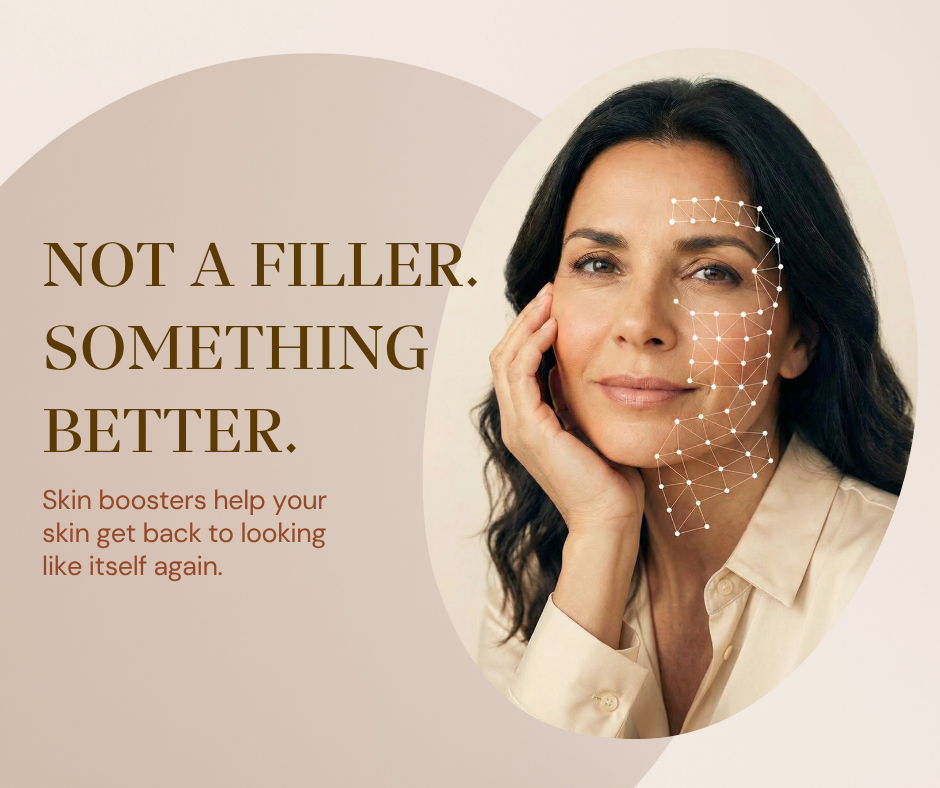
The term "skin booster" gets used a lot in aesthetic conversations, and not always accurately. It tends to get lumped in with fillers, Botox, and other injectables as if they're all variations on the same thing. They're not — and understanding the difference matters, both for setting the right expectations and for making sure you're working with the right provider.
Let's start with what a skin booster actually is, then talk about why a dental office is a genuinely sound place to have one done.
Skin Boosters vs. Fillers: A Distinction Worth Understanding
Traditional dermal fillers are designed to add volume. They're used to restore fullness to areas that have lost it — cheeks, lips, under-eye hollows — by physically filling space beneath the skin. Results are visible and immediate.
Skin boosters work differently, and that difference is significant.
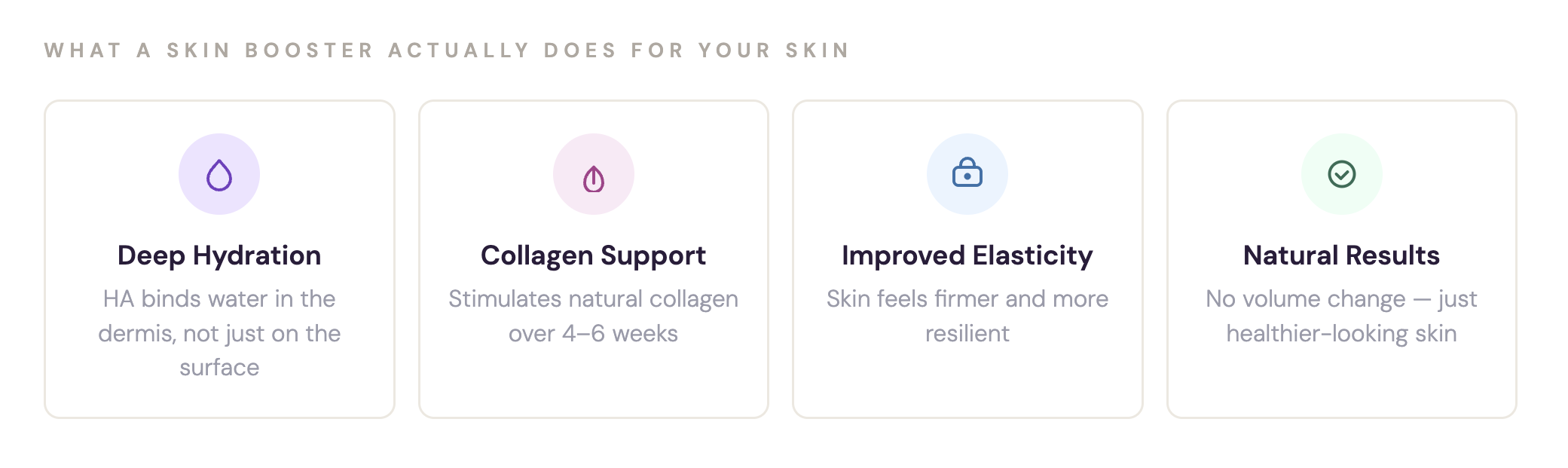
Rather than adding structure or volume, skin boosters — most commonly formulated with low-concentration hyaluronic acid — are injected in small amounts across a treatment area to restore hydration at the dermal level. Hyaluronic acid is a molecule naturally present in the skin that holds moisture, supports collagen, and gives skin its plumpness and resilience. As we age, its concentration decreases. Environmental exposure, stress, and hormonal changes accelerate that decline.
A skin booster doesn't reshape the face. It rehydrates the tissue from within, improving skin quality, elasticity, and surface texture in a way that looks — and is — natural. The result isn't "I had something done." It's "You look well-rested. Did you change something?"
Who Skin Boosters Are Actually For
Skin boosters are particularly well-suited for patients who:
Notice their skin looking dull, dry, or lacking the glow it once had
Are seeing fine lines — especially around the eyes, mouth, and forehead — that feel more about dehydration than structural volume loss
Want visible improvement without the recovery time, dramatic change, or significant downtime associated with more intensive procedures
Are in their 30s, 40s, or 50s and looking for maintenance rather than correction
Have been through a period — pregnancy, postpartum recovery, extended stress, illness — during which self-care genuinely took a back seat
That last point deserves a moment. A significant portion of patients who seek out skin boosters are mothers — women who spent months or years prioritizing everyone else's needs and are now, perhaps for the first time in a while, thinking about how they feel in their own skin. The appeal isn't dramatic transformation. It's restoration. Looking like themselves again, but rested. That's a meaningful distinction, and it shapes how we approach every consultation.
What the Treatment Actually Involves
A skin booster session typically takes 30 to 45 minutes. After a topical numbing cream is applied, the product is administered through a series of small, precise injections distributed across the treatment area — most commonly the face, neck, or décolletage, depending on the patient's goals.
The injections use fine-gauge needles, and most patients report minimal discomfort. Mild redness or swelling at injection sites is normal and typically resolves within 24 to 48 hours. There's no significant downtime — most patients resume normal activities the same day.
Results timeline: Some improvement in skin texture and hydration is noticeable within the first week. Optimal results develop over 4 to 6 weeks as the hyaluronic acid integrates with the surrounding tissue and stimulates collagen production. A single session produces meaningful improvement; a series of two to three treatments spaced a month apart tends to produce the most sustained results.
How long it lasts: With proper maintenance, results typically last 6 to 12 months. Patients with very dry skin, significant sun damage, or high levels of physical stress may find the effects shorter-lived in the first cycle, improving with subsequent treatments.
Why a Dental Office Is the Right Place for This

This is where things get interesting — and where we want to be genuinely transparent rather than just reassuring.
The short answer: dentists are facial anatomy specialists. That's not a marketing claim. It's the actual scope of the training.
Every day, a dentist works with the nerves, muscles, bone structure, and soft tissue of the face — particularly around the mouth and jaw. We understand how the muscles of facial expression move, how the structures beneath the skin relate to one another, and how the bite, jaw alignment, and facial balance all interact. When we evaluate a face, we're doing so with a functional and structural understanding that most surface-level aesthetic providers don't have.
This matters most in the areas where skin boosters are commonly placed: the perioral region (around the mouth), the jawline, and the mid-face. These zones contain critical anatomical structures — nerves, blood vessels, salivary glands — where the consequences of imprecise placement can be serious. The anatomy we work with every day in clinical dentistry is the same anatomy that determines the safety of any facial injection.
At State Avenue Dental Office, aesthetic treatments like skin boosters are not an add-on service or a revenue diversification. They are a clinical extension of how we think about facial health — function, balance, and appearance as a unified picture.
The K-Beauty Connection: Why This Approach Resonates
Skin boosters have deep roots in Korean aesthetic medicine — the same tradition that gave rise to what the global beauty industry now calls K-Beauty. In Korean dermatology and aesthetic practice, skin hydration and texture have long been prioritized over structural intervention, reflecting a philosophy that natural, healthy-looking skin is the foundation of every other aesthetic decision.
At State Avenue Dental Office, we serve a significant Korean-American patient population, and many of our patients have experience with skin care approaches that emphasize skin health over dramatic transformation. Skin boosters align naturally with that philosophy — and we're able to have those conversations in Korean, with a shared cultural understanding of what "looking healthy" means versus "looking done."
Frequently Asked Questions
What's the difference between a skin booster and a filler? Fillers add volume and structure. Skin boosters restore hydration and improve skin quality from within. A filler changes the shape of an area; a skin booster improves the quality of the skin across an area. Many patients benefit from both, depending on their specific concerns.
Does it hurt? Most patients describe minimal discomfort. A topical numbing cream is applied before treatment, and the injections use fine-gauge needles. Mild soreness, redness, or small bumps at injection sites are normal and typically resolve within 24 to 48 hours.
How is this different from drinking more water or using a good moisturizer? Topical moisturizers and hydration affect the very surface of the skin. Skin boosters deliver hyaluronic acid to the dermal layer — beneath the surface — where it can actually bind and hold water within the tissue, stimulate collagen, and improve elasticity over time. The two approaches complement each other but aren't substitutes.
Am I a candidate for skin boosters? Most healthy adults with concerns about skin dryness, texture, or early fine lines are candidates. Skin boosters are not appropriate during pregnancy or breastfeeding, or for patients with certain skin conditions or active infections. A consultation gives us the information to make that determination accurately.
Why shouldn't I just go to a med spa? You can — and there are excellent providers at med spas. What we offer that's different is the depth of anatomical knowledge that comes with dental training, combined with a clinical framework that looks at facial aesthetics in the context of your entire facial structure. For treatments placed around the mouth and jawline specifically, that context is genuinely valuable.
Why We Do This
We didn't add skin boosters to be a full-service spa. We added them because patients kept asking — and because the anatomy we work with every day as dentists makes us genuinely well-positioned to offer them responsibly.
But the real reason it resonates is simpler. A lot of the people who come in for this aren't looking for a dramatic change. They just want to look in the mirror and feel like themselves again — rested, present, themselves. After years of showing up for everyone else, that's not a small thing.
That's what skin boosters, done well, can offer. Not transformation. Restoration.
If you're curious whether it's right for you, give us a call.
📍 State Avenue Dental Office — Kansas City, KS (KCK) 🗣 English • Korean • Spanish