
It's a fair question, and one we genuinely like getting: "If I'm brushing twice a day and flossing, why do I still need to come in every six months?" It can sound like the professional cleaning is just a formality for people who don't take care of their teeth at home.
It isn't. Home care and dental care aren't two versions of the same thing, where doing one well lets you skip the other. They do genuinely different jobs — and understanding what each one actually accomplishes makes it clear why you need both. Let's start somewhere unexpected: the back of your toothpaste tube.
Reading the Back of the Toothpaste Tube
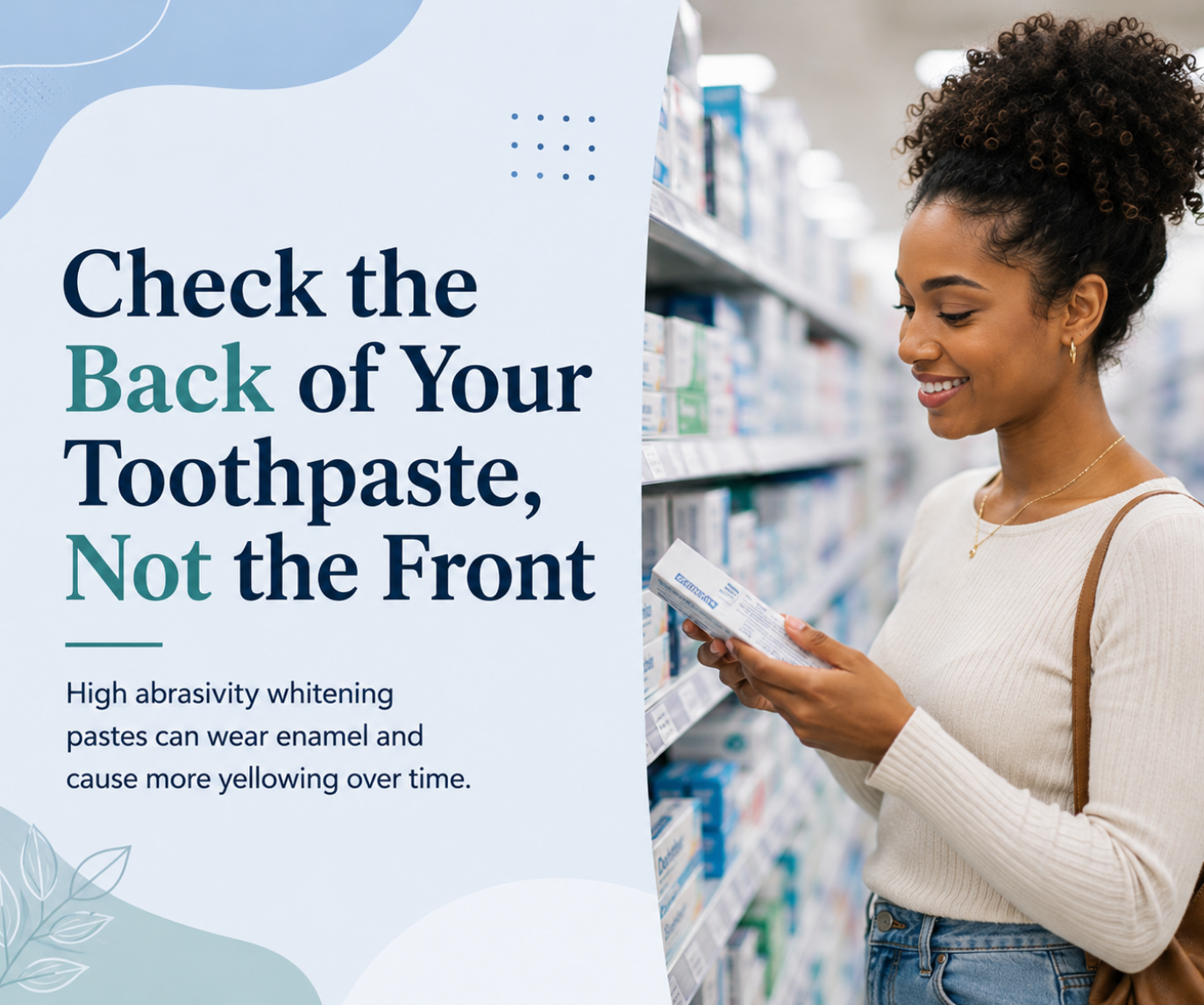
Most people choose toothpaste based on the front of the box — the big promises about whitening, freshness, or protection. The more useful information is on the back, in the ingredient list. A few things are worth checking.
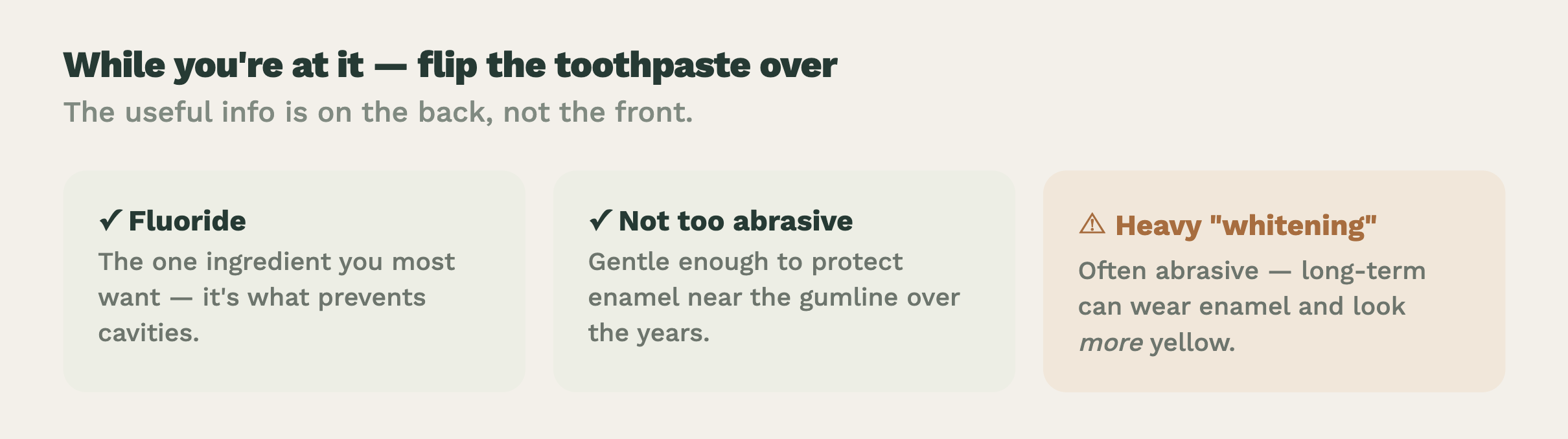
Fluoride. This is the single most important ingredient for cavity prevention. Fluoride strengthens enamel and helps it resist decay, and it's the one thing you most want to confirm is present. A toothpaste without it is missing its most protective feature.
Abrasiveness. Toothpaste cleans partly through mild abrasion, but the degree matters. A product that's too abrasive can, over years of use, wear down enamel — especially near the gumline. This is worth paying attention to, particularly with one specific category.
Ingredients matched to your needs. If you have sensitivity, look for a toothpaste formulated for it, with ingredients that address the issue rather than working against it. The right formulation for your situation matters more than the boldest claim on the front.
The Whitening Toothpaste Trap
This deserves its own mention, because it's a common and counterproductive mistake. Many toothpastes that heavily emphasize whitening achieve part of that effect through higher abrasiveness — essentially scrubbing surface stains away more aggressively.
In the short term, this can make teeth look a little brighter. But over the long term, it can backfire in a specific way. As the abrasive wears down the enamel surface, it thins that outer layer — and the layer beneath enamel, the dentin, is naturally yellow. So the very product being used to whiten can, with extended use, make teeth appear more yellow as thinning enamel lets more of the dentin's color show through. It's a case where chasing a cosmetic quick-fix can undermine the thing you were trying to improve.
What Home Care Actually Does
Here's the key concept that clears up the whole home-versus-professional question: brushing and flossing exist primarily to remove the bacterial film — plaque — that forms fresh on your teeth every single day.
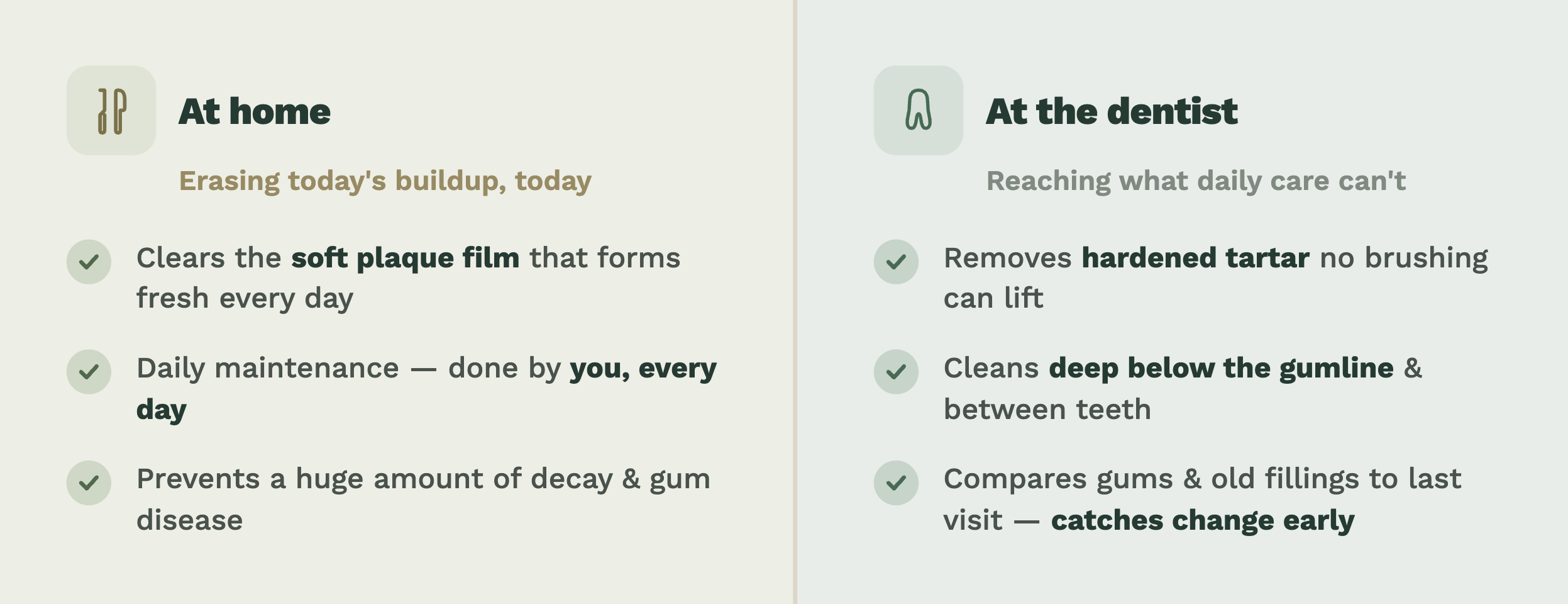
Plaque is constantly reforming. It builds up as a soft film throughout the day, and daily brushing and flossing clear it away before it can do damage. This is essential, effective, and genuinely important work — but notice its nature: it's about handling today's buildup, today. Home care is maintenance against a daily process, and it has to be done daily precisely because the plaque comes back daily.
Done well, this prevents an enormous amount of dental disease. But there's a specific and important limit to what it can reach.
What Home Care Can't Reach — and Professional Care Handles
The limit is this: once plaque is left undisturbed long enough, it hardens into tartar (calculus) — a mineralized deposit bonded firmly to the tooth. And hardened tartar cannot be removed by brushing or flossing, no matter how diligent you are. It requires professional instruments to remove.
This is the heart of why professional cleaning isn't optional. There are places daily home care simply can't fully address: tartar that has already hardened, deep areas below the gumline, and certain spots between teeth that resist even good flossing. Tartar left in place continues to harbor bacteria, driving gum inflammation and disease. A professional cleaning removes exactly what home care can't — resetting the surfaces so your daily routine can keep them healthy.
But a checkup is more than a cleaning, and this is the part people most often overlook. A regular visit is also an assessment over time. It's the opportunity to compare your gums to how they were last visit — catching recession or inflammation early — and to check whether older dental work has changed: a filling margin starting to break down, a crown showing wear, an area that needs watching. That comparison against your own history is something home care, by its nature, can't provide.
Why Neither One Replaces the Other
The relationship between the two is the whole point: they're complementary, not interchangeable.
Home care handles the daily battle against fresh plaque — the frequent, ongoing maintenance that professional care can't do for you, because it happens every day and you're the only one there. Professional care handles what accumulates despite good habits and monitors the bigger picture over time — the hardened deposits, the hidden areas, the slow changes — which home care can't reach no matter how good your technique.
Skip the home care, and plaque wins the daily battle between visits. Skip the professional care, and tartar and slow changes accumulate unaddressed. Neither substitutes for the other, and the gap left by skipping either one is exactly where problems develop. It's the combination — diligent daily habits plus regular professional care — that actually keeps teeth healthy for the long run.
Frequently Asked Questions
Why go to the dentist if I brush and floss well?
Because home care and professional care do different jobs. Brushing and flossing remove daily plaque, but they can't remove hardened tartar, reach deep below the gumline, or assess changes over time. Professional cleanings handle what home care physically can't, and checkups monitor your gums and existing dental work.
What can a dentist do that home care can't?
Remove hardened tartar that's bonded to the teeth, clean deep below the gumline and between teeth where brushing can't reach, and compare your gums and existing dental work against previous visits to catch changes early. These are physically impossible to accomplish with a toothbrush and floss alone.
How do I read a toothpaste label?
Look at the ingredient list on the back rather than the claims on the front. Confirm it contains fluoride for cavity prevention, check that it isn't excessively abrasive, and if you have sensitivity, choose one formulated to address it.
Is whitening toothpaste bad for your teeth?
Some whitening toothpastes rely on higher abrasiveness to scrub away stains. Short-term this can brighten teeth, but long-term it can wear down enamel — and because the dentin beneath is yellow, thinning enamel can eventually make teeth look more yellow, not less.
How often should I get a professional cleaning?
For most people, every six months, though some benefit from more frequent visits depending on their gum health and risk factors. Your dentist can recommend the right interval for your specific situation.
The Thing About Two Halves of One Job
It's tempting to think of dental care as a single task you can do either at home or at the dentist — as if they're competing options and doing one well earns you a pass on the other. But they were never the same job. One is the daily work of staying ahead of fresh plaque; the other is removing what daily care can't and watching how things change over time. Each covers exactly what the other can't.
That's why the honest answer to "why come in if I take good care of my teeth at home?" is: because you take good care of them at home — and that care does its half of the job beautifully, which is precisely why the other half is worth completing. The two together are what let people keep their natural teeth, healthy, for as long as possible.
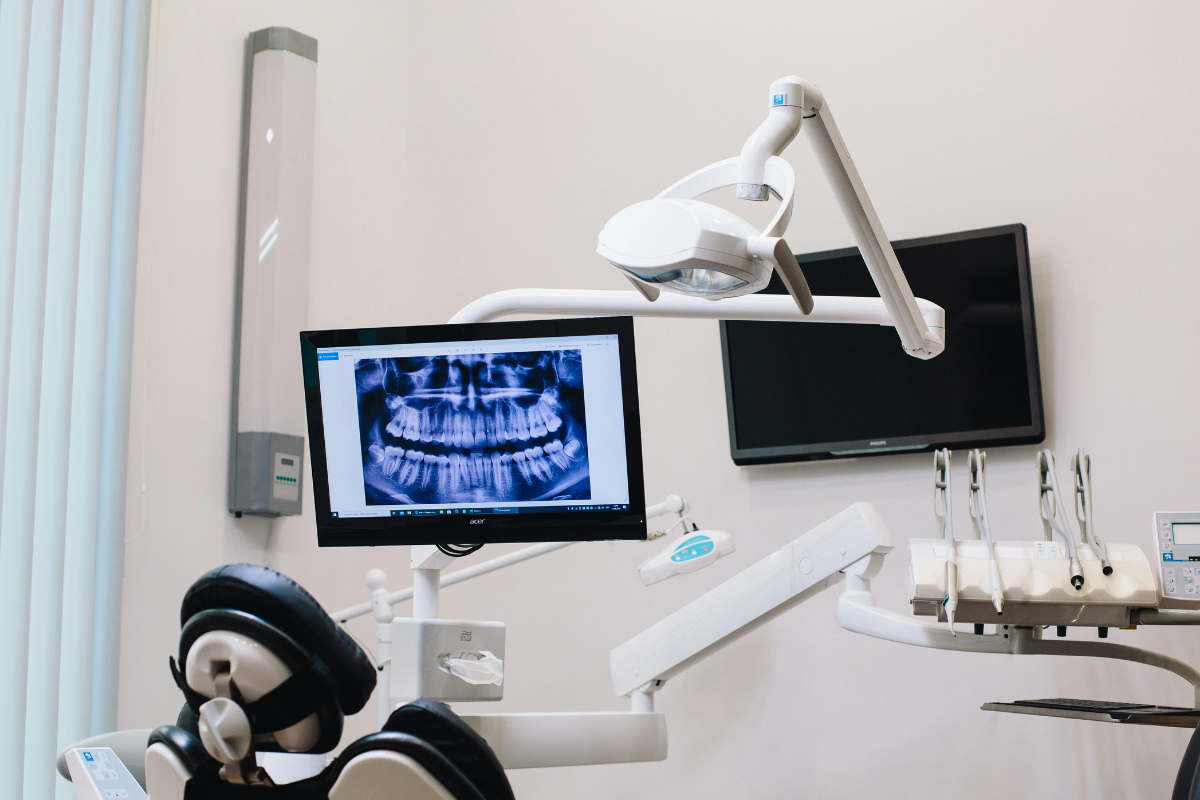
If it's been more than six months since your last cleaning, your daily habits have been doing their half of the work this whole time. Give us a call, and we'll take care of the other half.
📍 State Avenue Dental Office — Kansas City, KS (KCK) 🗣 English • Korean • Spanish