
The Ice-Chewing Habit Is More Dangerous Than You Think
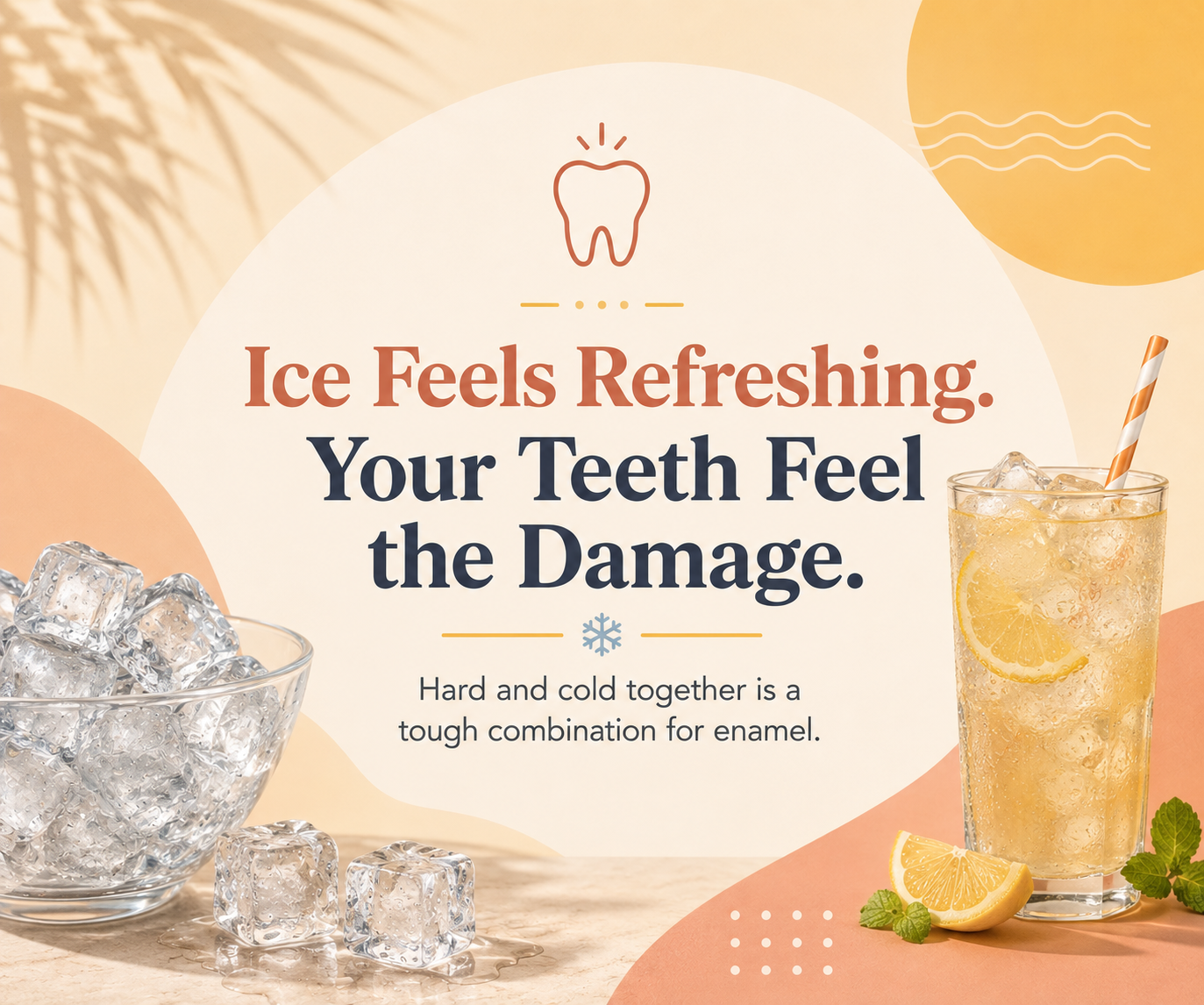
It's one of the most common habits we see, and one of the most underestimated. You finish a cold drink, there's a little ice left at the bottom, and almost without deciding to, you start crunching it. It's satisfying, it's refreshing, and it seems completely harmless.
From your teeth's point of view, it's anything but. Chewing ice is one of the more damaging everyday habits for teeth — and because the damage builds up quietly over a whole summer of iced drinks, most people never connect the habit to the problem it eventually causes. Here's what's actually happening every time you crunch.
Why Ice Is Uniquely Hard on Teeth
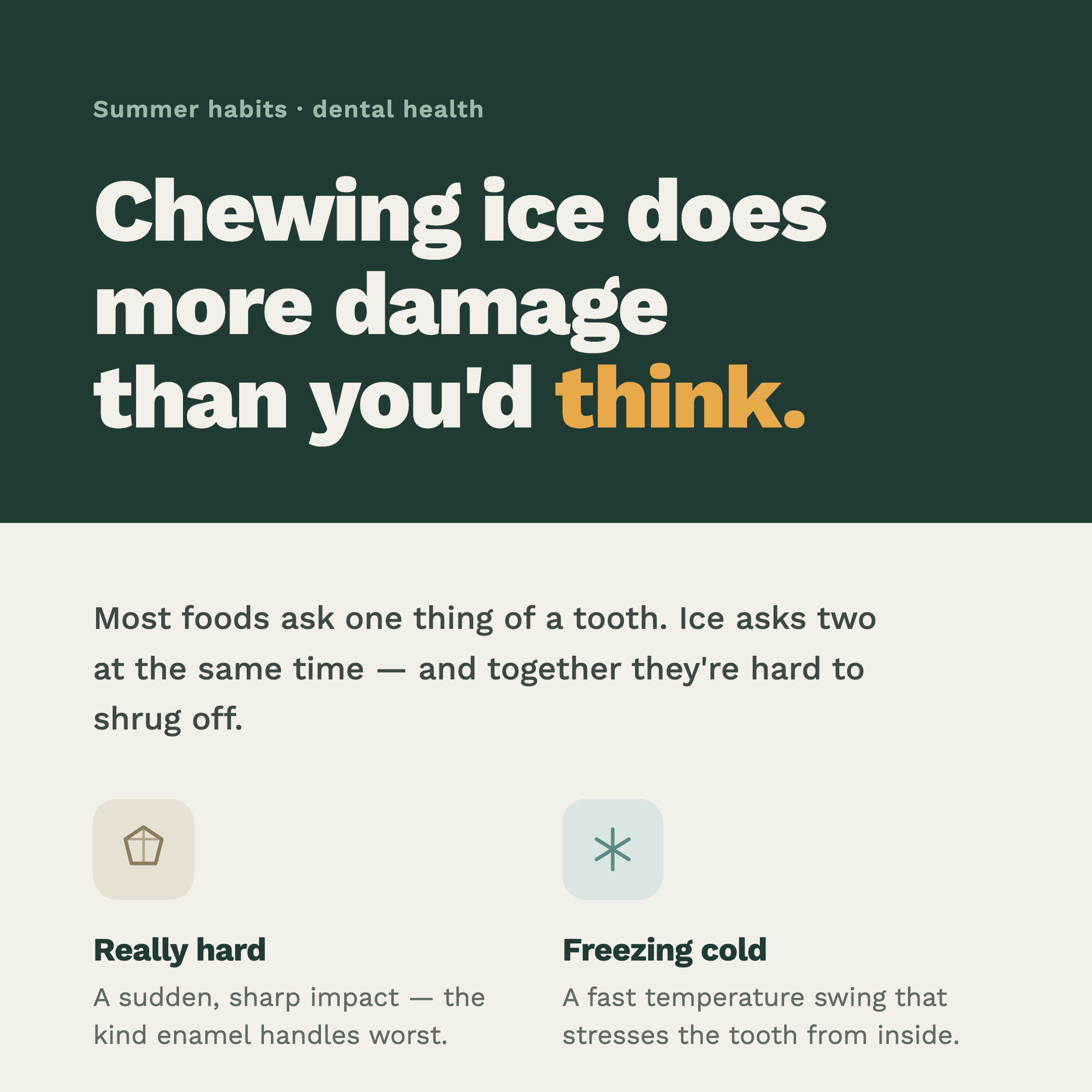
Most foods are one challenge at a time. Ice is two at once, and that combination is what makes it so tough on teeth.
It's extremely hard. Ice is genuinely hard — hard enough that biting through a cube generates a sudden, concentrated force. Tooth enamel is strong, but it's also brittle, meaning it resists steady pressure well but is vulnerable to sudden, sharp impact. Cracking down on a hard cube delivers exactly the kind of force enamel handles worst.
It's cold. At the same time, ice is near-freezing, which causes the tooth to contract slightly at the surface. Teeth expand and contract minutely with temperature, and rapid change creates internal stress within the tooth structure.
Put those together — a hard mechanical impact and a sharp thermal shock, at the same instant — and you have a combination almost engineered to stress a tooth. The pressure and the temperature swing work together to create tiny cracks in the enamel surface that neither might produce alone.
The Damage Adds Up Invisibly
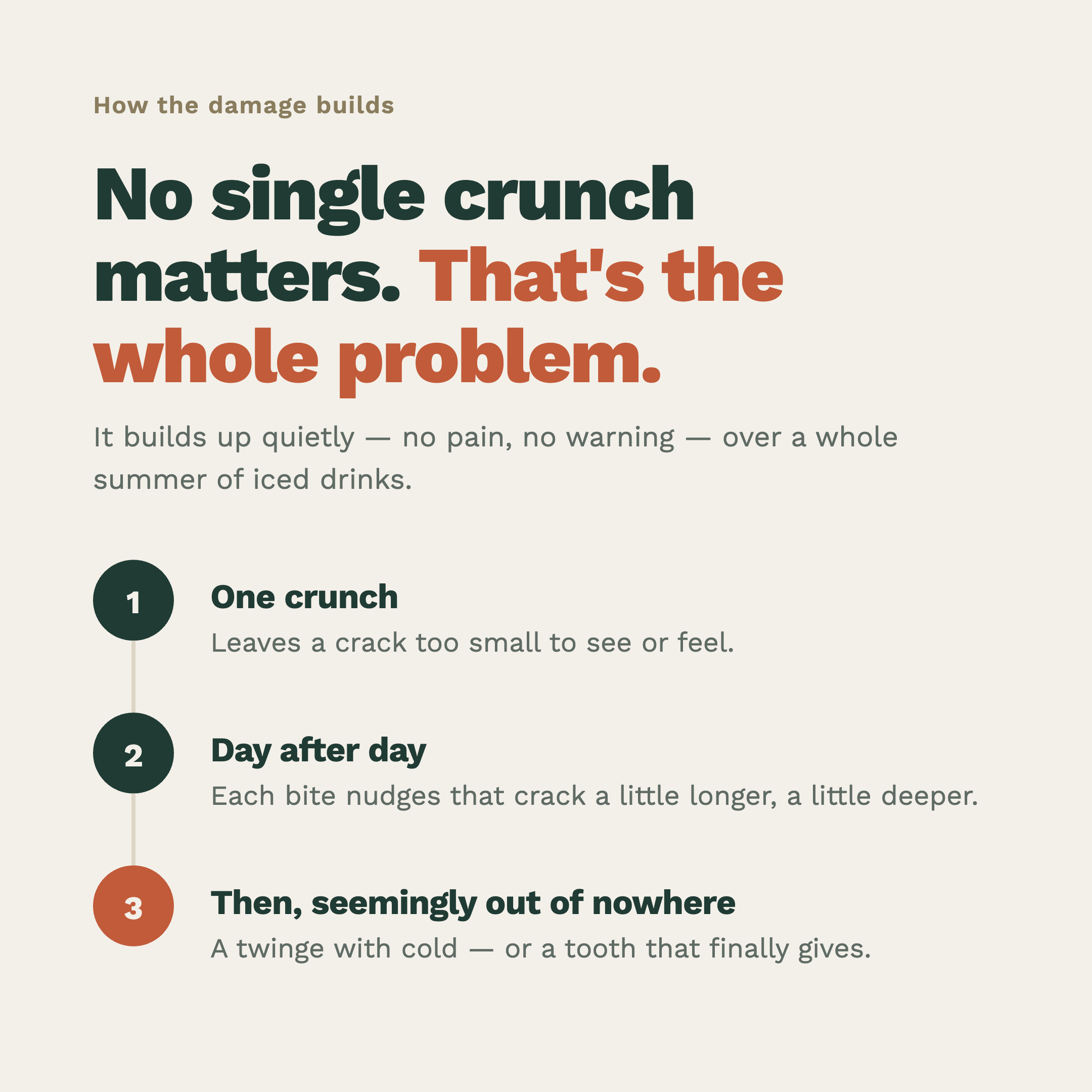
Here's the part that makes ice-chewing genuinely sneaky: it almost never breaks a tooth in a single dramatic moment. The damage is cumulative.
A single crunch doesn't crack a healthy tooth in half. What it does is create or extend a microscopic crack — far too small to see or feel. On its own, that's nothing. But repeated dozens of times a day, across an entire summer of iced coffees and cold drinks, those micro-cracks slowly propagate. Each crunch nudges an existing crack a little longer, a little deeper. The tooth looks and feels completely normal the whole time, because the change per crunch is imperceptible.
This is why the eventual problem seems to come out of nowhere. By the time a crack becomes symptomatic — or the tooth finally fractures — the habit that caused it has been quietly at work for weeks or months. The dramatic moment is just the end of a long, invisible process.
Why Crowned, Filled, and Root-Canaled Teeth Are Most at Risk
If chewing ice is risky for healthy teeth, it's considerably more dangerous for teeth that have already had significant dental work — and this is where it most often causes a real emergency.
A tooth with a large filling has less intact natural structure holding it together, so it's less able to distribute the force of an impact. A crowned tooth concentrates stress at the margins. And a tooth that's had a root canal is particularly vulnerable: root-canaled teeth are more brittle than living teeth, because they no longer have the internal blood supply that keeps tooth structure resilient. Their capacity to absorb and disperse a sudden impact is reduced.
For all of these, the repeated shock of ice-chewing is more than the compromised structure can reliably handle. This is why so often the story is a crowned or root-canaled tooth that seemed totally fine, right up until it fractured on a piece of ice — sometimes badly enough that the tooth can't be saved. The habit finds the weakest link and eventually breaks it.
The Warning Signs of a Progressing Crack
Because the cracking process is usually painless as it develops, the early warning signs are subtle — and easy to dismiss. But they're worth paying attention to, because a crack caught early can often be protected before it becomes a fracture.
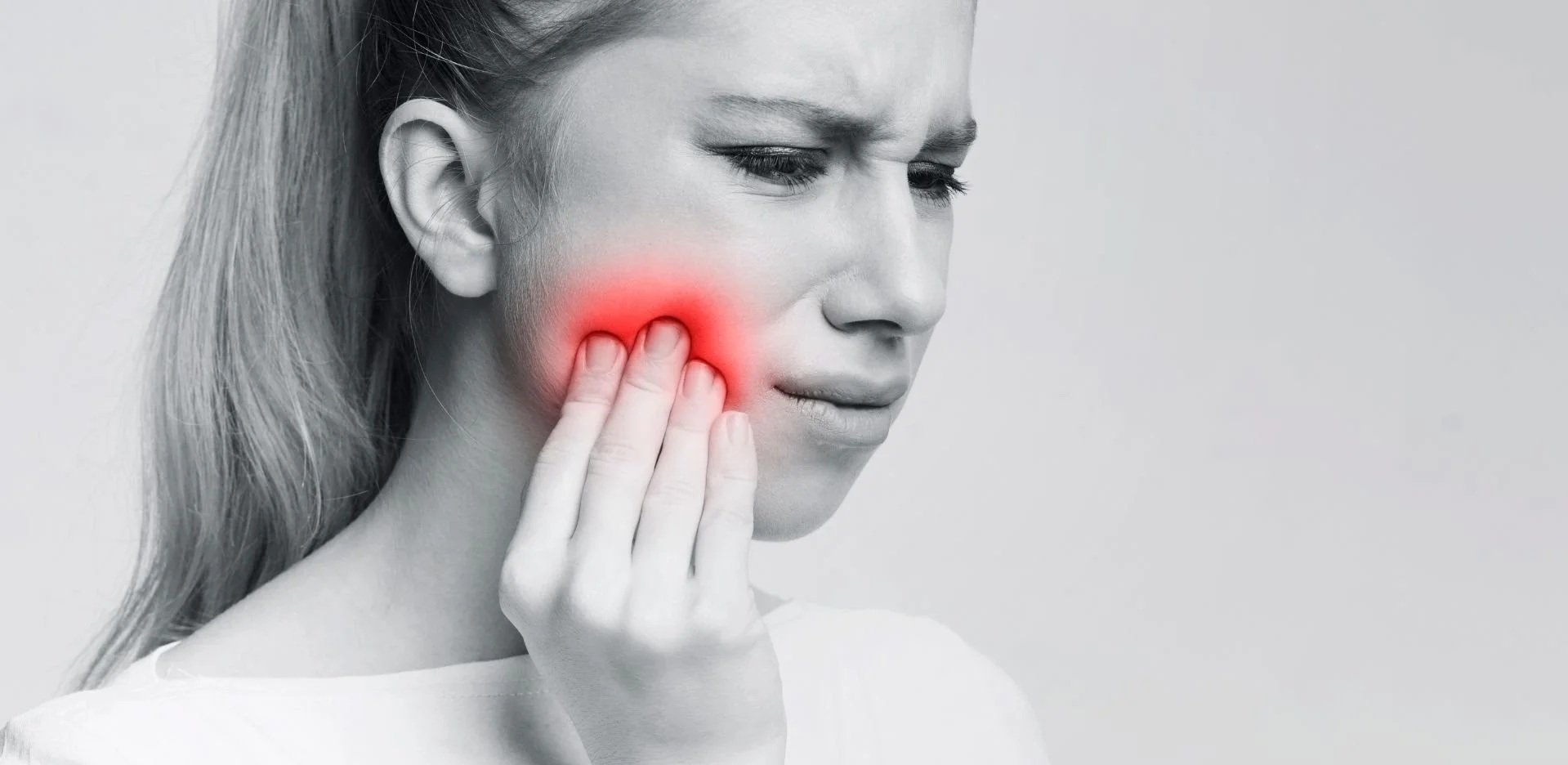
The most common early signal is sensitivity that shows up only in specific situations: a twinge with cold water, or a sharp sensation when biting down on a particular tooth or at a particular angle. Pain that comes and goes rather than staying constant, or discomfort only when chewing certain foods, can also indicate a crack that's begun to progress. These symptoms mean the crack has developed enough to occasionally reach the sensitive inner tooth — a sign to have it evaluated before it advances further.
A Note on Craving Ice
There's one more thing worth mentioning, because it's genuinely useful to know. Some people don't just chew ice occasionally — they crave it, compulsively, going through cup after cup. This specific, persistent craving for ice has a name (pagophagia), and it's sometimes associated with underlying conditions, most notably iron-deficiency anemia. Frequent dry mouth can also drive people toward constant ice-chewing.
If you or someone in your family feels a strong, ongoing compulsion to chew ice — well beyond an occasional habit — it's worth mentioning to a physician, as it can occasionally be a clue worth following up on. It's a small detail, but one that's led more than a few people to a diagnosis they wouldn't otherwise have caught.
Frequently Asked Questions
Is chewing ice really bad for your teeth?
Yes. Ice combines extreme hardness with cold temperature, delivering both a sharp mechanical impact and a thermal shock at once. Together these create micro-cracks in enamel that grow with repeated chewing, and can eventually lead to sensitivity or a fractured tooth.
Can chewing ice crack a tooth?
It can, though usually not in one bite. Each crunch extends microscopic cracks slightly; repeated over time, they progress until a tooth becomes sensitive or fractures. Teeth with large fillings, crowns, or root canals are especially prone to sudden fracture from ice.
Why are crowned or root-canaled teeth more at risk from ice?
They have less intact natural structure to distribute impact. Root-canaled teeth are also more brittle because they lack the internal blood supply that keeps teeth resilient. This reduced ability to absorb sudden force makes them more likely to fracture on hard ice.
Does chewing ice cause tooth sensitivity?
It can. As micro-cracks develop and progress, they can reach the sensitive inner layers of the tooth, producing sensitivity to cold or discomfort when biting. Sensitivity that appears in specific situations is often an early sign of a crack.
Why do I crave chewing ice so much?
A persistent, compulsive craving for ice is called pagophagia and is sometimes linked to iron-deficiency anemia or dry mouth. An occasional urge is usually just habit, but a strong ongoing compulsion is worth mentioning to a physician.
The Thing About Small, Repeated Things

Most serious tooth damage doesn't come from one big event. It comes from something small, repeated so many times that it eventually adds up to something big. Ice-chewing is the clearest example there is: no single crunch matters, which is exactly why the habit is so easy to keep, and why the damage is so easy to miss until it's done.
The good news is that it cuts both ways. Because the damage is cumulative, simply stopping the habit halts the process — the micro-cracks stop getting nudged forward, and teeth aren't subjected to the repeated shock. It's one of the easier high-impact changes you can make for your teeth.
If your teeth haven't felt quite the same lately — a new sensitivity, a twinge when biting, a tooth that catches your attention — and there's been a lot of ice in your summer, it's worth a look. Give us a call, and we'll check whether a crack has started before it turns into something bigger.
📍 State Avenue Dental Office — Kansas City, KS (KCK) 🗣 English • Korean • Spanish