
Crown vs. Bridge vs. Implant: What's Really the Difference?
Let's be honest—dental terminology can feel like a foreign language.
You're sitting in the chair, your dentist mentions something about a "crown" or maybe a "bridge," and you're nodding along while quietly wondering, "Wait, which one is which again?"
Trust me, after two decades in this field, I can tell you that you're in good company. These terms get mixed up all the time, and frankly, that's on us as dental professionals to explain things better.
So here's my attempt to do exactly that. No jargon. No pressure. Just the information you need to make a decision that actually makes sense for your mouth and your life.
What Exactly Is a Dental Crown?
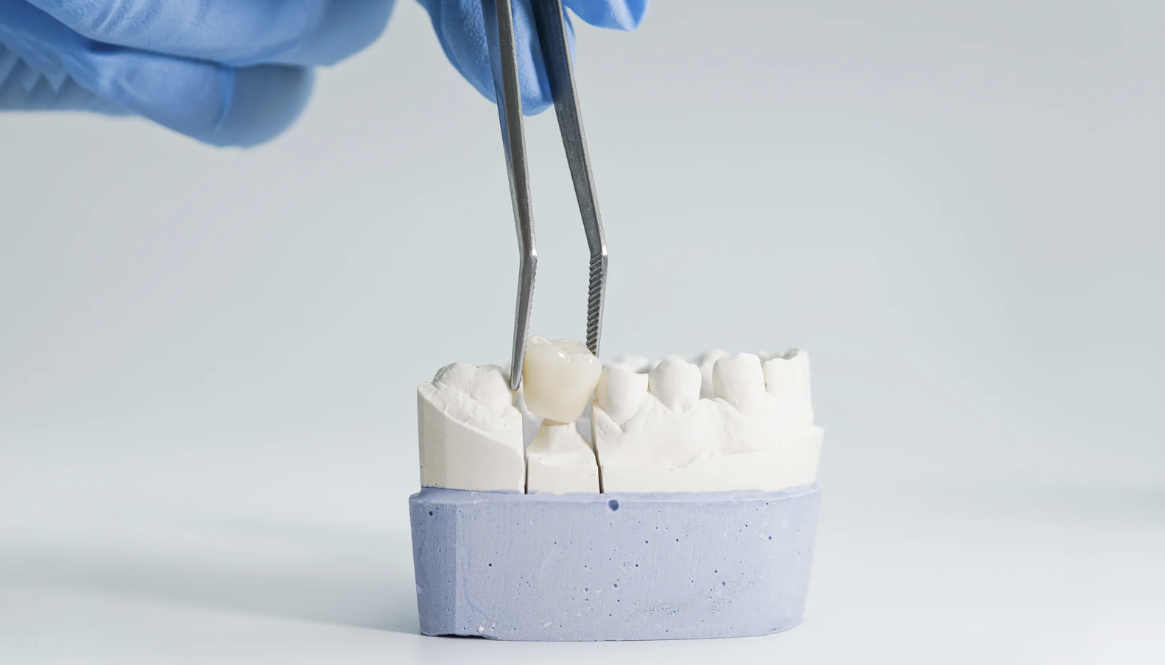
Think of a crown as a custom-fitted cap that slides over your existing tooth.
Your natural tooth is still there—it's just been reshaped and covered with a protective shell made from porcelain, ceramic, zirconia, or metal alloy. The crown takes over the job of protecting what's underneath while restoring the tooth's original shape and chewing function.
When does a crown make sense?
A cavity has gotten too large for a standard filling to hold
You've had a root canal (the tooth is now more brittle and needs reinforcement)
A tooth is cracked, worn down, or weakened from grinding
You want to improve the appearance of a discolored or misshapen tooth
Here's something most people don't realize:
A well-made crown, placed on a healthy foundation, can last 15 to 25 years—sometimes longer. But that longevity depends heavily on what's happening underneath. If the remaining tooth structure is compromised or if gum disease is present, even the best crown won't hold up. That's why we always evaluate the whole picture before recommending one.
Also worth knowing: not all crowns are created equal. The materials, the lab that fabricates them, and how precisely they fit your bite all matter. A crown that's even slightly "off" can cause jaw discomfort, uneven wear on other teeth, or premature failure. It's one of those areas where craftsmanship really shows.
What About a Dental Bridge?
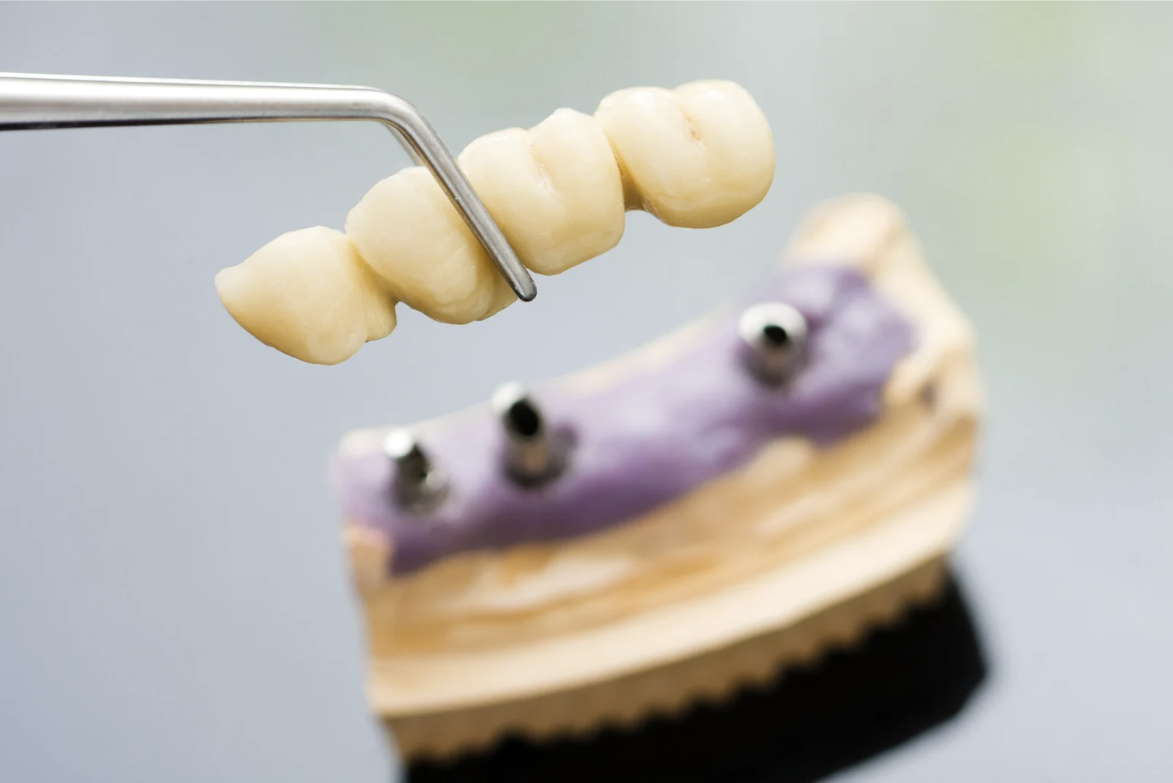
A bridge does exactly what it sounds like—it bridges the gap where a tooth used to be.
Here's how it works: The teeth on either side of the empty space (we call them abutment teeth) are shaped down, and a connected unit of crowns is cemented over them. The middle crown, called a pontic, fills the gap where your missing tooth was.
The appeal of a bridge:
No surgery required
Fixed in place (you don't remove it like a denture)
Treatment is typically completed in just a few appointments
More affordable upfront than an implant
The trade-off:
Those neighboring teeth have to be permanently altered, even if they were perfectly healthy. You're essentially involving two good teeth to replace one missing tooth. Over time, this can put additional stress on those anchor teeth, and if one of them develops a problem down the road, the whole bridge may need to be replaced.
Something I always tell patients:
Bridges can be a great solution—especially when the adjacent teeth already have large fillings or crowns and would benefit from coverage anyway. But if those neighboring teeth are healthy and untouched? It's worth having a conversation about whether an implant might make more sense long-term.
Why Dental Implants Have Become So Popular
An implant takes a completely different approach. Instead of relying on neighboring teeth for support, it replaces the tooth from the root up.
A small titanium post is placed directly into your jawbone. Over the next few months, your bone actually fuses with the implant—a process called osseointegration. Once that's complete, a custom crown is attached on top.
What makes implants stand out:
They function like natural teeth (stable, strong, no slipping)
They don't require altering adjacent healthy teeth
They help preserve jawbone density (bone loss is a real issue after tooth loss)
With proper care, they can last a lifetime
The honest downsides:
Implants do require a surgical procedure, which means healing time. They also tend to cost more upfront than bridges or crowns. And not everyone is an immediate candidate—if you've experienced significant bone loss, you may need a bone graft before an implant can be placed.
Here's what I find interesting:
Many patients assume implants are only for younger people or that they're "too complicated." In reality, I've seen patients in their 70s and 80s do beautifully with implants. Age alone isn't the deciding factor—overall health, bone quality, and commitment to oral hygiene matter far more.
Full-Arch Reconstruction: When Multiple Teeth Need Attention
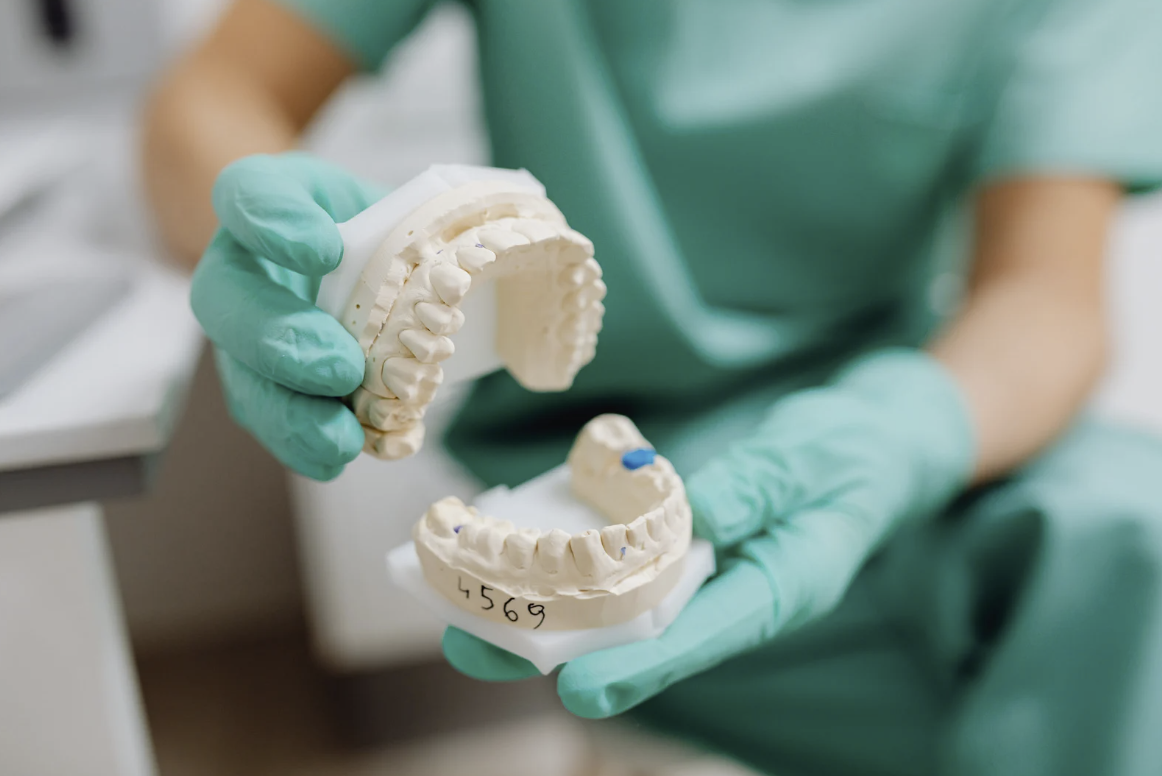
Sometimes the situation goes beyond a single tooth.
Full-arch reconstruction is a comprehensive approach designed for patients who are missing several teeth, dealing with multiple failing teeth, or whose bite has collapsed over time.
This might be the right path if:
You're tired of dealing with a partial denture that doesn't stay put
Multiple teeth are broken, infected, or beyond saving
You've noticed your face looks "sunken" due to bone and tooth loss
Chewing has become difficult or painful
Full-arch treatment can involve a combination of implants, bridges, and prosthetics tailored to your specific needs. The goal isn't just replacing teeth—it's restoring proper function, facial support, and confidence.
A word of perspective:
This level of treatment is a significant investment, both financially and in terms of time. But for patients who've been struggling for years with dental problems, it can be genuinely life-changing. I've watched people go from avoiding restaurants and social situations to smiling freely again. That's not marketing speak—it's just what I've observed in practice.
So Which Option Is Right for You?
Here's the truth: there's no universal "best" choice.
The right option depends on several factors that are unique to you:
The health of your remaining teeth and gums
The condition of your jawbone
Your overall health and any medical considerations
Your budget and insurance coverage
How you prioritize longevity vs. convenience vs. cost
What I can tell you is this: a good dentist in Kansas City, Kansas—or anywhere else—should take the time to explain your options clearly, answer your questions without rushing, and help you weigh the pros and cons based on your situation. Not what worked for someone else. Not what's most profitable. What actually makes sense for you.
At State Avenue Dental Office, that's the approach we try to take with every patient. We'd rather have an honest conversation than push a treatment you're not comfortable with.
Have Questions? Just Give Us a Call.
If you've been putting off a decision because you're not sure what you need—or you've gotten different opinions and feel more confused than ever—we're happy to help you sort through it.
Sometimes a straightforward conversation is all it takes to feel confident about your next step.
Give us a call at State Avenue Dental Office. We'll take the time to listen, explain your options in plain English (or Korean or Spanish, if that's easier), and help you figure out what makes the most sense for your teeth, your health, and your life.