
Why Do My Teeth Hurt When I'm Sick? A Dentist Explains the Mouth-Body Connection
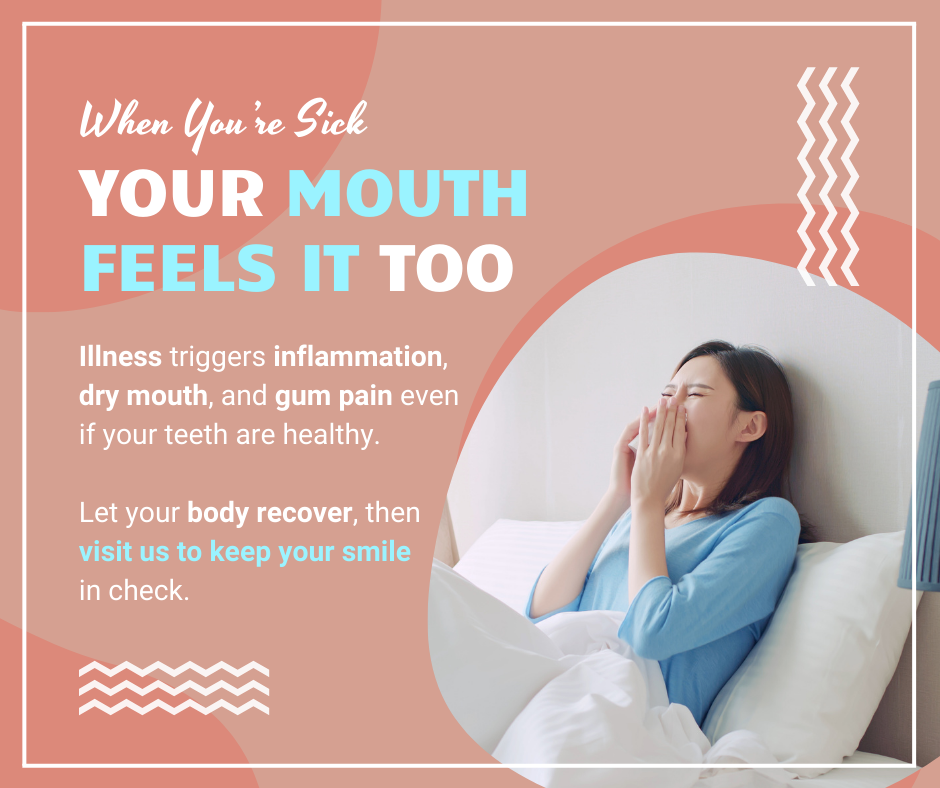
Every winter, we get the same question at State Avenue Dental Office: "I have a cold, so why do my teeth hurt?"
If you've ever been lying in bed fighting off the flu and noticed your teeth feel achy or your gums seem tender, you're definitely not alone. And no, you're not imagining it.
Here's what's actually going on — and when you might need to give us a call.
Your Mouth and Body Are More Connected Than You Think
When you're sick, your immune system kicks into high gear. That means inflammation levels rise throughout your entire body — and yes, that includes your mouth. But there's actually a lot more going on beneath the surface than most people realize.
The Role of Inflammatory Response
When your body fights off an infection, it releases proteins called cytokines. These are chemical messengers that help coordinate your immune response. While cytokines are essential for healing, they also trigger inflammation — and that inflammation doesn't stay in one place. It travels throughout your entire system, including your gum tissue.
This systemic inflammatory response can activate bacteria that normally live quietly below your gumline. These bacteria are always present, but when inflammation increases, they can become more aggressive. The result? Swollen, tender gums and teeth that suddenly feel sensitive or achy — even though nothing has actually changed in your mouth.
Sinus Pressure and Upper Tooth Pain
Here's something that surprises a lot of patients: your upper back teeth share very close real estate with your maxillary sinuses. These are the air-filled spaces located right above your upper jaw. When you have a cold, the flu, or a sinus infection, those sinuses can become inflamed and congested.
As pressure builds in your sinuses, it presses down on the roots of your upper molars and premolars. This can create a dull, aching sensation that feels exactly like a toothache — even though your teeth are perfectly healthy. In fact, sinus-related tooth pain is one of the most common reasons patients come in thinking they have a cavity when they actually have a sinus issue.
The Trigeminal Nerve Connection
Your face, jaw, and teeth are all served by the trigeminal nerve — one of the largest nerves in your head. This nerve has three branches that cover sensation in your forehead, cheeks, and lower face. When you're sick, inflammation and congestion can irritate this nerve, causing referred pain that shows up in unexpected places.
That's why a bad head cold can make your teeth throb, or why jaw pain sometimes accompanies the flu. It's not that your teeth are damaged. It's that your nervous system is responding to stress and inflammation elsewhere in your body.
How Dehydration Makes Things Worse
Here's something a lot of folks don't realize: when you're running a fever or just not feeling well enough to drink much, your saliva production drops. And saliva does a lot more than most people give it credit for.
Saliva is your mouth's natural defense system. It washes away food particles, neutralizes acids, and helps keep harmful bacteria in check. When your mouth gets dry, you lose that protection. That's when irritation, sensitivity, and even mild gum inflammation can show up seemingly out of nowhere.
Staying hydrated when you're sick isn't just good for your overall recovery — it's good for your teeth and gums, too.
Can Cold and Flu Medications Cause Tooth Pain?

This is one we hear often, and the short answer is yes, they can contribute.
Many over-the-counter cold remedies, fever reducers, decongestants, and even some stomach medications have a drying effect on your mouth. Antihistamines are particularly notorious for this. When oral tissues dry out, they become more prone to irritation. Some people also notice increased tooth sensitivity as a side effect.
So if you're taking medication for your illness and your teeth start bothering you, there's a good chance the two are related. It doesn't necessarily mean you have a cavity or a cracked tooth. Often, it's just a temporary reaction.
What Should You Do About It?
For most people, the best approach is pretty straightforward:
Focus on staying hydrated. Water, broth, and electrolyte drinks can all help keep your mouth from drying out. Let the inflammation settle. As your body recovers from the illness, the inflammation in your gums should calm down too. Keep up with gentle oral care. Even when you don't feel great, try to brush and floss as normally as you can. Just be gentle if your gums are tender.
In most cases, once you're feeling better overall, your mouth will feel better too.
When Should You Actually See a Dentist?
Here's the important part, and I want to be straight with you about this.
Most tooth discomfort during illness is temporary and will resolve on its own. But there are some situations where you shouldn't wait it out.
If your pain lasts more than a few days after you've recovered from your illness, that's worth checking out. If the pain is getting worse instead of better, that's a red flag. And if the discomfort is concentrated on one side of your mouth or focused on a specific tooth, that could indicate something more serious — like a tooth infection, root inflammation, or a gum abscess.
These situations don't get better on their own, and waiting too long can turn a manageable problem into a bigger one.
What It All Comes Down To
Tooth and gum discomfort when you're sick isn't random. It's your body's way of telling you that everything is connected. Your immune system, your hydration levels, your medications, and your oral health all influence each other.
Once you're back on your feet, take a moment to think about your mouth, too. If something still doesn't feel right, or if you just want the peace of mind that comes from knowing everything is okay, a quick dental check can answer those questions.
As a trusted dentist in Kansas City, Kansas, we've helped thousands of patients understand what's really going on with their oral health — and we're always happy to take a look.
As we step into 2026, our team at State Avenue Dental Office wishes you and your family a healthy and happy new year. Your well-being — from head to toe, and yes, teeth included — matters to us. If you have questions or concerns about tooth pain that won't go away, give us a call. We're here to help you start the year feeling your best. Reach out to schedule an appointment — we'd love to hear from you.

FAQ: Tooth Pain During Illness
Q: Why do my teeth hurt when I have a cold or the flu? A: When you're sick, your body's inflammatory response increases throughout your entire system, including your gums. This can make teeth feel sensitive or achy, even if there's nothing wrong with the teeth themselves.
Q: Can dehydration cause tooth pain? A: Yes. Dehydration reduces saliva production, and saliva protects your teeth and gums. When your mouth is dry, you're more prone to irritation and sensitivity.
Q: Do cold medications affect my teeth? A: Many cold and flu medications, especially antihistamines and decongestants, can dry out your mouth and temporarily increase tooth sensitivity.
Q: When should I see a dentist for tooth pain during illness? A: If pain persists more than a few days after recovery, gets worse, or is focused on one specific area, see a dentist to rule out infection or other dental issues.