
Do You Really Need Dental Checkups Twice a Year?
Every January, I hear the same thing from patients:
"I'm finally going to get serious about my health this year."
And I love that. I really do.
But there's one health habit that tends to run on autopilot for most people: dental visits. The assumption is simple—go twice a year, and you're covered. That's what we've all been told since we were kids, right?
Here's the thing, though. After twenty years in dentistry, I can tell you that "twice a year" is a reasonable starting point for some people. But it's not a universal truth. And for a lot of folks, it's either more than they need or—more commonly—not quite enough.
At State Avenue Dental Office, we get this question all the time:
"Is every six months actually the right schedule for me?"
The honest answer? It depends entirely on what's happening in your mouth.
Where Did "Twice a Year" Come From, Anyway?
You might be surprised to learn that the twice-yearly dental visit isn't based on some landmark scientific study. It became the standard recommendation decades ago, and for people with healthy gums and minimal risk factors, it works reasonably well.
But here's what that guideline doesn't account for: we're not all starting from the same place.
Some people can go six months between cleanings and show up with minimal buildup. Others come back after four months and already have early signs of inflammation creeping in. The difference isn't about effort or willpower—it's about biology, health history, and risk factors that vary widely from person to person.
Think about it this way. We don't tell everyone to change their car's oil at exactly the same interval regardless of how they drive, what climate they live in, or what kind of engine they have. Your mouth works the same way. The maintenance schedule should match the conditions.
The Question That Actually Matters
Instead of asking "how often should I go to the dentist," the better question is:
How quickly can inflammation and bacterial buildup cause problems in my mouth?
Your gums and the bone underneath them are the foundation holding your teeth in place. When bacteria accumulate below the gumline, they trigger an inflammatory response. In some people, that process moves slowly. In others, it accelerates fast—sometimes before any symptoms show up.
That's why the "right" schedule isn't about following a rule. It's about understanding your personal risk profile and building a plan around it.
Six Situations Where Every Six Months Probably Isn't Enough
Based on what we see clinically—and what the research supports—here are the most common scenarios where a shorter interval between visits makes a real difference:
1. You've Been Diagnosed with Gum Disease
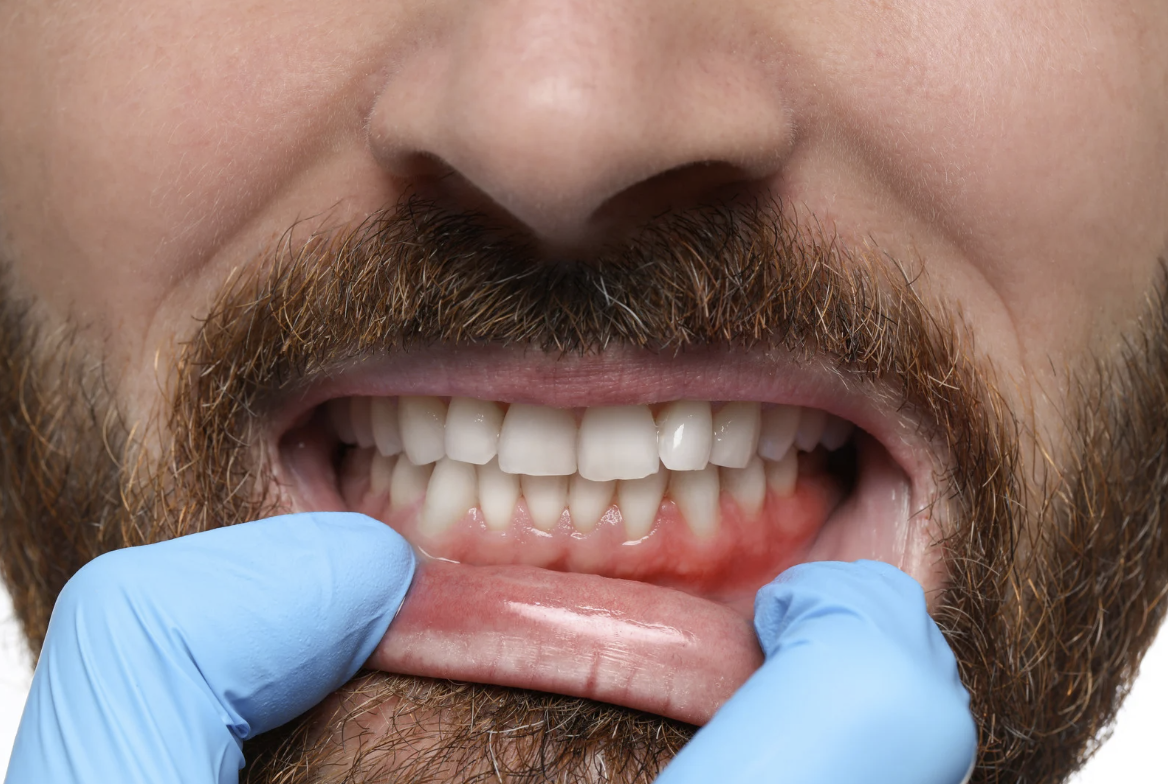
If you've ever been told you have gingivitis or periodontitis, your gums have already shown a tendency toward inflammation. Even after treatment, that susceptibility doesn't disappear. Bacterial populations can rebound faster than you'd expect, and what looks stable at three months can start breaking down by six.
For most patients with a history of periodontal disease, we recommend visits every three to four months. It's not about being overly cautious—it's about staying ahead of a process that's already proven it can get away from you.
2. You Have Dental Implants
Implants are remarkable. They look natural, they function like real teeth, and with proper care, they can last for decades. But implants aren't maintenance-free.
The tissue surrounding an implant can develop a condition called peri-implantitis—essentially, inflammation around the implant that can lead to bone loss if it's not caught early. Some patients are more prone to this than others, and the early signs aren't always obvious.
If you've invested in implants, protecting that investment with more frequent monitoring just makes sense. Think of it as the difference between checking your tire pressure occasionally versus waiting until you have a flat.
3. You Have Diabetes or Blood Sugar Challenges
There's a two-way relationship between blood sugar and gum health that doesn't get talked about enough.
When blood sugar runs high, your body's ability to fight infection decreases—including infections in your gums. At the same time, active gum disease can make blood sugar harder to control. It becomes a cycle that feeds on itself.
For patients managing diabetes, more frequent dental visits aren't just about teeth. They're part of managing your overall health. A three to four month schedule often makes more sense than the standard six.
4. You Smoke or Vape
I'm not here to lecture anyone about their choices. But from a clinical standpoint, I'd be doing you a disservice if I didn't mention this.
Smoking reduces blood flow to your gums, which impairs healing and masks some of the early warning signs of gum disease (like bleeding). Vaping isn't harmless either—the chemicals and heat exposure affect oral tissues in ways we're still learning about.
If you smoke or vape regularly, your mouth is dealing with an added stressor. Shorter intervals between cleanings help us catch problems earlier, when they're easier to address.
5. You're in Orthodontic Treatment
Braces, clear aligners with attachments, wires, bands—all of these create additional surfaces where plaque loves to hide. It's not a reflection of your brushing skills. It's just physics. More hardware means more places for bacteria to accumulate.
During orthodontic treatment, more frequent professional cleanings help compensate for what's harder to reach at home. Once your braces come off, you can typically return to a standard schedule.
6. You Deal with Chronic Dry Mouth
Saliva does more than you might realize. It neutralizes acids, washes away food particles, and delivers minerals that help keep your enamel strong. When saliva production drops—whether from medication, medical conditions, or other factors—your mouth loses a critical line of defense.
Patients with persistent dry mouth often develop cavities and gum inflammation faster than expected. If that sounds familiar, a tighter recall schedule can help us intervene before small problems become big ones.
A Practical Framework (Not a Diagnosis)

I want to be clear: this isn't a substitute for an actual evaluation. But as a general guide, here's how we tend to think about scheduling:
Low risk (healthy gums, no major risk factors): Every 6 months often works well
Moderate risk (some history of gum issues, one or two risk factors): Every 4 months is often more appropriate
Higher risk (active gum disease, implants, multiple risk factors): Every 3 months typically offers better protection
The goal isn't to get you into the office as often as possible. The goal is to find the interval that keeps you stable with the least amount of intervention over time.
Let's Address the Elephant in the Room
I know what some people are thinking: "Of course a dentist wants me to come in more often. That's more business."
I get the skepticism. But let me offer a different perspective.
The patients who come in on an appropriate schedule—whatever that schedule is for them—tend to need less treatment over time, not more. We catch the small stuff early. We make minor adjustments. We keep things from progressing.
The patients who stretch their visits too far? They're the ones who end up needing scaling and root planing, or discovering that a small cavity has become a crown, or learning that the bone loss around their implant has advanced further than anyone wanted.
More frequent checkups, when they're warranted, aren't about finding more things to fix. They're about keeping your mouth in a place where there's less to fix in the first place.
That's what preventive dentistry is supposed to look like: boring, uneventful appointments where nothing dramatic happens. That's actually the win.
What You Can Do at Home to Stay in the "Every Six Months" Category

If you're currently low-risk and want to stay that way—or if you're working toward getting there—these daily habits make a measurable difference:
Floss daily (or use interdental brushes). I know, I know. Everyone says this. But here's the reality: brushing alone misses about 40% of tooth surfaces. The areas between your teeth are exactly where gum disease likes to start. If you're not cleaning there, you're leaving the door open.
Brush with intention, not aggression. Harder isn't better. Gentle, thorough brushing at a 45-degree angle toward your gumline is more effective than scrubbing hard enough to wear down enamel and irritate your gums.
Consider a water flosser. Especially if you have implants, bridges, or braces, a water flosser can reach areas that string floss struggles with. It's not a replacement for flossing—think of it as a supplement.
Stay hydrated and manage dry mouth. If you take medications that cause dry mouth, talk to us about strategies. Sometimes it's as simple as sipping water more frequently or using a saliva substitute.
Address smoking and vaping if you can. I'm not going to pretend this is easy. But any reduction helps, and if you're working on quitting, we can factor that into your care plan.
Small daily habits beat heroic once-a-year efforts. Every single time.
So, is twice a year enough?
For some people, absolutely. For others, it's a schedule that lets problems develop between visits.
The good news is that figuring out the right interval isn't complicated. It just requires an honest conversation about where your mouth is right now and what makes sense going forward.
As a dentist in Kansas City, Kansas, I've had this conversation thousands of times. It's one of my favorite parts of the job, actually—helping someone understand their own risk factors and build a plan that fits their life. Not a generic recommendation. Not a guilt trip. Just a straightforward discussion about what's likely to work best.
Ready to Figure Out Your Schedule?
If you're not sure whether your current recall interval is right for you—or if you've been putting off dental visits and want to get back on track—we'd be glad to help you sort it out.
Give us a call at State Avenue Dental Office. We'll take a look at what's going on, talk through your risk factors honestly, and help you land on a schedule that actually makes sense. No pressure, no judgment—just a plan you can stick with.