
Fastbraces in Kansas City, KS: What No One Tells You Before You Start
In our practice, we don't recommend Fastbraces to everyone who asks about it. That's not because the system doesn't work — it does, and impressively so for the right patient. It's because good dentistry starts with an honest diagnosis, not a popular option.
Here's what that honest picture actually looks like.
What Is Fastbraces — and Why Does the "Fast" Part Actually Hold Up?
Traditional orthodontics is a two-stage process. First, the brackets move the visible crown of the tooth into position. Then — only after that — a second phase begins to address the root. That's where the 18-to-36-month timeline comes from. Two stages means double the time.
Fastbraces collapses that into one.
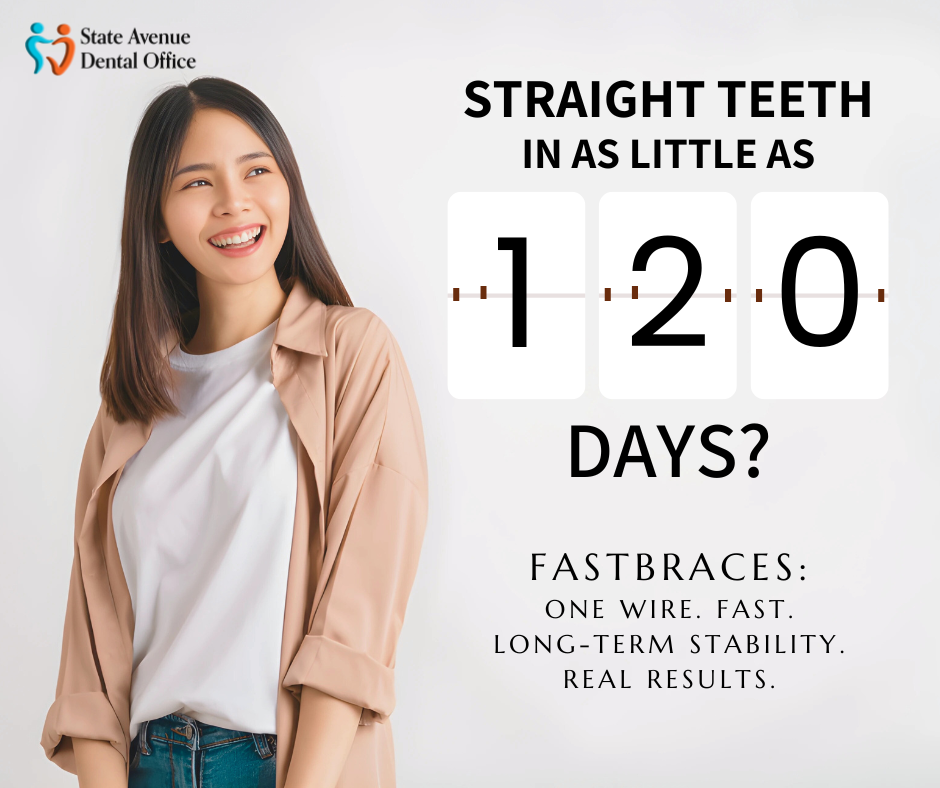
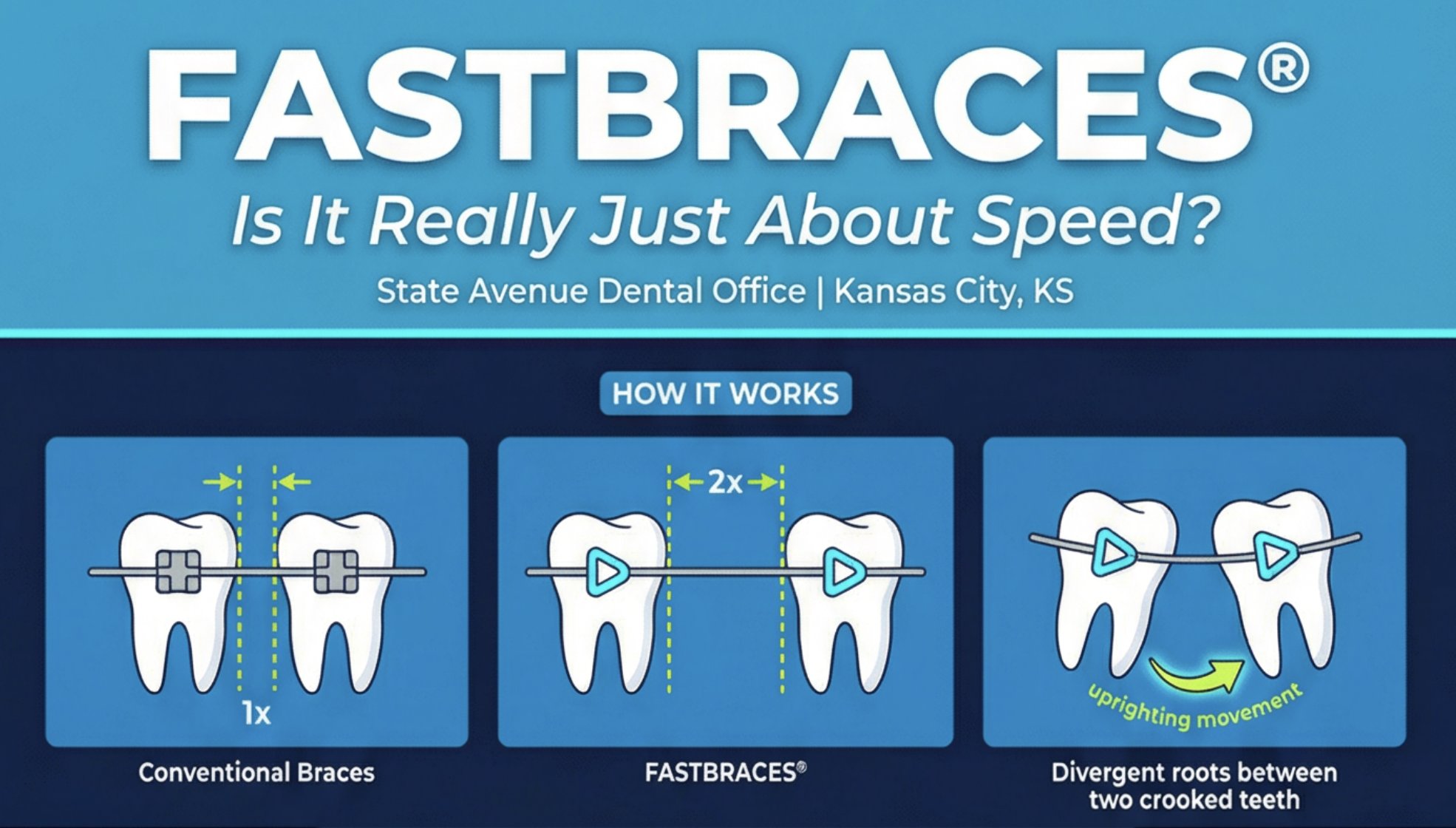
The system uses a patented triangular bracket combined with a square-shaped archwire that works on the crown and the root simultaneously — from the very first appointment. Because of this, most patients complete treatment in 3 to 12 months, and some straightforward dental cases wrap up in under 120 days.
Here's what makes it clinically interesting beyond just the speed: the triangular bracket increases the distance between brackets (called the inter-bracket span), which allows the wire to flex using substantially lighter forces. According to Fastbraces research, the system generates up to 87% less frictional force than conventional braces. Less friction means less discomfort, less stress on surrounding bone and tissue, and a body that adapts more cooperatively to the movement.
For patients who've mentally written off orthodontics because of the time commitment, Fastbraces genuinely changes the equation.
Who Is Actually a Good Candidate for Fastbraces?
This is the part most practices skim. We won't.
Fastbraces tends to deliver excellent, stable results for patients with primarily dental alignment concerns — meaning the problem is in how the teeth are positioned, not in the underlying bone structure. Specifically:
Mild to moderate crowding — teeth that are slightly overlapping or rotated
Spacing and small gaps — where teeth need to move closer together
Minor overbites or underbites — where the root cause is tooth position, not jaw geometry
Cosmetic concerns in the front teeth — wanting a cleaner, more even smile for photos, events, or just daily confidence
Time-sensitive goals — a wedding, a reunion, a job interview season, or any life event where waiting 2+ years simply isn't realistic
If you're in one of these categories, Fastbraces is worth a serious conversation.
When Fastbraces Isn't the Right Call
And here's the part we really want you to sit with for a moment.
When alignment issues aren't just in the teeth — when they're rooted in the jaw structure itself — that's a fundamentally different clinical situation. Fastbraces is an orthodontic tool, not an orthopedic one. The two are not interchangeable.
Fastbraces is typically not the appropriate first choice if you have:
Significant skeletal malocclusion — where the upper and lower jaws don't align due to bone structure, not tooth position
Severe crowding that may require tooth extractions or substantial space creation before any movement can begin
Impacted teeth that haven't fully erupted and need to be addressed before bracket placement
Complex Class II or Class III bite issues where jaw repositioning is part of the solution
Active gum disease or bone loss — healthy periodontal tissue is a non-negotiable prerequisite for any orthodontic treatment
Here's the hard truth: moving teeth quickly in a mouth that isn't structurally ready for it doesn't produce a faster smile. It produces an unstable one. And an unstable result almost always means starting over — which costs more time, more money, and more trust than doing it right the first time.
This is why the evaluation phase isn't just a formality. It's the whole game.
The Most Important Word in Orthodontics Isn't "Fast" — It's "Stable"
Every tooth you've ever had in your mouth has a memory. The surrounding bone and periodontal fibers that hold your teeth in place adapted over years to where those teeth sit. When orthodontic treatment moves a tooth, those structures have to be given time and support to adapt to the new position — otherwise, the tooth will drift back. Orthodontists call this relapse, and it happens across all orthodontic systems: traditional braces, clear aligners, and Fastbraces alike.
What prevents relapse is a proper diagnosis before treatment begins, appropriate case selection, and a sound retention protocol afterward — usually a retainer worn consistently after treatment wraps up.
At State Avenue Dental Office, when we're evaluating someone for Fastbraces, the question we're really asking isn't just can we do this? It's will this result still look great five years from now?
Speed without stability is just temporary. We're not in the business of temporary.
What Does a Fastbraces Consultation Actually Include?
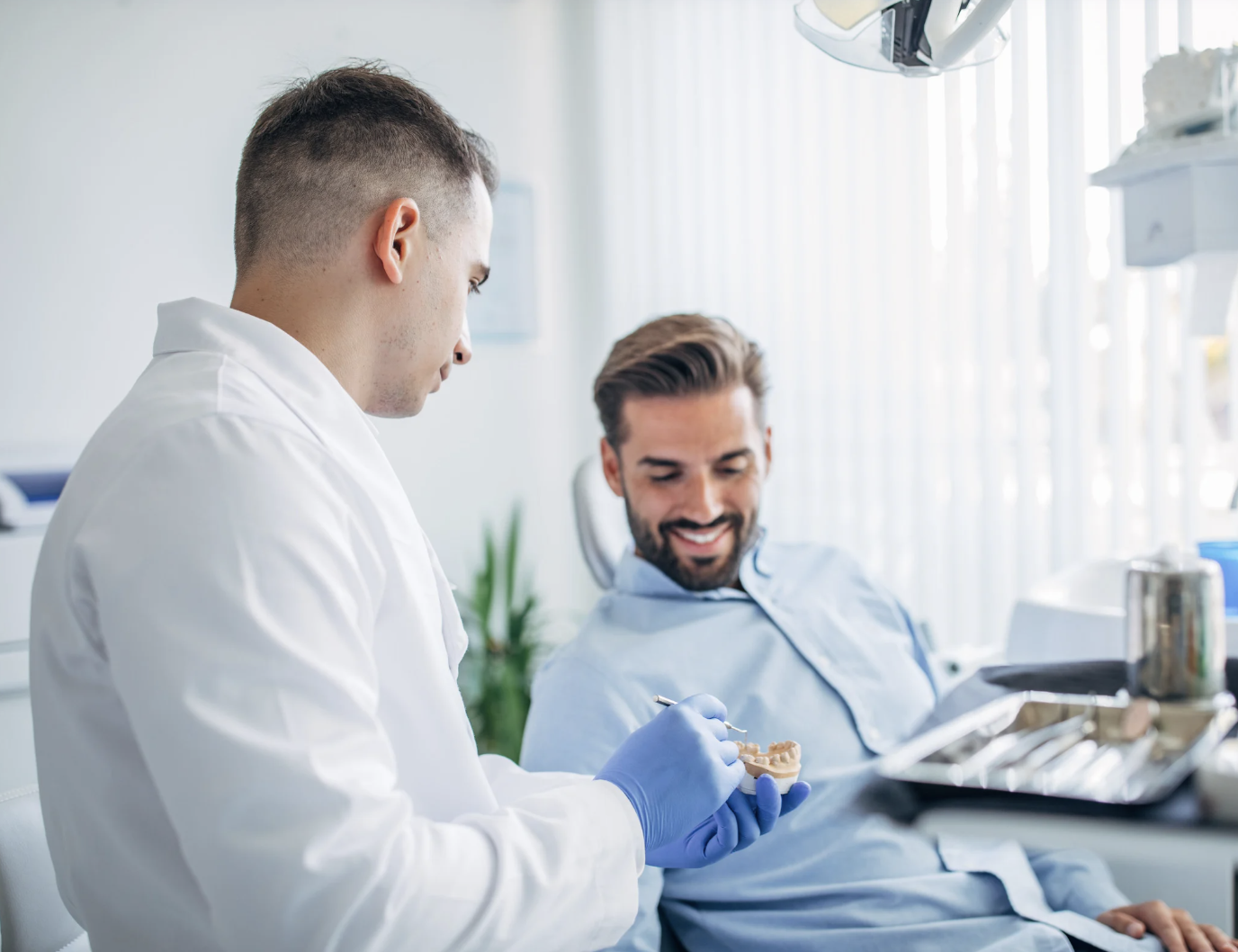
A lot of people aren't sure what they're signing up for when they schedule a consultation. Here's what we actually do:
Full dental examination — We assess the health of your teeth, gums, and underlying bone before we talk about moving anything.
Digital X-rays and imaging — Root positions, bone levels, and jaw geometry all factor into whether Fastbraces is appropriate and how long treatment is likely to take.
Bite analysis — We evaluate how your upper and lower teeth come together. This is where we determine whether your alignment issue is dental (teeth position) or skeletal (jaw structure) — a distinction that significantly affects which treatment is right for you.
Goal and timeline discussion — You have a life. If there's a wedding in five months or a class reunion on the calendar, that matters. We factor your timeline into our treatment planning conversation.
Honest candidacy assessment — We'll tell you directly whether Fastbraces is the right tool for your situation, or whether a different approach — traditional braces, clear aligners, or a referral to an orthodontist — will give you a more predictable result.
We don't do sales pitches. We do evaluations.
Fastbraces FAQ — Designed to Answer What You're Actually Searching For
How long does Fastbraces treatment take?
Most patients complete Fastbraces treatment in 3 to 12 months. Simple dental alignment cases can finish in as little as 100–120 days. More complex cases involving multiple teeth or mild bite correction may extend to around 14 months — still dramatically faster than traditional braces.
Does Fastbraces hurt more because it moves teeth faster?
Generally, no — and this surprises most people. Because the system uses lighter, more flexible forces (up to 87% less friction than conventional braces), the majority of patients report less discomfort than they expected compared to traditional metal brackets.
Can adults get Fastbraces, or is it mainly for teenagers?
Fastbraces is effective for both teens and adults. In fact, a significant portion of our Fastbraces patients are adults who put off orthodontic treatment because they didn't want to commit to two-plus years of traditional braces. If that's you — you're not alone, and there may be a realistic path forward.
Will I need a retainer after Fastbraces?
Yes, and this part matters. Any orthodontic treatment requires a retention phase to prevent teeth from shifting back. We discuss retainer options as a standard part of every Fastbraces treatment plan — it's not an afterthought.
Does insurance cover Fastbraces?
Coverage varies by plan. We accept most major dental insurance, as well as Medicare and Medicaid. We also offer financing through CareCredit and Sunbit. If you're not sure what your plan covers, call us and we'll help you sort through it before your appointment.
Questions Worth Asking Any Fastbraces Provider
Before committing to treatment anywhere, ask these:
Will you take X-rays before recommending Fastbraces?
How do you distinguish dental vs. skeletal alignment issues?
What does your retention protocol look like post-treatment?
If I'm not a candidate, do you have an orthodontist referral?
A confident provider answers all of these without hesitation.
The Bottom Line

Fastbraces delivers real results — for the right patient. The difference between a lasting outcome and one that slowly reverses comes down to one thing: a thorough clinical evaluation before treatment begins.
If you're ready for a straight answer, give us a call. We'll do a proper consultation — X-rays included — and tell you honestly whether Fastbraces is right for you. If it's not, we'll point you in the right direction.
📍 State Avenue Dental Office — Kansas City, KS (KCK) 🗣 English • Korean • Spanish Your implant investment deserves ongoing protection. We're here to help.