
When Your Implant Feels Like It’s Loose
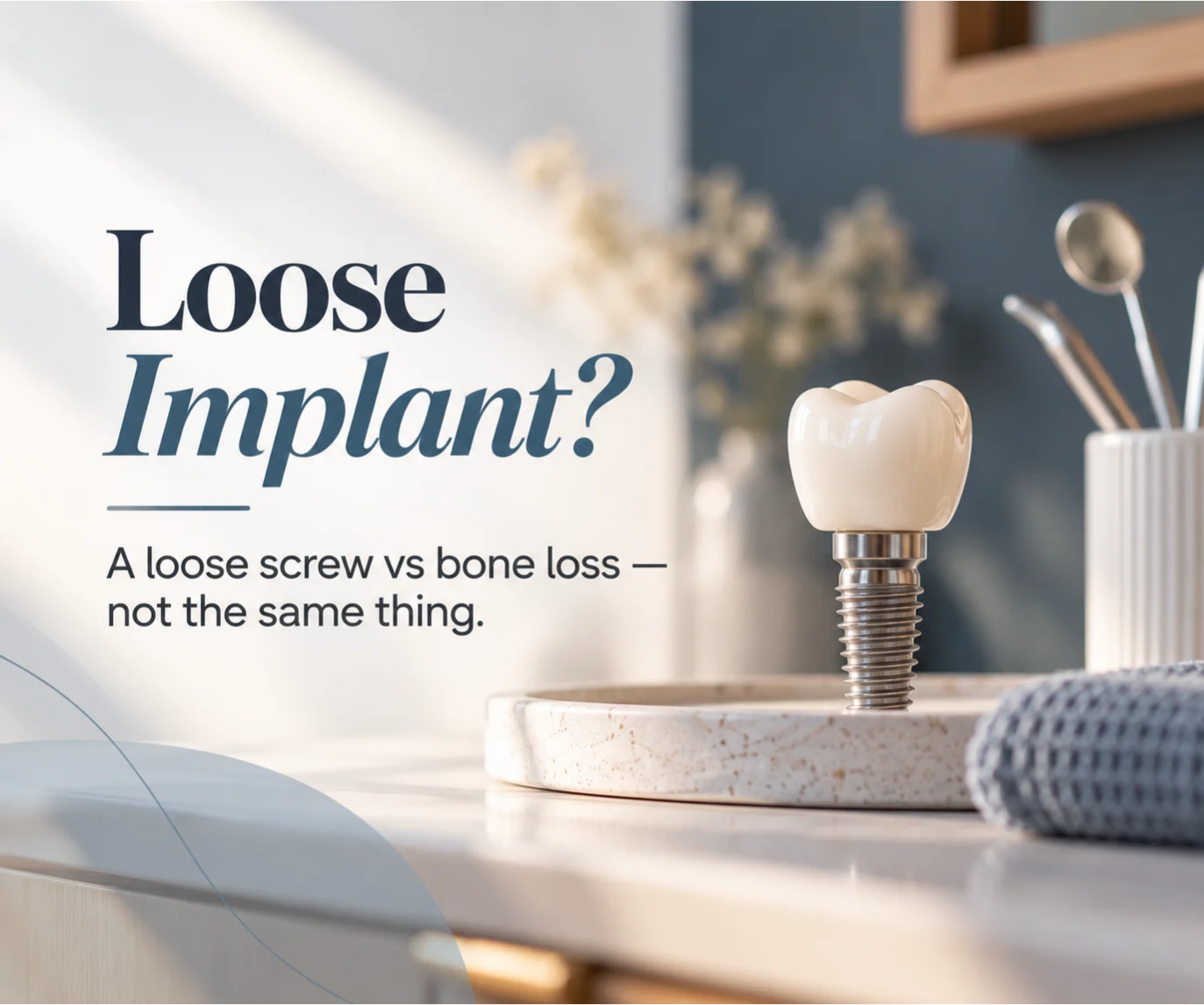
Few things get a patient’s attention faster than the sense that a dental implant — something that’s supposed to be rock-solid — has started to move. It’s an alarming feeling, and an understandable reason to worry.
Here’s what’s important to know: that wobbling sensation can mean two very different things. They can feel nearly identical in your mouth, but their causes, and their outcomes, are worlds apart. One is usually a simple fix. The other is serious. Understanding the difference — and what to do about either — is what this post is for.
Possibility One: The Screw Has Loosened (Usually Simple)
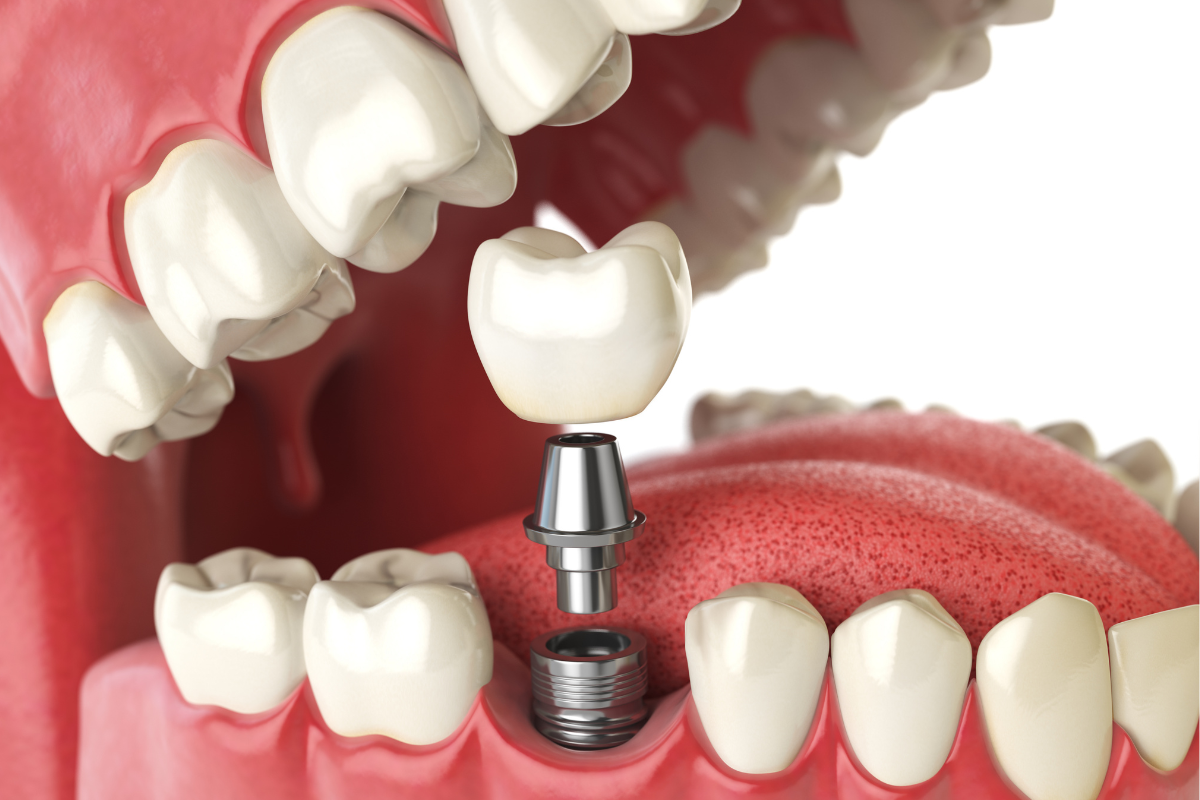
A dental implant isn’t a single piece. There’s the implant itself — the post anchored in your jawbone — and the restoration (the crown) that sits on top, held in place by a small screw. Those are two separate components, and that distinction is the key to this whole topic.
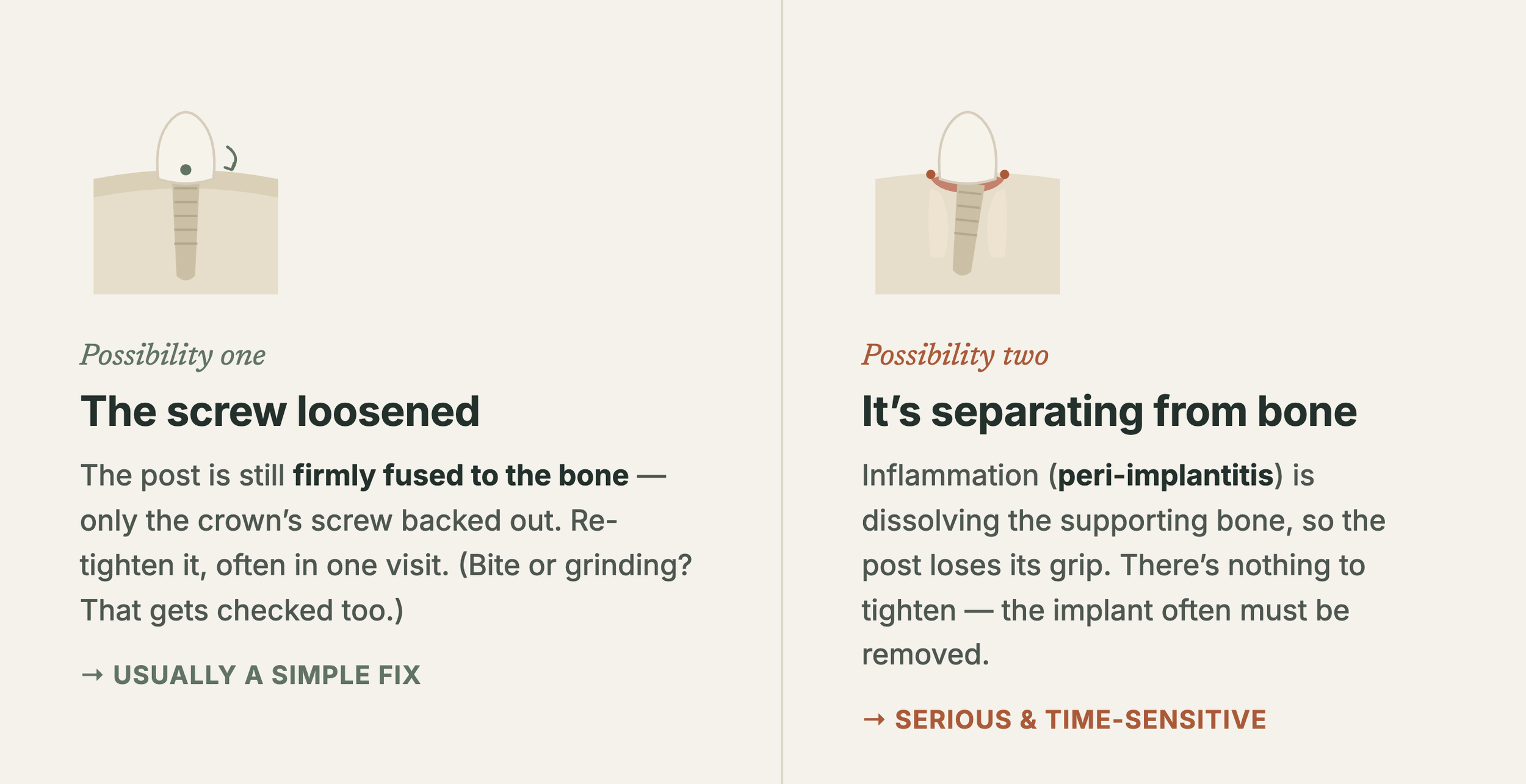
In the first scenario, the implant post is still firmly fused to the bone exactly as it should be. What’s come loose is just the screw holding the crown on top. So the movement you’re feeling isn’t the implant failing — it’s only the restoration shifting slightly on a solid foundation.
The good news: this is relatively straightforward to resolve. The crown is removed, the screw is re-tightened (or replaced) to the proper specification, and things are back to normal — often in a single visit.
But there’s an important footnote. A screw that loosens usually loosened for a reason. If your bite forces aren’t balanced, or if you grind or clench your teeth, that repeated stress can back the screw out again and again. So while re-tightening fixes the immediate problem, the underlying cause — the bite, the grinding — needs to be identified and addressed, or you’ll be back for the same issue.
Possibility Two: The Implant Is Separating From the Bone (Serious)
The second scenario feels similar but is a fundamentally different problem — and a much more concerning one.
Here, it’s not the screw. It’s the implant post itself beginning to separate from the jawbone. This happens when inflammation develops in the tissue around the implant — a condition called peri-implantitis — and that inflammation causes the supporting bone to dissolve away. As the bone that was anchoring the implant is lost, the implant loses its grip, and genuine movement begins.
This is serious because the foundation itself is failing. And unfortunately, once an implant has meaningfully separated from the bone, re-tightening won’t help — there’s nothing loose to tighten. In many of these cases, the implant has to be removed.
The difference between the two scenarios couldn’t be starker: one is a quick adjustment to a healthy implant; the other is the loss of the implant itself. And from the outside, in those early moments, they can feel surprisingly alike — which is exactly why a wobble should never be self-diagnosed or waited out.
Watch for the Signals That Come Before the Wobble
Here’s the most useful thing to take from all of this: by the time an implant is visibly wobbling due to bone loss, the problem is already advanced. The signals worth acting on almost always show up before the movement does.
Those earlier warning signs are the ones to pay attention to:
Bleeding from the gums around the implant
An odor coming from that area
Swelling or tenderness in the surrounding tissue
A change in how it feels when you chew — different from how it used to feel
Any of these can indicate the inflammation that leads to bone loss, while it’s still early enough to intervene. Catching peri-implantitis in its early stages gives the best chance of saving the implant — before the bone is gone.
Why Waiting Is the Real Risk
The temptation with a mild wobble or a little bleeding is to wait and see — to hope it settles on its own. With implants, that instinct is genuinely risky, and it’s worth being direct about why.
If it’s a loose screw and you wait, the screw can continue to work against an unstable bite until it fractures — turning a simple re-tightening into a more involved repair. If it’s early bone loss and you wait, the bone keeps dissolving the entire time. And that matters enormously for what comes next: once enough bone is lost, not only does the implant fail, but there may not be enough bone left to place a new one without extensive grafting. In other words, waiting can turn a fixable situation into one where re-implanting becomes difficult or impossible.
Time is not neutral here. In both scenarios, the problem gets harder to solve the longer it goes unaddressed.
The Bottom Line: A Wobble Is Not a Watch-and-Wait Symptom
With most minor aches and twinges, “keep an eye on it for a few days” is reasonable advice. A loose-feeling implant is the exception. It’s not a symptom to monitor — it’s a signal to act on.
The reason is simple: the two causes are impossible to tell apart on feel alone, one of them is serious and time-sensitive, and both get worse with delay. A quick evaluation settles it. If it’s a loose screw, you’ll likely walk out with it fixed. If it’s something more, catching it early is the single biggest factor in what can be done about it.
So if your implant feels even slightly off — a little movement, a little bleeding, an odor, a change when you chew — don’t wait it out. Give us a call and let us take a look. With implants, checking right away isn’t overreacting. It’s exactly the right response.
Frequently Asked Questions
Why does my dental implant feel loose?
There are two main causes. Either the screw holding the crown on top has loosened — a relatively simple fix — or the implant itself is separating from the bone due to inflammation and bone loss, which is serious. They can feel similar, so an evaluation is the only reliable way to tell which it is.
Is a loose implant an emergency?
It’s not an emergency in the way severe pain is, but it should be checked promptly rather than watched. Because a loose screw and failing bone feel alike and both worsen with time, waiting risks turning a simple repair into a lost implant.
Can a loose dental implant be fixed?
If it’s a loose screw and the implant is still fused to the bone, yes — the crown is removed and the screw re-tightened or replaced, often in one visit. If the implant has separated from the bone, re-tightening won’t help and the implant usually has to be removed.
What are the early warning signs of implant trouble?
Bleeding gums around the implant, an odor from the area, swelling or tenderness, and a change in how it feels to chew. These often appear before any visible wobbling and are the best opportunity to intervene while the implant can still be saved.
What happens if I ignore a loose implant?
A loose screw can fracture against an unbalanced bite; early bone loss keeps progressing. Either way the problem gets harder to fix, and advanced bone loss can leave too little bone to place a new implant without grafting.
📍 State Avenue Dental Office — Kansas City, KS (KCK) 🗣 English • Korean • Spanish