
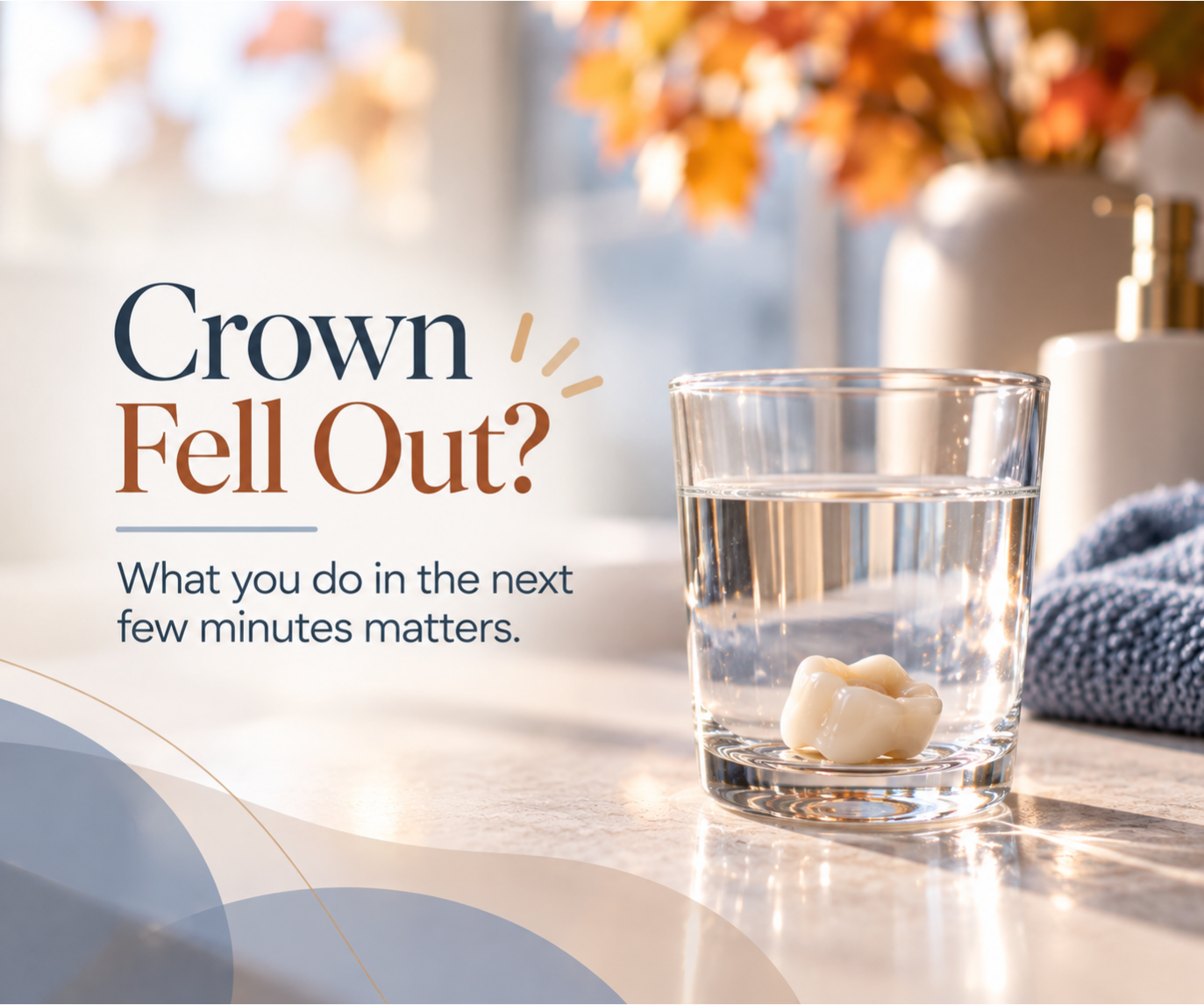
It usually happens at the worst moment — mid-meal, on a caramel or a crusty roll — and suddenly there’s a hard little object in your mouth that used to be firmly attached to a tooth. A crown has come off. It’s startling, and the instinct to fix it yourself right away is strong.
The good news: a crown that’s fallen off is rarely an emergency, and handled well, it often ends with your original crown going right back on. But the handled well part matters a great deal — because a couple of common, well-intentioned mistakes can turn a simple re-cement into a far bigger job. Here’s exactly what to do, and what to avoid.
First: Don’t Throw the Crown Away
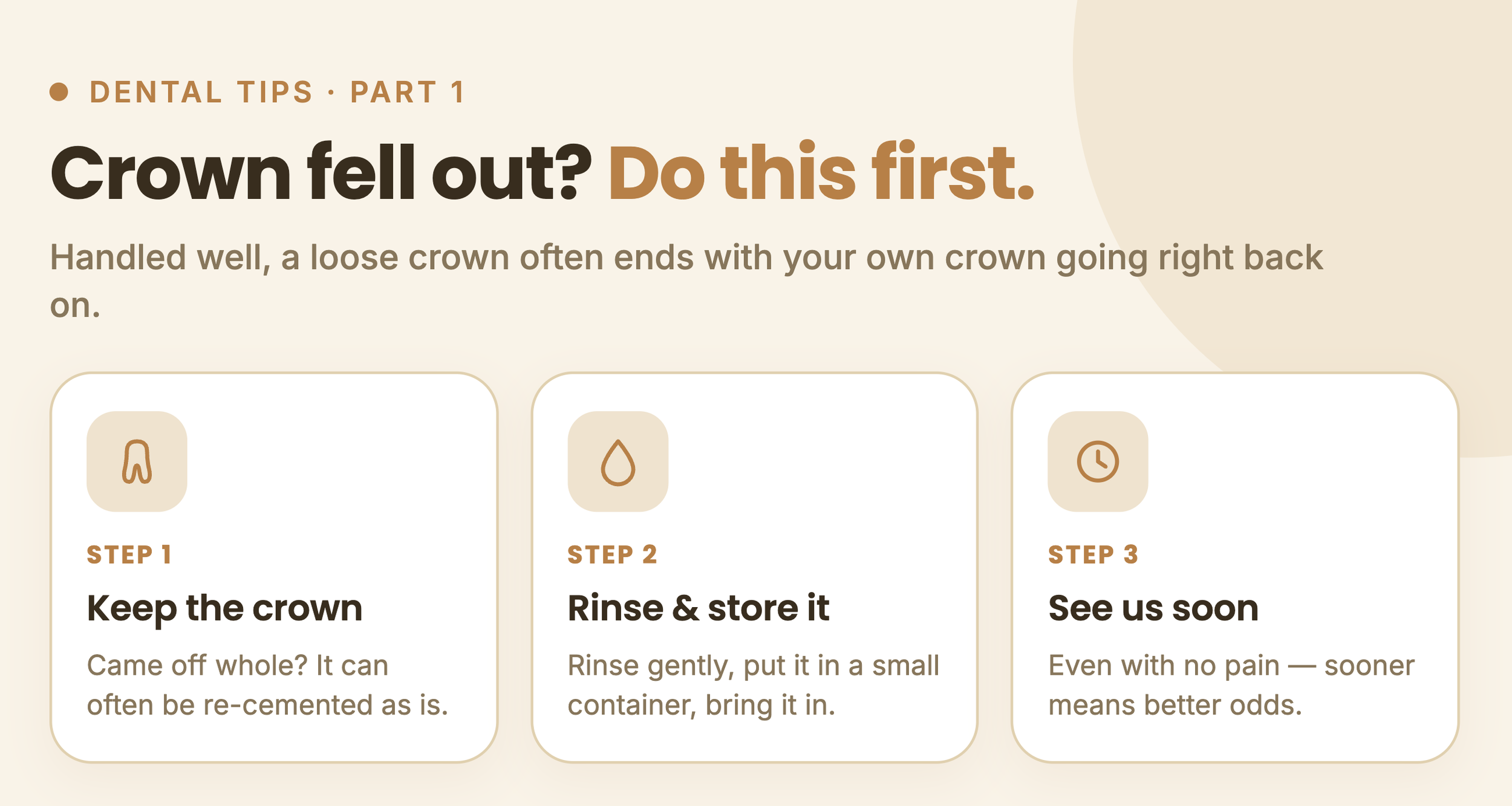
The single most important thing in the first moment is simple: keep the crown.
When a crown comes off cleanly — whole, not broken into pieces — it can very often be re-cemented and reused exactly as it is. That means no new crown to make, less time, and less cost. But only if you still have it.
So once it’s out of your mouth, rinse it gently with water, place it somewhere safe — a small container or pill box is ideal, not loose in a pocket where it can be lost or crushed — and bring it with you to your appointment. That little object is very possibly the exact crown that’s going back on your tooth.
The One Thing You Must Never Do: Glue It Back On
This is the most important warning in this entire post, because it’s both a common instinct and a genuinely costly mistake.
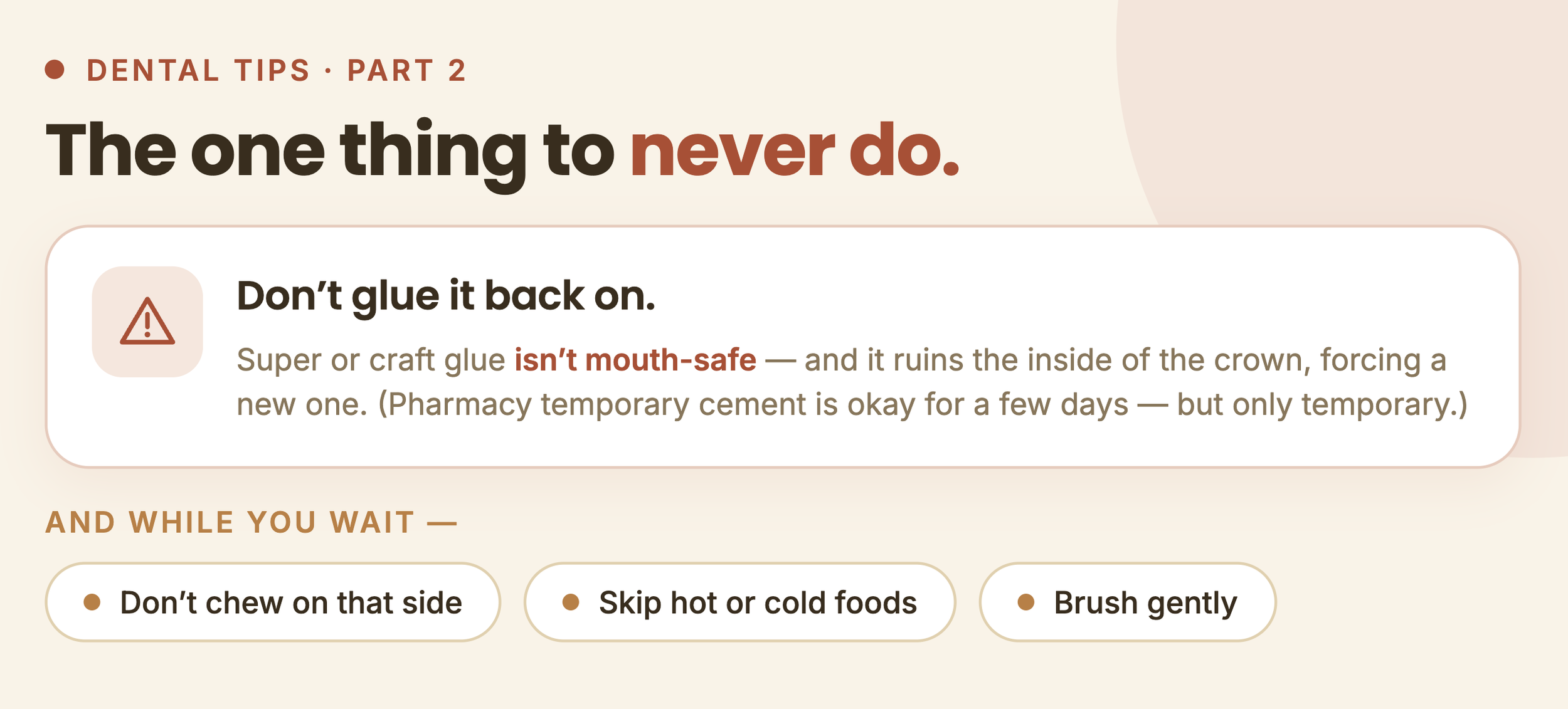
Never use household glue — craft glue, super glue, or any similar adhesive — to reattach a crown yourself.
Here’s why it matters so much. These products are not made for use inside the mouth; they aren’t safe to have against oral tissue, and they aren’t designed for the wet environment of the mouth. But the bigger problem is what they do to the crown itself. Once household glue hardens inside a crown, the inside can no longer be cleaned out properly for a correct re-cementation. In other words, gluing it yourself can take a perfectly good, reusable crown and ruin it — forcing an entirely new crown to be made. The quick fix destroys the easy fix.
What about pharmacy temporary cement? The temporary dental cement sold at drugstores is a different story — it’s designed for the mouth and can be used to hold a crown in place for a few days if you genuinely can’t get in right away. But it’s exactly what the name says: temporary. It’s a short bridge to a proper appointment, not a solution, and it shouldn’t be treated as one.
Don’t Leave It Out for Long, Either
If gluing it is the mistake on one end, simply ignoring it is the mistake on the other. Leaving a tooth uncrowned for an extended period causes two specific problems.
The exposed tooth is vulnerable.
The tooth underneath a crown has had its outer structure reshaped, and without the crown covering it, that surface is exposed. This makes it sensitive — especially to temperature — and notably more vulnerable to decay, since the protected surface is now open to bacteria.
The space starts to close.
This is the part people don’t expect. In as little as a few days to a few weeks, the neighboring teeth and the opposing tooth begin to shift slightly into and around the space. Teeth move more readily than most people realize, and it doesn’t take much. The consequence is direct: shift enough, and your original crown no longer fits — which means the easy re-cement is off the table and a new crown becomes necessary. Waiting, quite literally, can close the window on reusing the crown you already have.
What to Do in the Meantime
Until you can get in, a few simple measures protect the tooth and keep things stable:
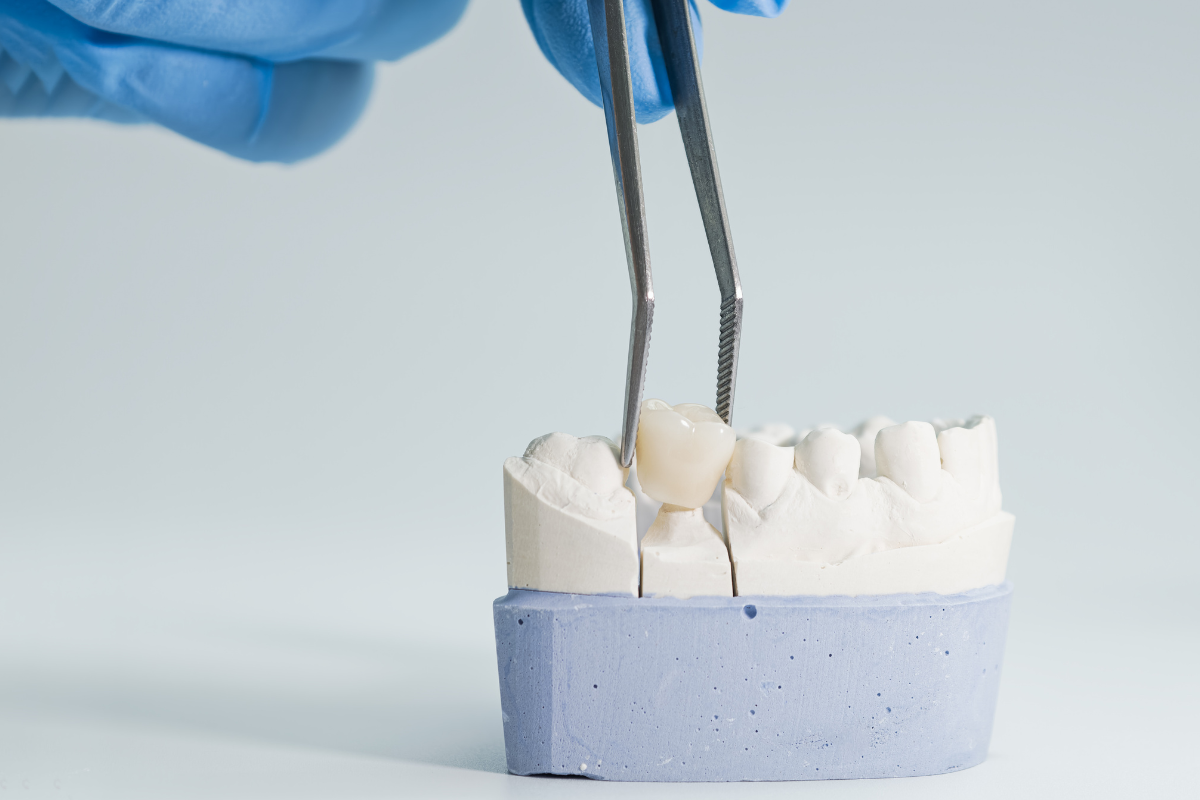
Don’t chew on that side. Keep food and pressure off the exposed tooth entirely.
Avoid very hot or very cold foods and drinks. The exposed surface can be sensitive, and temperature extremes are the most common trigger.
Brush gently around the area — keep it clean, but don’t scrub the exposed tooth aggressively.
None of this is complicated. The goal is simply to keep the tooth protected and unchanged until it can be properly addressed.
Even Without Pain, Go Soon
Here’s the point that ties it all together: a crown can come off without any pain at all, and that absence of pain leads a lot of people to put off dealing with it. That’s the delay that causes the trouble.
The reason to come in quickly isn’t pain — it’s preservation. The sooner you’re seen, the more likely it is that your original crown goes right back on: it hasn’t been ruined by glue, the tooth hasn’t decayed, and the surrounding teeth haven’t shifted enough to change the fit. Every one of those risks grows with time. Acting fast is simply the difference between the simplest possible outcome — your own crown, re-cemented — and a more involved one.

So if your crown has come off, even if nothing hurts, keep the crown, skip the glue, stay off that side, and give us a call. Bring the crown with you, and come in as soon as you can — it’s the surest way to keep the fix as simple as it should be.
Frequently Asked Questions
What should I do if my crown falls out?
Keep the crown — rinse it gently and store it in a small container to bring in. Don’t glue it back on. Avoid chewing on that side, stay away from very hot or cold foods, brush gently, and call your dentist to be seen as soon as possible so your original crown can likely be reused.
Can I glue my crown back on myself?
Never with household or super glue — it isn’t safe for the mouth and it ruins the inside of the crown, which can force an entirely new one to be made. Pharmacy temporary dental cement is safe for short-term use to hold the crown for a few days, but it’s strictly temporary, not a fix.
Is a crown falling out an emergency?
It’s usually not an emergency, but it is time-sensitive. There’s often no pain, but the exposed tooth is vulnerable to decay and sensitivity, and surrounding teeth can shift within days to weeks — so it should be seen promptly even when it doesn’t hurt.
Can a crown that fell out be reused?
Often, yes — if it came off whole and you get in before problems develop. Reuse depends on the crown not being damaged (don’t glue it), the tooth underneath staying healthy, and the neighboring teeth not shifting enough to change the fit. The sooner you’re seen, the better the odds.
What happens if I leave a lost crown too long?
The exposed tooth can become sensitive and decay, and the neighboring and opposing teeth gradually shift into the space. Once they move enough, the original crown no longer fits and a new one must be made — turning a simple re-cement into a larger, costlier job.
📍 State Avenue Dental Office — Kansas City, KS (KCK) 🗣 English • Korean • Spanish