
Do You Really Need a Crown After a Root Canal?
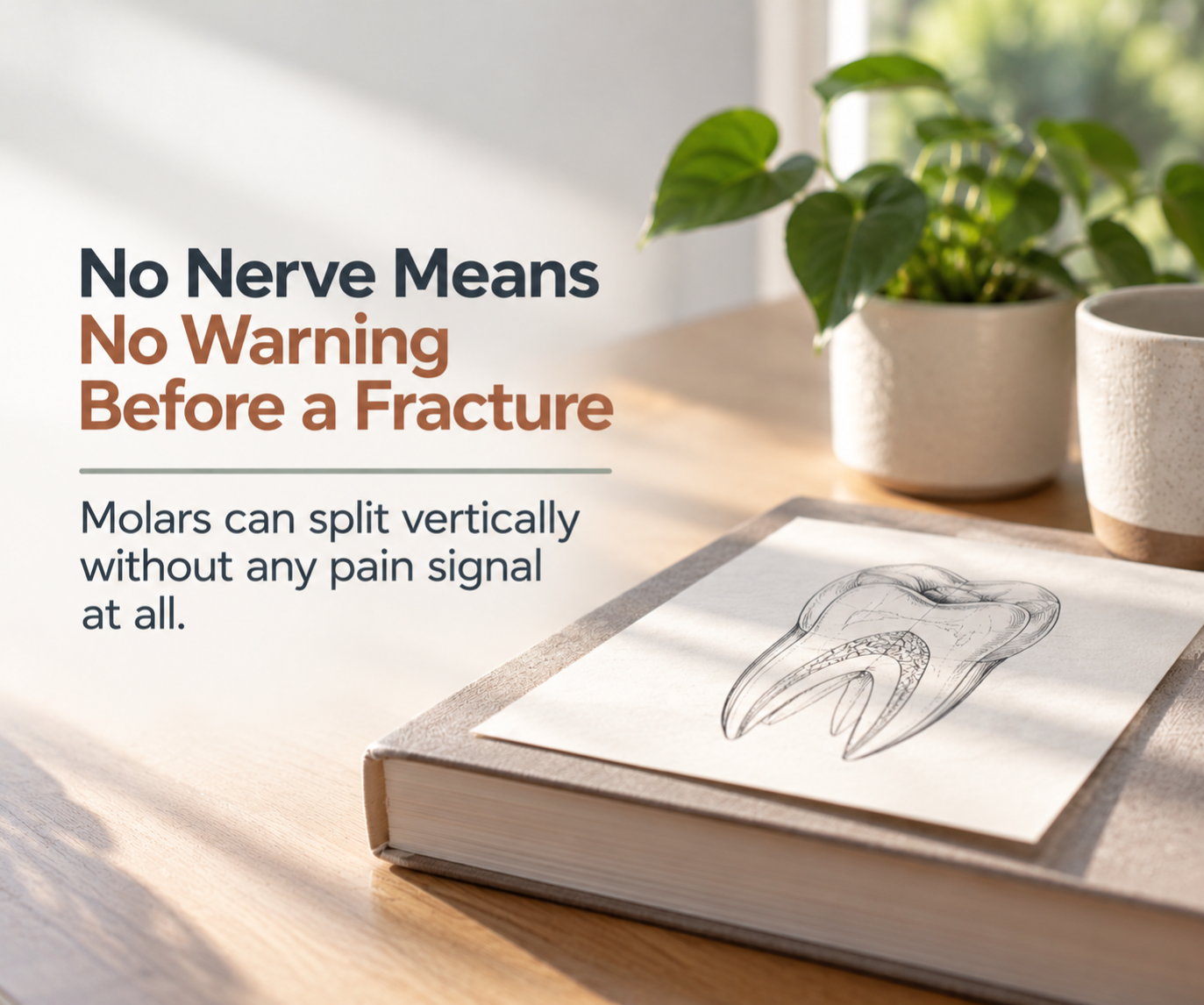
It's one of the most understandable questions in dentistry, and we hear it often: "The root canal is done, the pain is completely gone — do I really need to come back for a crown?" When a tooth that was throbbing for days suddenly feels fine, it's natural to feel like the problem is solved and the crown is an optional extra.
Here's the thing worth understanding before you skip it: the relief you feel and the strength of the tooth are two completely different things. The root canal took care of the pain. The crown takes care of keeping the tooth. Let's walk through why that final step matters more than it seems.
Why the Tooth Feels Fine — but Isn't Strong
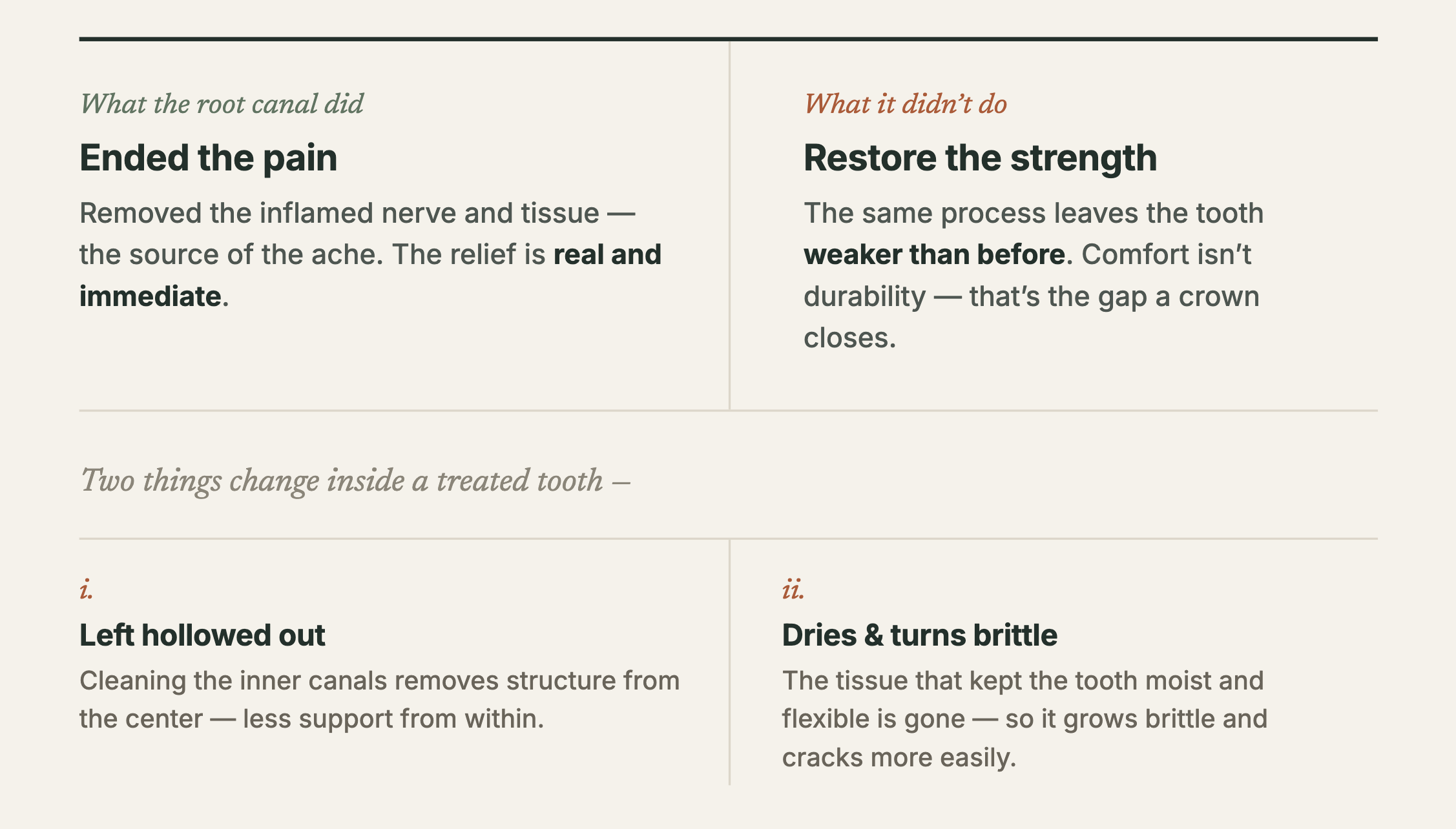
A root canal removes the inflamed nerve and tissue from inside the tooth. Since that inflamed tissue was the source of the pain, taking it out brings genuine relief — the tooth stops hurting, often dramatically.
But it's important not to read that comfort as strength. Removing the pain and reinforcing the tooth are separate things, and a root canal only does the first. In fact, the very process that ends the pain is what leaves the tooth structurally weaker than it was before. The comfort is real; the durability isn't there yet. That's the gap a crown is designed to close.
What a Root Canal Leaves Behind
To understand why a treated tooth is vulnerable, it helps to picture what changes inside it.
The tooth is left hollowed out.
A root canal involves cleaning out the inner chamber and canals of the tooth — removing the nerve and tissue from the center. This necessarily leaves the tooth more hollow than a solid, intact tooth, with less internal structure supporting it from within.
It loses its moisture supply.
The living tissue inside a tooth doesn't just carry the nerve — it also supplies moisture that keeps the tooth structure resilient and slightly flexible. Once that tissue is removed, the tooth gradually loses that internal hydration. Over time, it becomes drier and more brittle — and a brittle tooth is far more prone to cracking and breaking than a living one.
Put those together and you have a tooth that is both more hollow and more brittle than it used to be. It can look completely normal and feel completely fine, while being considerably less able to withstand force than the tooth next to it.
Why Molars Are Especially at Risk
This is where the location of the tooth matters enormously.
Molars — the back teeth — do the heavy lifting of chewing, and they absorb powerful, repeated forces every single day. When those substantial forces keep loading onto a tooth that's been hollowed out and made brittle by a root canal, the tooth can only take it for so long.
At some point, a weakened molar under that repeated stress can split — often vertically, straight down the tooth. And where that split ends makes all the difference. If only the upper portion chips or fractures, there's usually still enough sound tooth to save and restore. But if the crack travels all the way down into the root, the tooth typically can't be saved, and extraction becomes the only option. A crown exists precisely to distribute and contain those chewing forces, protecting the weakened tooth from reaching that point.
The Danger You Can't Feel
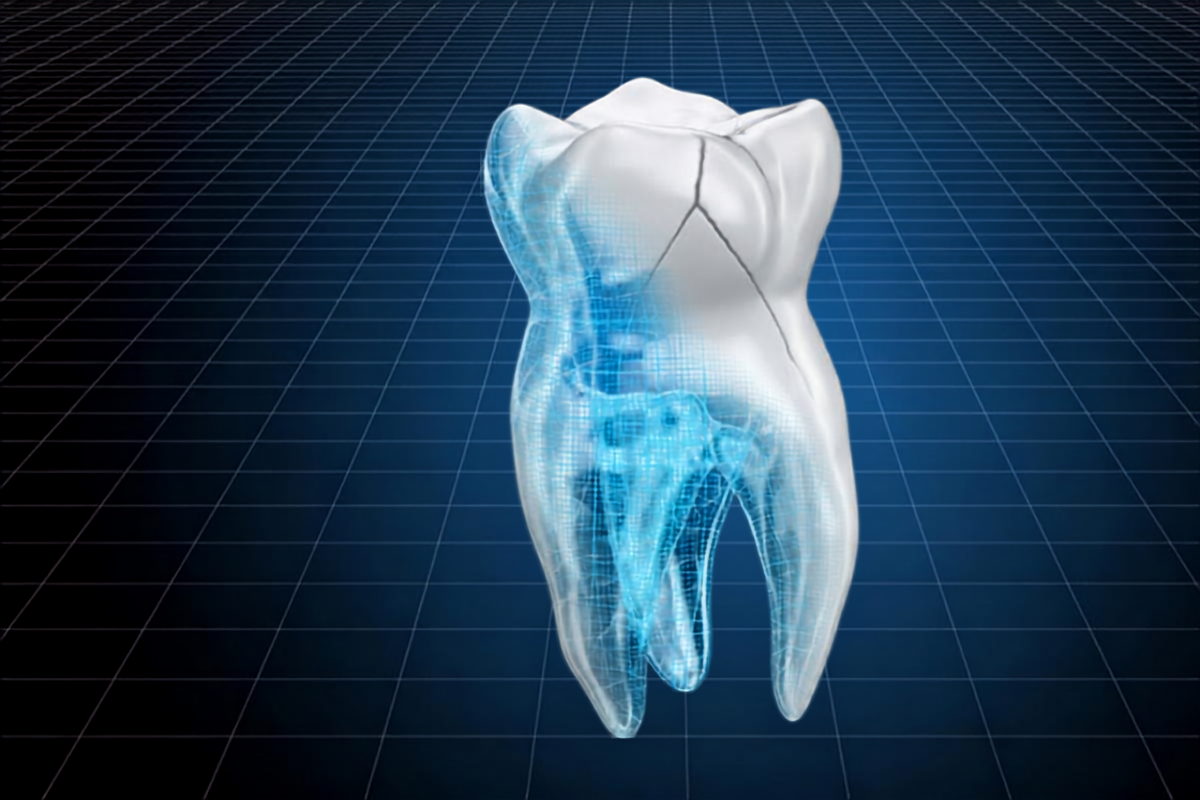
Here's the part that makes going without a crown genuinely risky rather than just theoretically unwise: the tooth has no nerve anymore, so it can't warn you.
Normally, a tooth in trouble sends signals — sensitivity, aching, discomfort when biting — that prompt you to get it looked at before things get worse. But a root-canaled tooth has had its nerve removed. That means as a crack develops and progresses, you feel nothing. There's no warning ache, no building sensitivity, no signal that stress is accumulating.
The result is a pattern we see regularly: someone finishes a root canal, feels completely fine, decides the crown can wait, and carries on normally for weeks or months. Then one day, mid-bite on something ordinary, the tooth fractures — sometimes catastrophically, sometimes beyond saving. There was no pain leading up to it because there couldn't be. The absence of a warning system is exactly why the protection needs to be built in ahead of time.
When a Crown Might Not Be Necessary
To be fair and accurate: a crown isn't automatically required after every single root canal. The decision depends on the specific tooth.
Front teeth (incisors and canines) take much less chewing force than molars, and they're shaped to shear rather than grind. If a front tooth has had a root canal and still has plenty of intact, healthy tooth structure remaining, a crown may not be necessary, and a more conservative restoration might be appropriate instead. The two factors that matter most are how much force the tooth absorbs in normal function and how much sound structure is left after treatment.
So it's genuinely a case-by-case judgment. But for molars and premolars doing the work of chewing — which is the majority of root canals — a crown is very often the difference between a tooth that lasts for decades and one that fractures within a few years.
The Crown Is the Finish Line, Not an Add-On
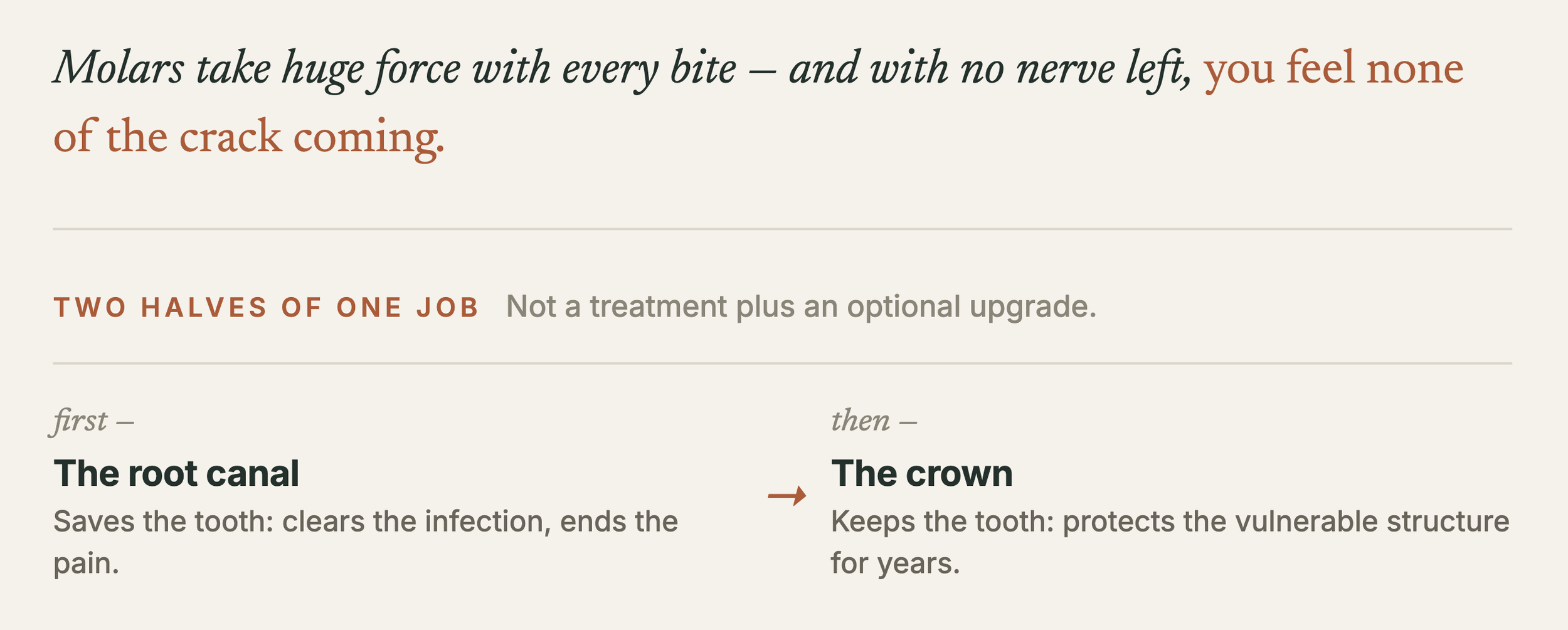
The most useful way to think about it is this: the root canal and the crown are two halves of one treatment, not a treatment plus an optional upgrade.
The root canal saves the tooth — it clears the infection and eliminates the pain, rescuing a tooth that might otherwise have been lost. The crown is what lets you keep that saved tooth for the long haul, protecting the now-vulnerable structure so it can go back to doing its job for years. Stopping after the root canal is like a contractor rebuilding the structure of a house but never putting the roof on — the hard, important work is done, but what protects it from what comes next is missing.
Skipping the crown doesn't just leave the treatment unfinished; it puts the very tooth you invested in saving at real risk. The treatment isn't truly complete until that final protective step is in place.
Frequently Asked Questions
Do I need a crown after a root canal?
For most back teeth (molars and premolars), yes. A root canal leaves the tooth hollowed out and increasingly brittle, and the heavy forces of chewing can crack it — often beyond saving. A crown protects and reinforces it. Front teeth with plenty of remaining structure are sometimes an exception.
What happens if you don't get a crown after a root canal?
The treated tooth becomes drier and more brittle over time, and without a crown to protect it, chewing forces can cause it to crack or split — sometimes down into the root, which usually means the tooth must be extracted. Because the nerve is gone, this can happen with no warning pain.
Why does a tooth become brittle after a root canal?
The procedure removes the inner tissue that supplied moisture to the tooth, so it gradually dries out. It also leaves the inside of the tooth more hollow. Together, these make the tooth less flexible and more prone to fracturing than a living tooth.
Can a root canal tooth crack without me feeling it?
Yes — and this is a key reason crowns matter. The nerve was removed during the root canal, so the tooth can't send pain signals. A crack can develop and worsen with no discomfort at all, until the tooth suddenly fractures during normal chewing.
Do front teeth need a crown after a root canal?
Not always. Front teeth take less chewing force, so if enough healthy structure remains, a more conservative restoration may be appropriate. The decision depends on the tooth's position and how much sound structure is left after treatment.
The Thing About Finishing What You Started
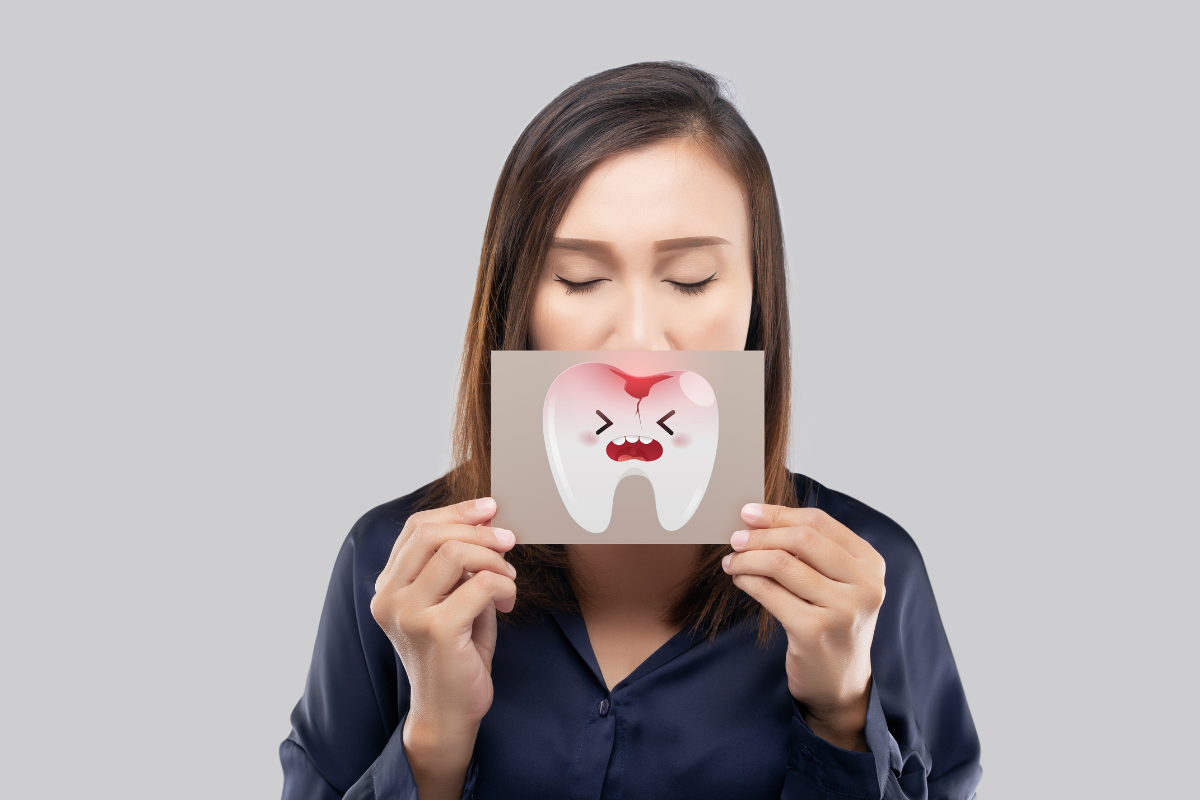
There's a particular frustration in seeing a tooth lost that didn't have to be — one where the hard part was already done, the infection cleared, the pain resolved, and then the last protective step was skipped because everything felt fine. The tooth that fractures a year after an un-crowned root canal was, in a sense, saved and then lost, and the second part was avoidable.
That's really the whole message here. A root canal is a significant investment of time and effort to rescue a tooth worth keeping. The crown is what makes that rescue last. Feeling fine afterward is exactly what the root canal was supposed to accomplish — it's not a sign you can stop early, but a sign the first half worked.
If you've had a root canal and haven't yet completed it with a crown — especially on a back tooth — it's worth finishing the job before the tooth finishes it for you. Give us a call, and let's protect the tooth you already worked to save.
📍 State Avenue Dental Office — Kansas City, KS (KCK) 🗣 English • Korean • Spanish