
The Best Age for Braces: Understanding Your Child's Orthodontic Golden Window
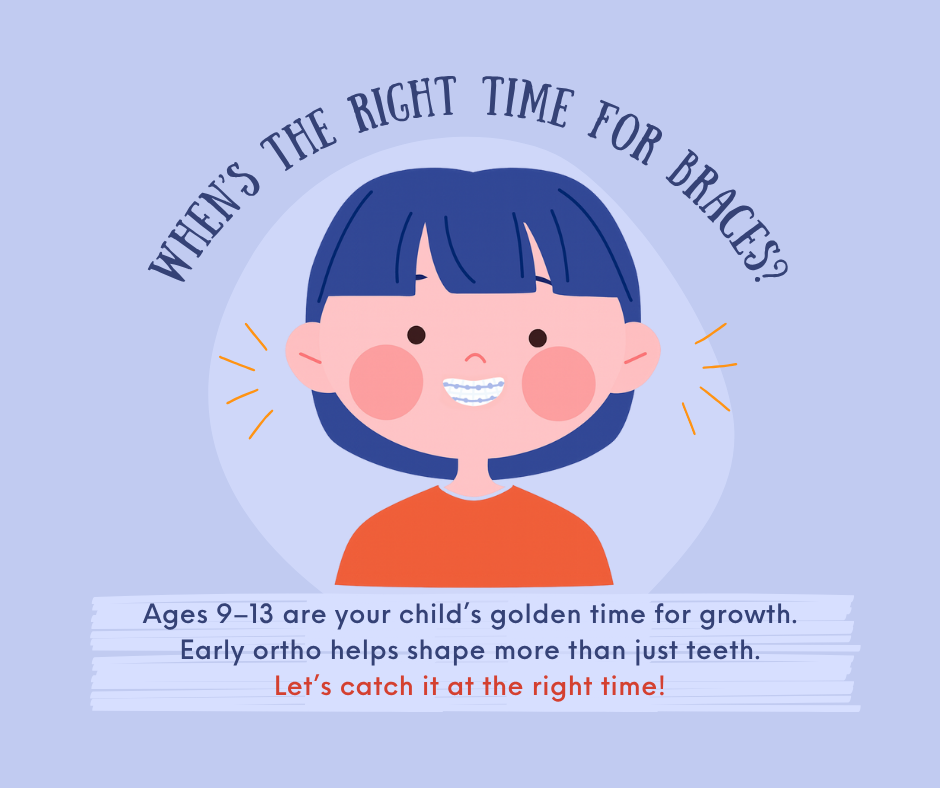
If you're a parent in Kansas City, you've probably asked yourself: "When should my child start braces?" Maybe you've heard different ages from different people—7, 10, 13—and wondered what's actually right.
Here's the truth: there's no single "perfect age" for every child. But there is a growth window where orthodontic treatment becomes more effective, more comfortable, and often simpler than waiting too long or starting too early.
At State Avenue Dental Office in Kansas City, Kansas, we've seen how timing can make all the difference—not just for straightening teeth, but for supporting healthy jaw development, proper breathing, and long-term facial balance.
The Growth Golden Window: Ages 10–13
For most children, the ideal time for orthodontic evaluation falls between ages 10 and 13—roughly upper elementary through early middle school years.

Why this window?
During these years, several things happen simultaneously:
Permanent teeth are coming in
The jaw is still actively growing
Facial structure is developing rapidly
Bite patterns are becoming established
This growth period gives us an opportunity to guide—not just correct. We can influence how the jaw develops, how the face balances, and how the airway forms. Starting treatment during active growth often means better results with less invasive intervention.
That said, some children benefit from earlier evaluation, and some do just fine starting later. It depends on what we see during the exam.
Why Jaw Growth and Breathing Matter More Than You Think
Most parents assume orthodontics is purely about straightening crooked teeth. But modern orthodontics looks at the bigger picture—especially jaw development and airway function.
Here's what many families don't realize: daily habits shape jaw growth.
Habits like:
Mouth breathing (especially during sleep)
Tongue thrusting
Chewing primarily on one side
Chronic nasal congestion or allergies
These patterns can gradually lead to:
A narrow or elongated face
Crowded or misaligned teeth
Jaw asymmetry
Bite problems
Even sleep and breathing issues
When we catch these patterns early—during active growth—we can often prevent more complex problems down the road. Sometimes, addressing these issues during the golden window helps kids avoid orthognathic surgery later in life.
How We Assess Your Child's Growth Timing
At State Avenue Dental Office, we use low-dose digital imaging and growth analysis to evaluate:
Whether the jaw is growing forward, backward, or asymmetrically
How much growth potential remains
Room available for permanent teeth
Airway and breathing patterns
Bite alignment and function
This assessment helps us determine whether your child should:
Start treatment now
Monitor growth for another 6–12 months
Address specific habits or breathing issues first
Every child's timeline is different, and that's okay. The goal isn't to rush treatment—it's to start at the right moment for your child.
Signs Your Child May Benefit from Early Evaluation
While the golden window is typically ages 10–13, some situations warrant earlier attention:
Severe underbite or crossbite
Significantly protruding front teeth
Jaw shifting to one side when chewing
No space for incoming permanent teeth
Chronic mouth breathing or snoring
Difficulty closing lips comfortably
Self-consciousness about their smile
If you notice any of these signs, it's worth scheduling an evaluation—even if your child seems young. Early assessment doesn't necessarily mean immediate treatment, but it gives us a baseline and helps us plan appropriately.
A Simple Home Checklist for Parents
Between dental visits, here are a few things to observe:
Does your child sleep with their mouth open?
Do they breathe through their mouth during the day?
Do they chew mostly on one side?
Are their front teeth flared or crowded?
Do they snore regularly?
Is their smile noticeably crooked or asymmetrical?
These observations can be helpful discussion points during your next dental visit.
Our Approach: Science-Based, Family-Centered
When you visit a dentist in Kansas City, Kansas for an orthodontic consultation, you want someone who listens—not just someone who prescribes a standard treatment.
At State Avenue Dental Office, we design each child's orthodontic plan around:
Current jaw growth and remaining growth potential
Breathing and airway health
Bite function and facial balance
Your child's personality and readiness
Your family's goals, schedule, and preferences
Orthodontics is more than hardware. It's a strategic part of your child's overall health and development—and we treat it that way.
When Should You Schedule a Consultation?
If you're unsure whether now is the right time, that probably means it is time to check.
A consultation doesn't commit you to anything. It simply gives you clarity about your child's growth, timing, and options. You'll walk away knowing whether to proceed now, monitor for a while, or address other factors first.
And if you've been wondering whether you've already missed the golden window—don't worry. Orthodontic treatment works at almost any age. But the earlier we can assess growth patterns, the more options we typically have.
Ready to find out if now is your child's golden time? Call State Avenue Dental Office to schedule a complimentary growth assessment. Let's figure out the right timing—together.