
Can Dental Implants Get Gum Disease?
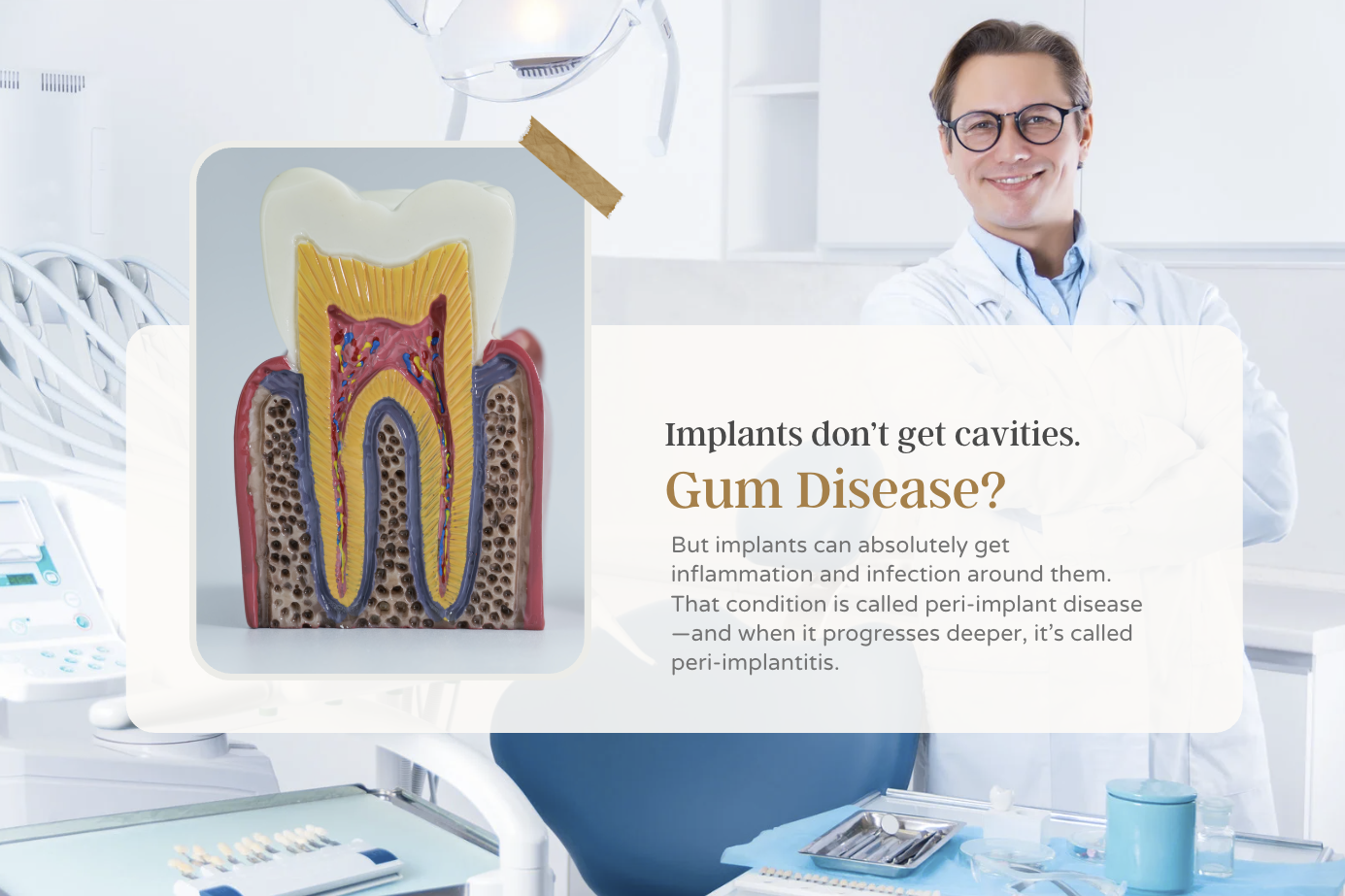
Early Signs of Peri-Implantitis—And How to Protect Your Investment
We hear a version of this almost every week at our office:
"It's not a real tooth anymore—so it can't really get problems, right?"
Fair assumption. Dental implants are titanium—they don't decay. But the gum and bone tissue around them are very much alive, and they can absolutely get inflamed and infected.
In the early stage, that's called peri-implant mucositis (gum inflammation only). When it reaches the bone, it becomes peri-implantitis—and once bone starts to go, getting it back isn't simple.
As a dentist in Kansas City, Kansas, our team at State Avenue Dental Office sees this more often than we'd like. The encouraging reality? When it's caught early, treatment is usually straightforward.
What Exactly Is Peri-Implantitis?
Think of a dental implant like a fence post set into the ground. The post itself is incredibly strong, but the soil around it is what keeps it upright. If that soil washes away, the post gets loose—no matter how solid the metal is.
That's what happens with peri-implantitis. Bacteria build up, inflammation starts in the gum tissue, and if it isn't addressed, it works deeper into the supporting bone. And because the tissue around implants attaches differently than around natural teeth, that progression can happen faster than you'd expect.
Key distinction: Mucositis is reversible—it's gum inflammation without bone loss. Peri-implantitis means bone is involved. That's a harder problem to solve.
7 Warning Signs You Shouldn't Ignore
Peri-implantitis rarely starts with sharp pain. Most early signals are subtle enough that people think, "It's probably nothing."
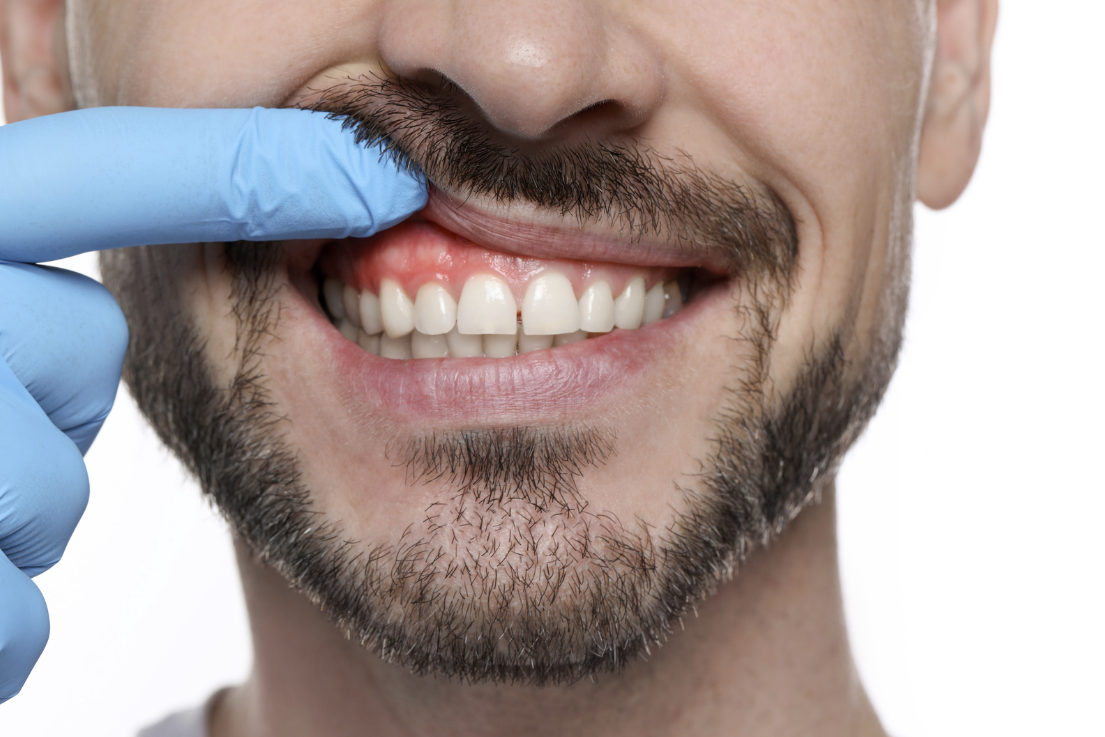
1. Bleeding when brushing or flossing around the implant. Healthy implant tissue shouldn't bleed with normal cleaning.
2. Puffy, red, or swollen gums near the implant site.
3. A bad taste or persistent odor that keeps returning. Likely bacteria trapped in a pocket you can't reach at home.
4. Tenderness or a dull ache in the implant area. More a low-grade awareness than sharp pain.
5. Chewing feels "different"—pressure, shifting, or a bite that's off.
6. Gum recession exposing the implant crown edge. You might notice a grey or metallic line at the gumline.
7. Pus or discharge around the implant. Active infection. Don't wait on this one.
Even one of these is worth a call. We'd rather check and tell you everything's fine than have you wait until it's not.
Implant Care Is Not the Same as Natural Tooth Care
The hygiene routine that works for your natural teeth may not be enough for your implant. Implant crowns and bridges have contours and connection points that standard floss and a toothbrush can't always clean well.
What we typically recommend:
Interdental brushes (correctly sized). We size these in-office so you get the right fit.
Water flosser. A game-changer for implant patients—flushes bacteria from pockets string floss misses.
Implant-specific floss or threaders. Some designs require floss threaded underneath the restoration.
Low-abrasive toothpaste. Some whitening or charcoal pastes can scratch implant surfaces.
The goal isn't to add 20 minutes to your morning. It's a simple, specific system that actually works for your implant—and that you'll stick with.
What Determines Long-Term Implant Success
The lifespan of a dental implant has less to do with placement—and everything to do with what happens after.
A well-maintained implant can last decades. The same implant without consistent care can develop problems within a few years. Here's what matters most:
Regular implant-specific checkups (every 3–6 months). We use instruments designed for implant surfaces and monitor pocket depth and bone levels over time.
Managing risk factors. Smoking and vaping are the biggest modifiable risks. Uncontrolled diabetes, a history of gum disease, and clenching/grinding all increase your chances—so we adjust your plan accordingly.
Open communication. Tell us if something feels different, even if you think it's minor. Early is always easier.
Frequently Asked Questions

Q: Can dental implants get gum disease? A: Implants can't get cavities, but the tissue around them can develop peri-implant disease. When bone loss is involved, it's called peri-implantitis—essentially gum disease around an implant.
Q: What are the first signs of peri-implantitis? A: Bleeding gums around the implant, swelling, persistent bad taste or odor, tenderness, changes in how your bite feels, and gum recession exposing more of the crown edge.
Q: How do you prevent peri-implantitis? A: Daily cleaning with implant-appropriate tools (interdental brushes, water flosser, implant-specific floss), professional maintenance every 3 to 6 months, and prompt evaluation when symptoms appear.
Q: Is peri-implantitis reversible? A: In its earliest stage (mucositis), yes—with proper treatment and improved home care. Once bone loss begins, the goal shifts to stopping further damage and stabilizing the implant.
Something Doesn't Feel Right? Let's Take a Look.
If you've noticed bleeding, swelling, an odd taste, or any change around your implant—don't wait for it to hurt. The difference between a simple fix and a complicated one is often just timing.
Give us a call at State Avenue Dental Office. We're right here in Kansas City, KS (KCK), and we're happy to answer your questions—even if it's just to put your mind at ease.
📍 State Avenue Dental Office — Kansas City, KS (KCK) 🗣 English • Korean • Spanish Your implant investment deserves ongoing protection. We're here to help.