
Why Do My Teeth Chip So Easily? (The Truth About Micro-Cracks)
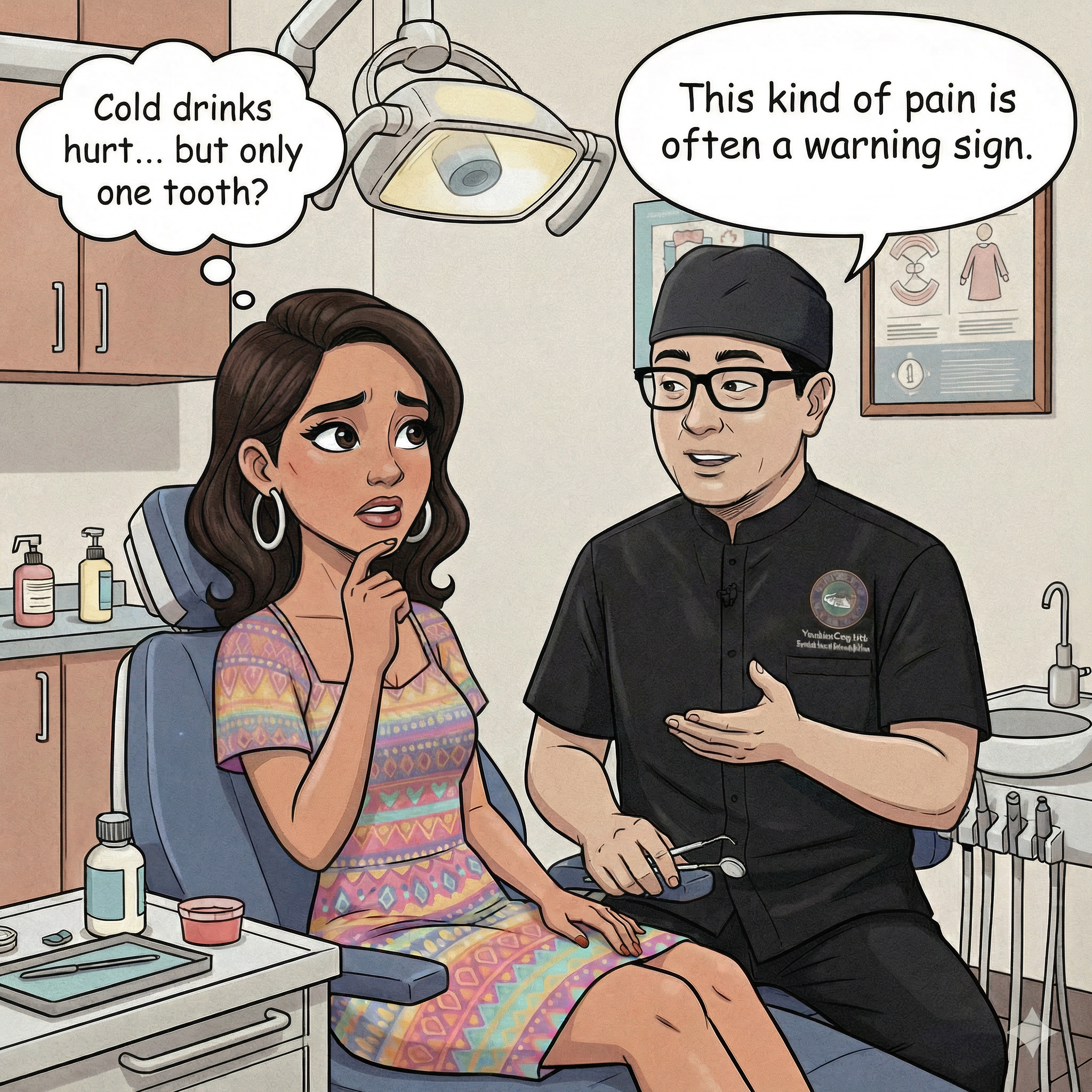
Here’s something we hear at State Avenue Dental Office pretty regularly:
"Doc, my tooth doesn't really hurt—except when I drink ice water. Or sometimes when I bite down on something just right. But then it goes away, so I figured it was nothing."
If that sounds familiar, that "nothing" might actually be a micro-crack. As a dentist in Kansas City, Kansas, I’ve seen hundreds of patients who ignored these little whispers until they turned into a dental emergency.
What Exactly Is a Micro-Crack?
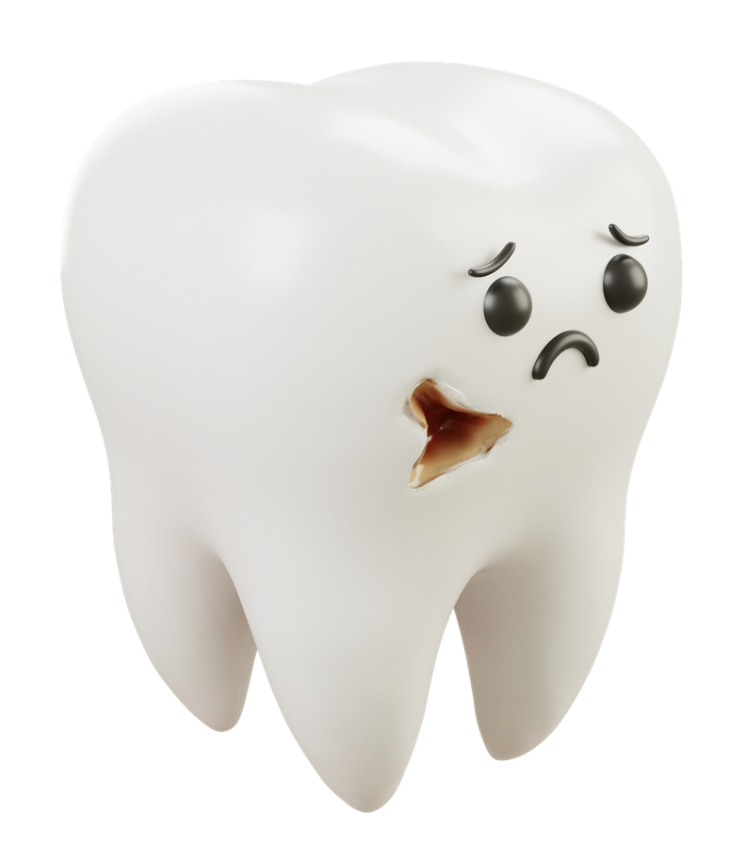
A micro-crack is exactly what it sounds like: a very small fracture that forms in the outer layer of your tooth (the enamel) or sometimes deeper into the dentin underneath.
Here's the tricky part—these cracks often don't show up on standard X-rays. And they don't always cause constant pain. So it's easy to think everything's fine.
But here's what's actually happening inside the tooth:
Once a crack forms, it creates a weak point. Every time you chew, bite down, or clench your jaw, stress concentrates right at that crack. Over weeks, months, or even years, the crack can slowly grow—until one day, it doesn't stay small anymore.
The bottom line: Micro-cracks don't heal on their own. Teeth aren't like bones. Once that fracture line exists, it's there for good.
Why Does This Happen in the First Place?
You might be wondering, "Did I do something wrong?"
The short answer: probably not. Micro-cracks happen for a lot of reasons, and most of them are just part of normal life.
The most common causes we see:
Grinding or clenching your teeth This is a big one. A lot of folks grind their teeth at night without even knowing it—especially during stressful times. That constant pressure wears on your teeth over time.
Chewing on hard things Ice, popcorn kernels, hard candy, pen caps (we've all been there). These habits put a lot of sudden force on teeth that weren't designed for it.
An uneven bite If your teeth don't come together evenly, some teeth end up doing more work than others. That extra load adds up.
Old dental work Fillings and restorations that were placed years ago can weaken over time. Large fillings especially can create stress points in the remaining tooth structure.
Just... time Teeth go through a lot over a lifetime. Decades of chewing, temperature changes, and daily wear take their toll. It's not a failure—it's just reality.
Common Signs You Shouldn't Ignore

Micro-cracks are sneaky. They don't scream; they whisper:
A quick, sharp "zing" when drinking cold liquids.
Pain only when you release a bite on crunchy food.
A tooth that looks fine but feels "off" or sensitive to pressure.
Why Early Detection Makes Such a Difference
Here's where things get important.
When a micro-crack is caught early—before it spreads deep into the tooth—you usually have options. Good options. The kind that protect the tooth without jumping straight into major procedures.
Early-stage treatment might include:
A crown or protective covering to hold the tooth together and distribute biting forces more evenly
Bonding or other targeted treatments to stabilize the weakened area
A night guard to reduce grinding pressure while you sleep
Minor bite adjustments to take stress off the affected tooth
These approaches are about preserving what you have—not replacing it.
But when cracks go undetected?
That's when things can escalate. We've seen plenty of situations where a tooth seemed fine for months, then suddenly cracked while eating something as simple as a sandwich. Or the crack reached the nerve, and what started as occasional sensitivity turned into a full-blown toothache requiring a root canal—or worse, an extraction.
The frustrating part? In many of those cases, earlier treatment could have prevented the whole thing.
FAQ: Quick Answers
Can it heal? No, teeth cannot regenerate.
How do you find it? We use transillumination (special lights) and bite tests since X-rays often miss them.
Is it an emergency? Not yet—but catching it now prevents an emergency later.
What Should You Do Next?
If any of this sounds like what you've been experiencing—teeth that seem to chip easily, sensitivity that comes and goes, or that nagging feeling that something's just not right—it's worth getting it checked out.
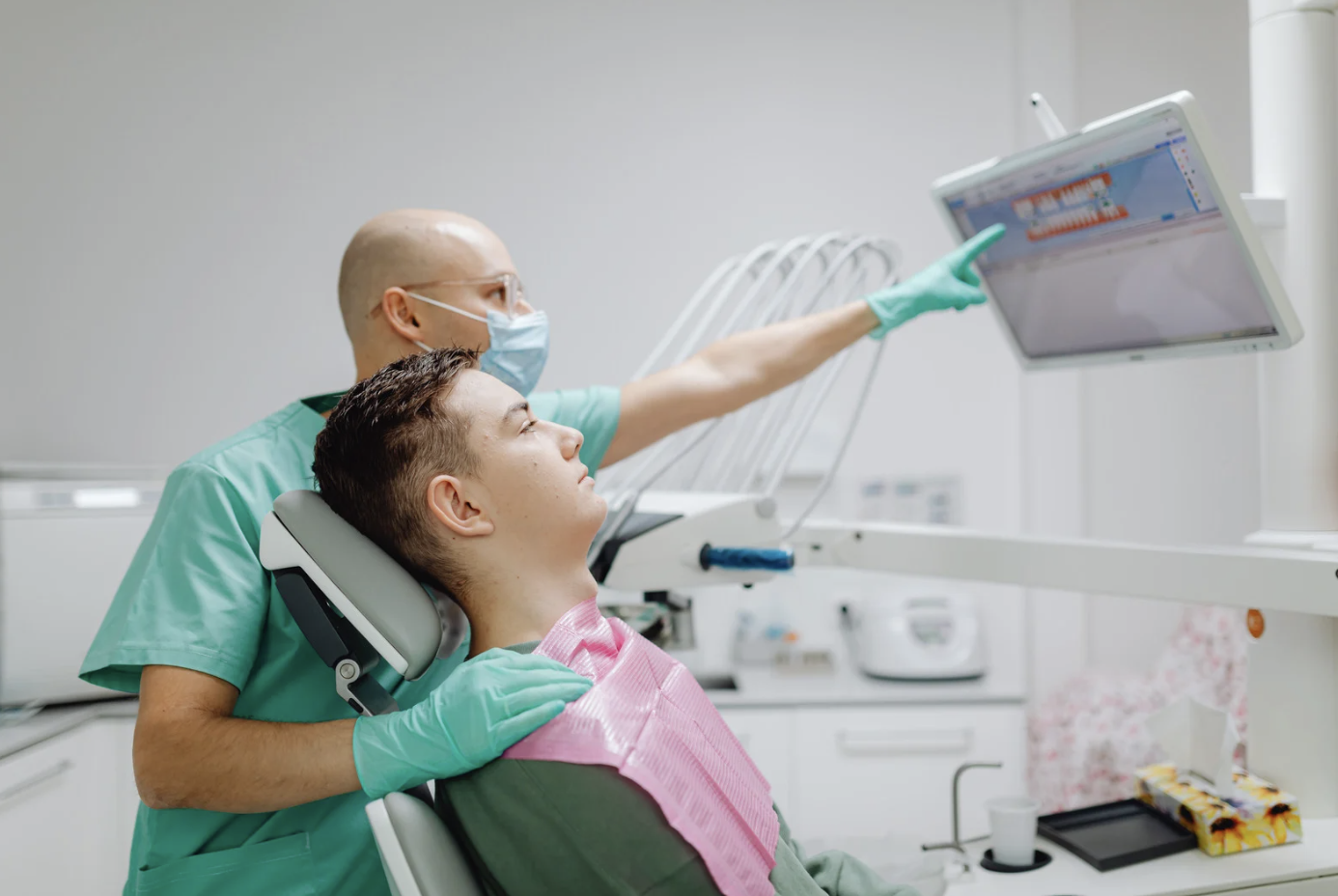
Not to scare you. Not to sell you something you don't need. Just to know where you stand.
Because here's the thing: a simple evaluation now can save you from a much bigger problem down the road. And if everything looks fine? Great. At least you'll have peace of mind.
We're here when you're ready.
At State Avenue Dental Office, we take the time to listen, explain what we're seeing, and walk you through your options—no pressure, no rush. We serve patients throughout Kansas City, Kansas (KCK) and the surrounding area, and we're happy to communicate in English, Korean, or Spanish.
If something doesn't feel right with your teeth, give us a call. Let's take a look together and figure out the best path forward for your smile.